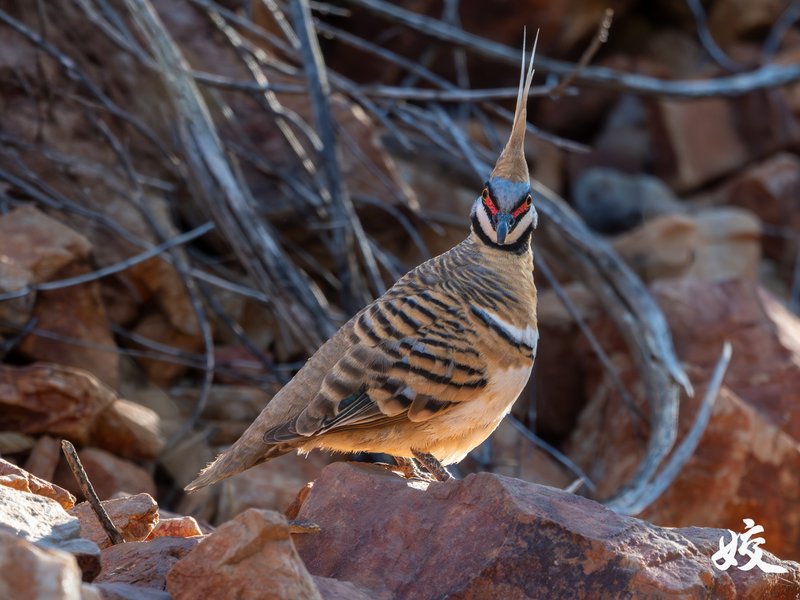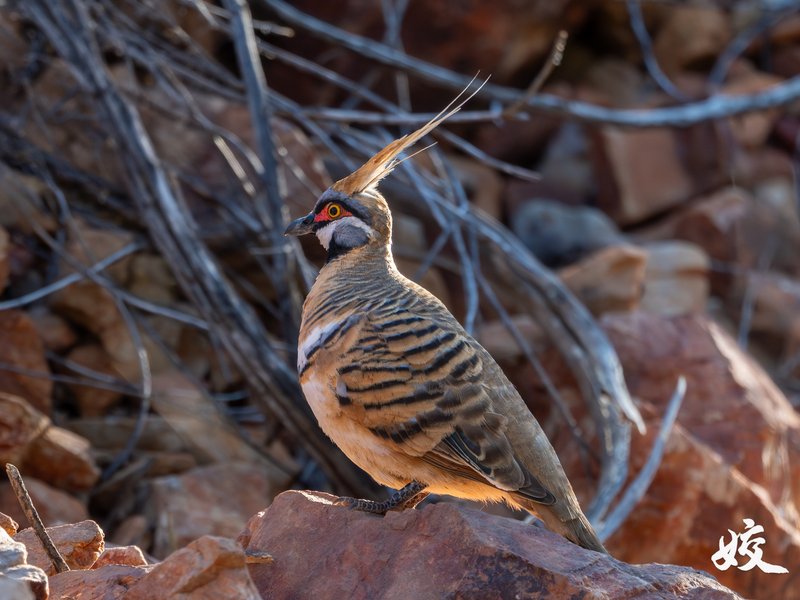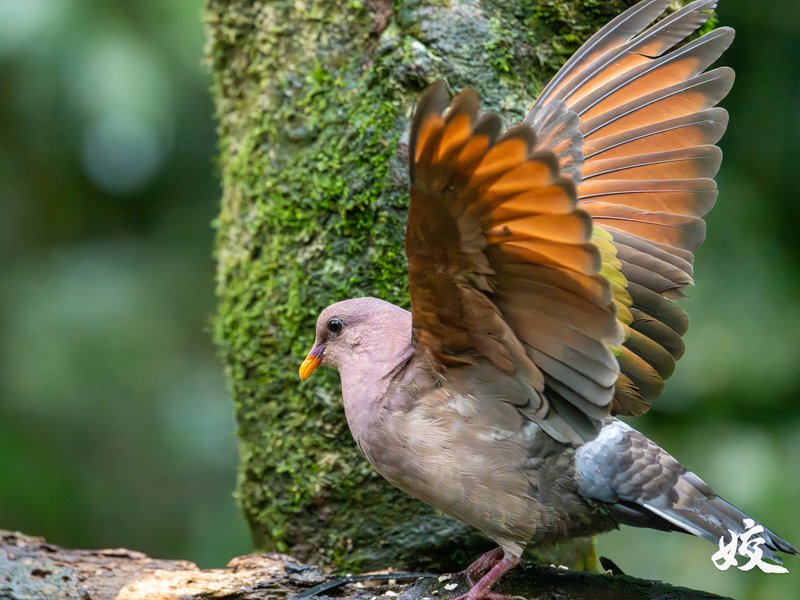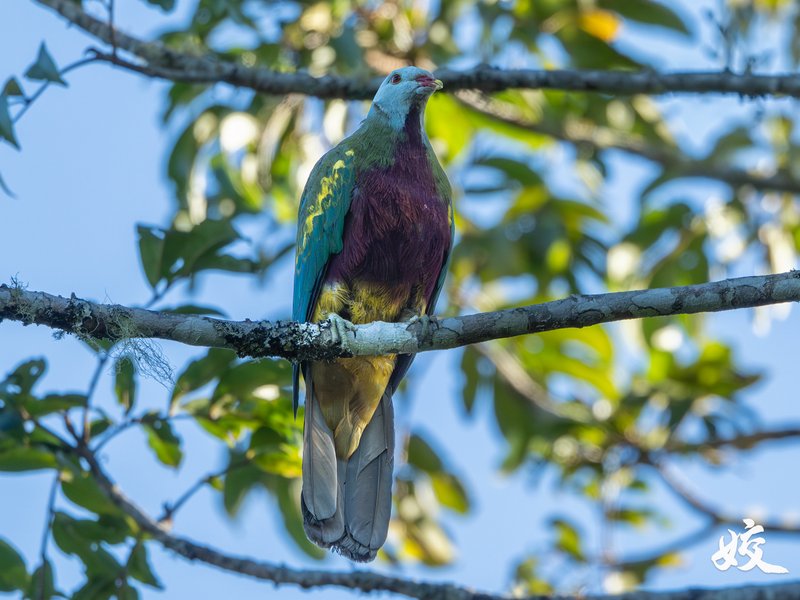
Topknot Pigeon
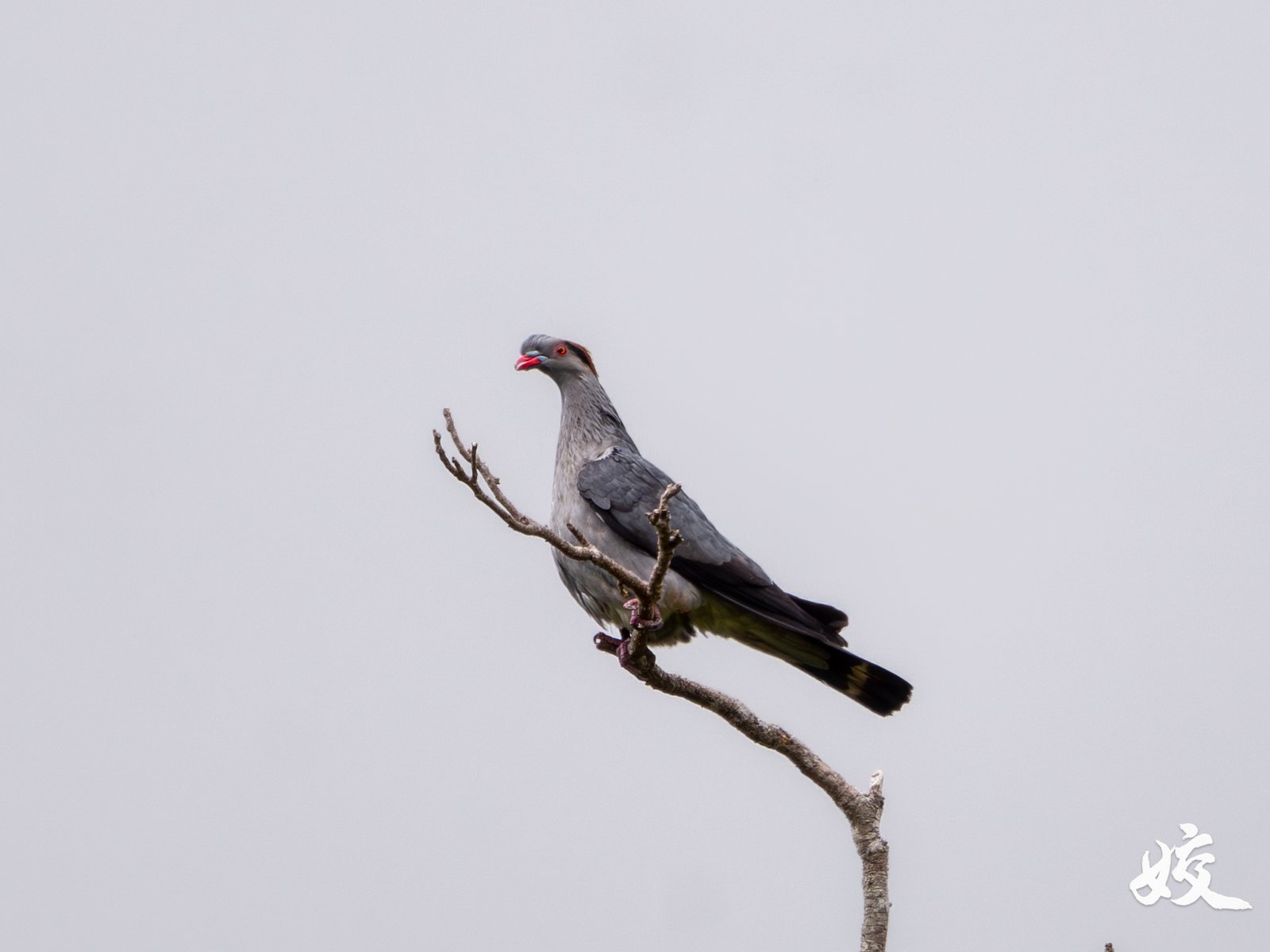
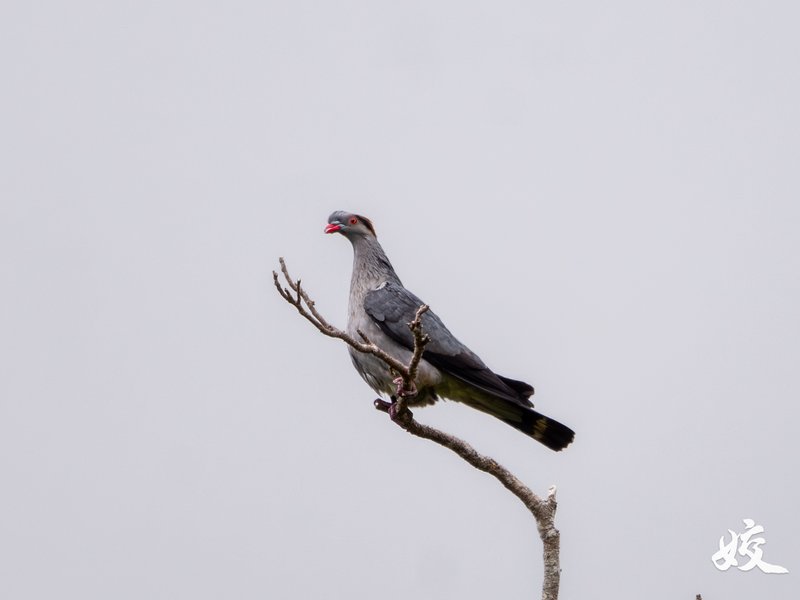
英文名:Topknot Pigeon(学名:Lopholaimus antarcticus),是鸽形目鸠鸽科的鸟类。40–46 厘米。大型浅灰色鸠鸽(在昆士兰东北部体型较小),怪异地向后梳起的“发型”,前部灰色,后部姜黄色。飞羽和长尾石板黑色;尾部横贯一道窄的皮黄灰色带。未成年鸟:较素净;嘴褐色;羽冠较小;尾带不甚分明。小群、数百只的大群轻松而有力地飞越雨林、山谷,毫不费力地盘旋,宛如尾部带斑纹的大型野鸽。在树冠层积极取食果实,攀爬、拍翅、争抢;群鸟栖息于树冠上方开阔(常是枯死)的树上,排出的种子啪嗒落在下方枝叶上。会穿越开阔地带前往孤立的无花果树、樟树。
Topknot Pigeon
40-46 cm. Big, pale grey pigeon (smaller in ne. Q) with curious backswept 'hair-do', grey in front, ginger behind. Flight-feathers and long tail slaty-black; tail crossed by narrow buff-grey band. Immature: plainer; bill brown; crest smaller; tail band less definite. Parties, flocks of hundreds fly easily, strongly, over rainforests, valleys, circling effortlessly, like big Feral Pigeons with large, banded tails. Feeds actively on fruits in canopy, clambering, flapping, skirmishing; flocks rest in open (often dead) trees above canopy, with pattering sound of excreted seeds on foliage below. Crosses open country to isolated figs, camphor laurels.
- Other name
- 'Flock Pigeon'.
- Similar Species
- White-headed Pigeon: note tail.
- Voice
- seldom heard; soft, rumbling grunt; when skirmishing, short screech, like distant flying fox or pig.
- Habitat
- rainforests, palms, native figs; nearby eucalypt forests, woodlands; fruiting trees in open country; orchards, e.g. cherries.
- Breeding
- July-Jan.
- Nest
- flat, loose, bulky, of long twigs; 3-30 m in leafy tree, usually in rainforest. Egg: 1; white, large, oval, slightly glossy.
- Range & Status
- coastal e. Aust., from C. York to far s. coast NSW, on and e. of Divide. Fairly common from Atherton Tableland (ne. Q) to ce. NSW; scarce n. of Cooktown; casual far e. Vic. to Mallacoota region; Gippsland Lakes and Tas. unprecedented numbers (flocks to c. 40) in the dry summer of 1994-1995. Movements influenced by seasonal availability of rainforest fruits, or absence of same.