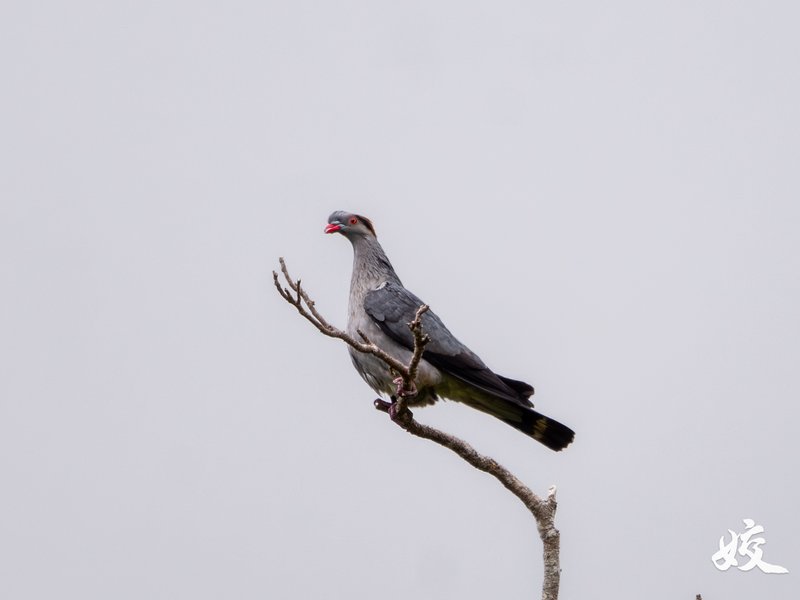
Topknot Pigeon
Lopholaimus antarcticus· 鸠鸽科(1 photos)
Photographed In:
Locations:
Topknot Pigeon
40-46 cm. Big, pale grey pigeon (smaller in ne. Q) with curious backswept 'hair-do', grey in front, ginger behind. Flight-feathers and long tail slaty-black; tail crossed by narrow buff-grey band. Immature: plainer; bill brown; crest smaller; tail band less definite. Parties, flocks of hundreds fly easily, strongly, over rainforests, valleys, circling effortlessly, like big Feral Pigeons with large, banded tails. Feeds actively on fruits in canopy, clambering, flapping, skirmishing; flocks rest in open (often dead) trees above canopy, with pattering sound of excreted seeds on foliage below. Crosses open country to isolated figs, camphor laurels.
- Other name
- 'Flock Pigeon'.
- Similar Species
- White-headed Pigeon: note tail.
- Voice
- seldom heard; soft, rumbling grunt; when skirmishing, short screech, like distant flying fox or pig.
- Habitat
- rainforests, palms, native figs; nearby eucalypt forests, woodlands; fruiting trees in open country; orchards, e.g. cherries.
- Breeding
- July-Jan.
- Nest
- flat, loose, bulky, of long twigs; 3-30 m in leafy tree, usually in rainforest. Egg: 1; white, large, oval, slightly glossy.
- Range & Status
- coastal e. Aust., from C. York to far s. coast NSW, on and e. of Divide. Fairly common from Atherton Tableland (ne. Q) to ce. NSW; scarce n. of Cooktown; casual far e. Vic. to Mallacoota region; Gippsland Lakes and Tas. unprecedented numbers (flocks to c. 40) in the dry summer of 1994-1995. Movements influenced by seasonal availability of rainforest fruits, or absence of same.