Eastern Spinebill
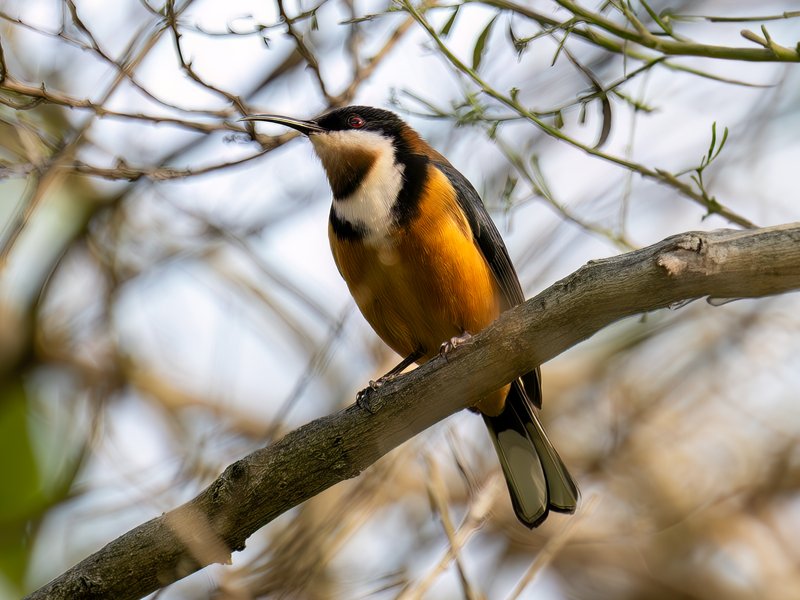
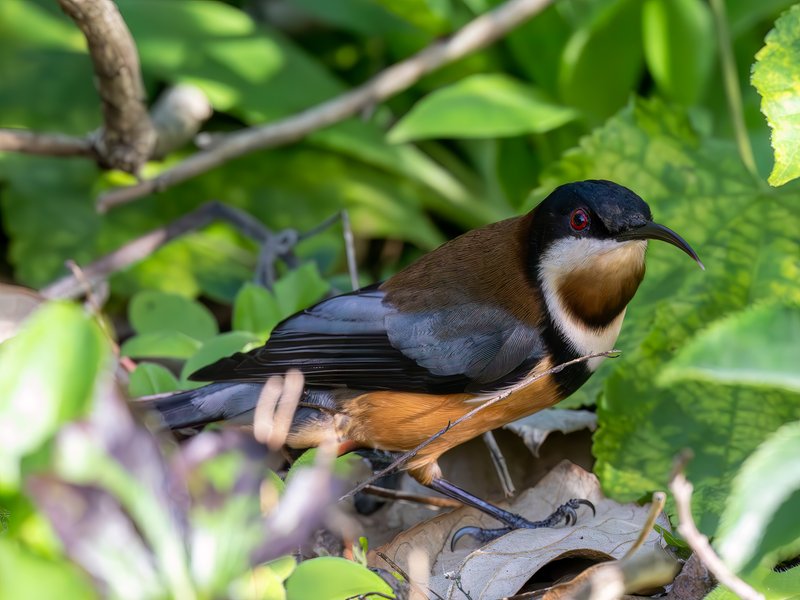
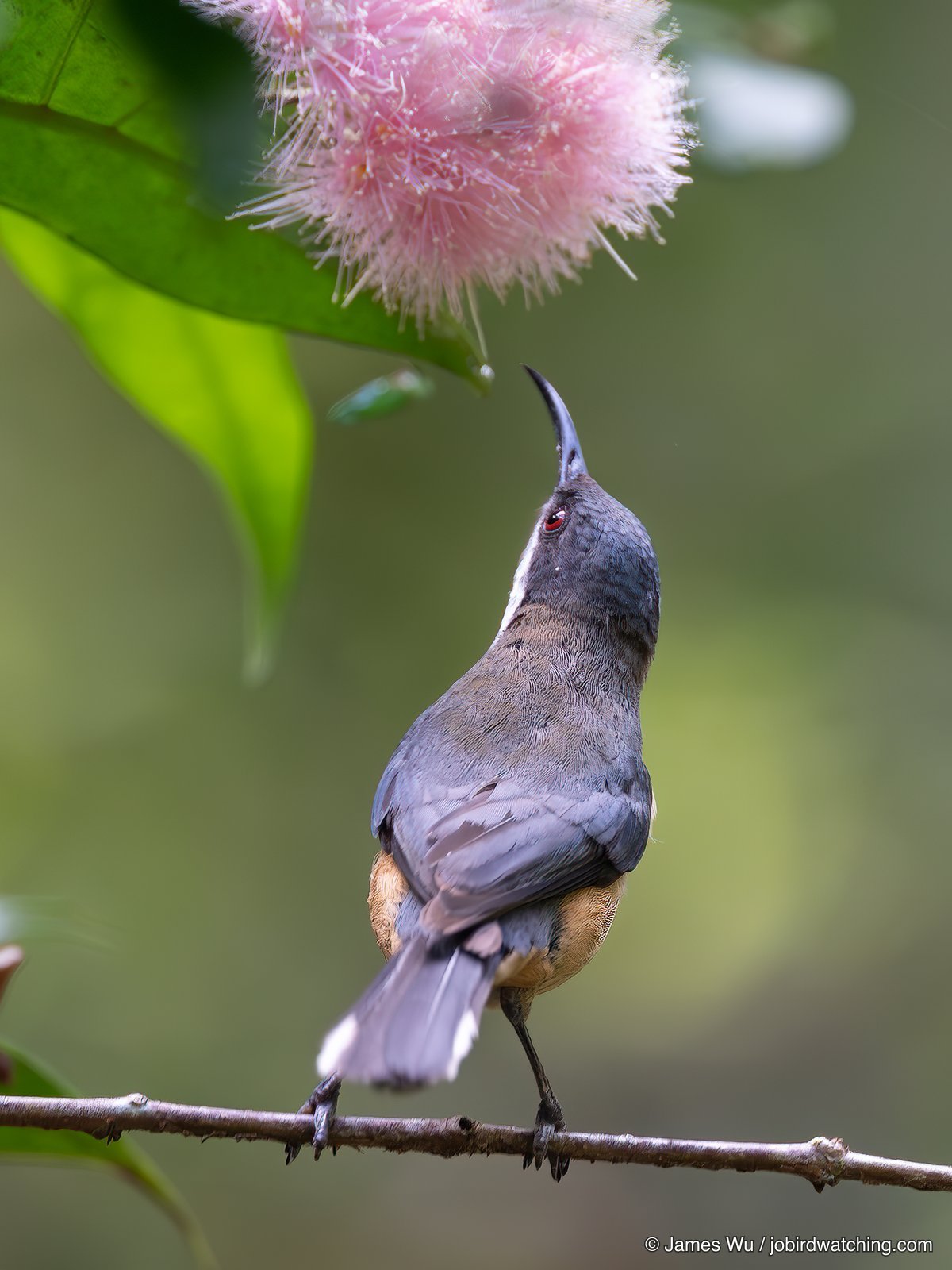
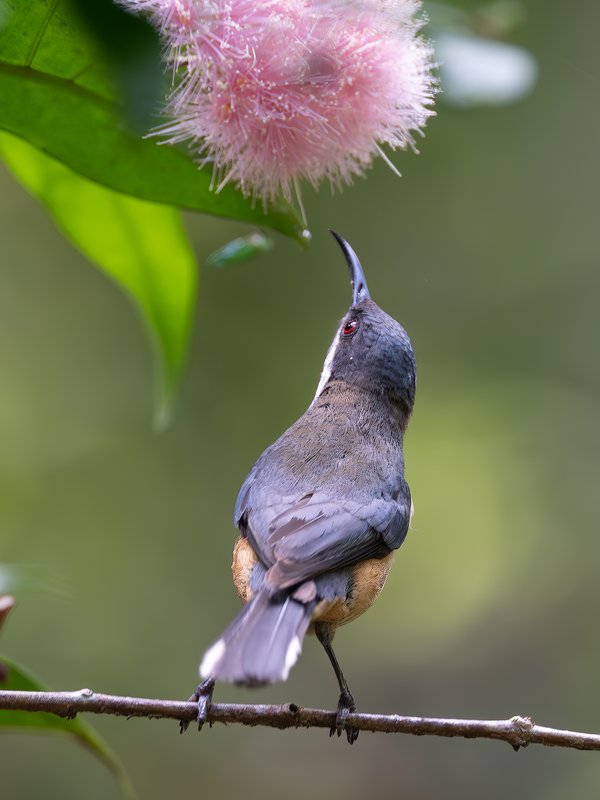
A tiny honeyeater, just 13–16cm long, known for its slim downcurved bill and striking colouring — males show a black head and a chestnut-flecked white throat patch, females a duller olive-grey. Endemic to southeastern Australia, from North Queensland down through New South Wales and Victoria into Tasmania and the Flinders Ranges, in dry forest, scrub and heath, adapting readily to well-planted gardens. Feeds mainly on nectar from eucalypts, mistletoes, banksias and grevilleas, topped up with small insects, and can slow its metabolism to ride out lean nectar seasons. Breeds August to January, raising one or two broods in a small cup nest slung in a tree fork. Rated Least Concern.
Eastern Spinebill
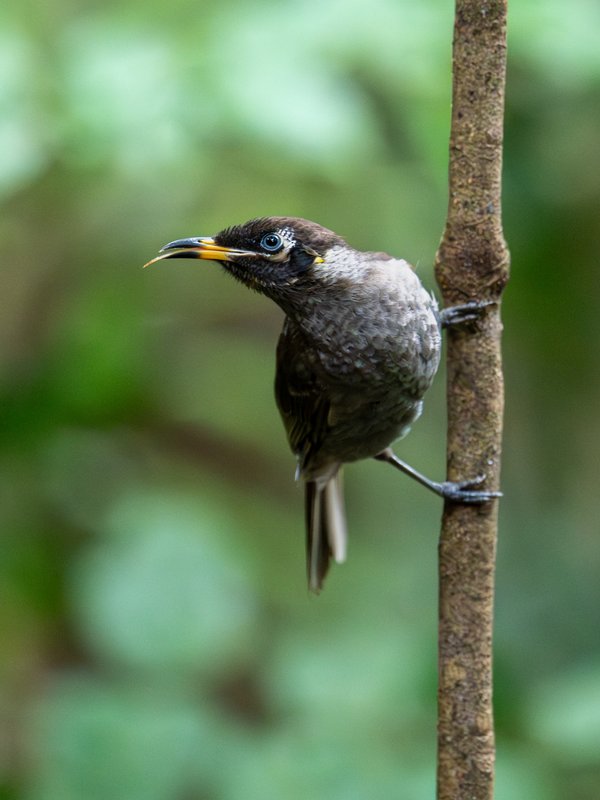
15-16.5 cm. Unmistakable fine, curved bill. Male: crown and 'wishbone' black; rufous/black patch on white throat; wings gunmetal; underparts rufous-buff; tail black, prominently edged white. Female: crown grey. Juvenile: olive-grey above, plain yellow-buff below. Singles, pairs: flight erratic, with quick 'flip flop'; flashes white outer tail feathers; hovers.
- Similar Species
- Crescent, Tawny-crowned Honeyeaters.
- Voice
- long, tinkling, staccato piping; explosive twittering rondos; twittering flight song.
- Habitat
- forests, woodlands, heathlands, flowering shrubs, thickets, gardens.
- Breeding
- Aug.-Dec.
- Nest
- cup of grass, moss, hair, spiders' web, feathers; slung in foliage 1-5 m+ high.
- Eggs
- 2-3; whitish, pink-buff, spotted chestnut, brown.
- Range & Status
- coastal e., se. Aust. and Tas.: ne. Q highlands above 500 m, from near Cooktown to Eungella NP, n. of Mackay. Coastal se. Aust., from Cooloola NP-Fraser I. (Q) to s. Vic., Tas., Bass Strait islands, w. to Mt Lofty Ras., Kangaroo I. (SA). Extends well inland in Q-NSW. Autumn-winter dispersal from highlands to lowlands. Common. Sedentary; dispersive.
- Distribution key to races
- 1. Acanthorhynchus tenuirostris cairnsensis 2. Acanthorhynchus tenuirostris dubius 3. Acanthorhynchus tenuirostris halmaturinus 4. Acanthorhynchus tenuirostris tenuirostris