Silver-backed Butcherbird
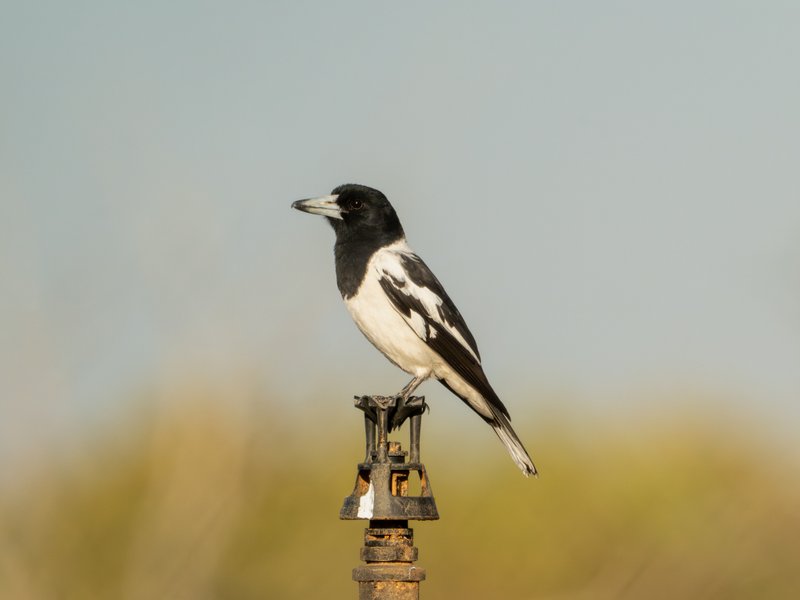
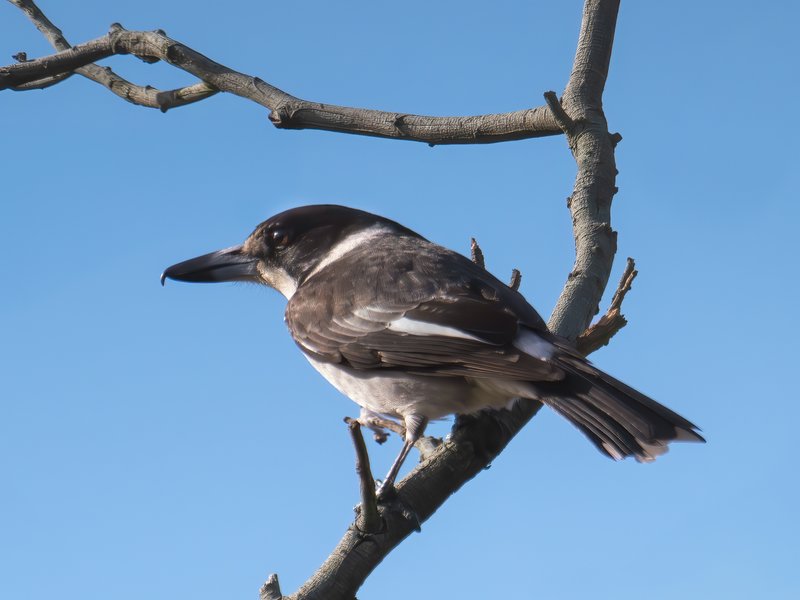
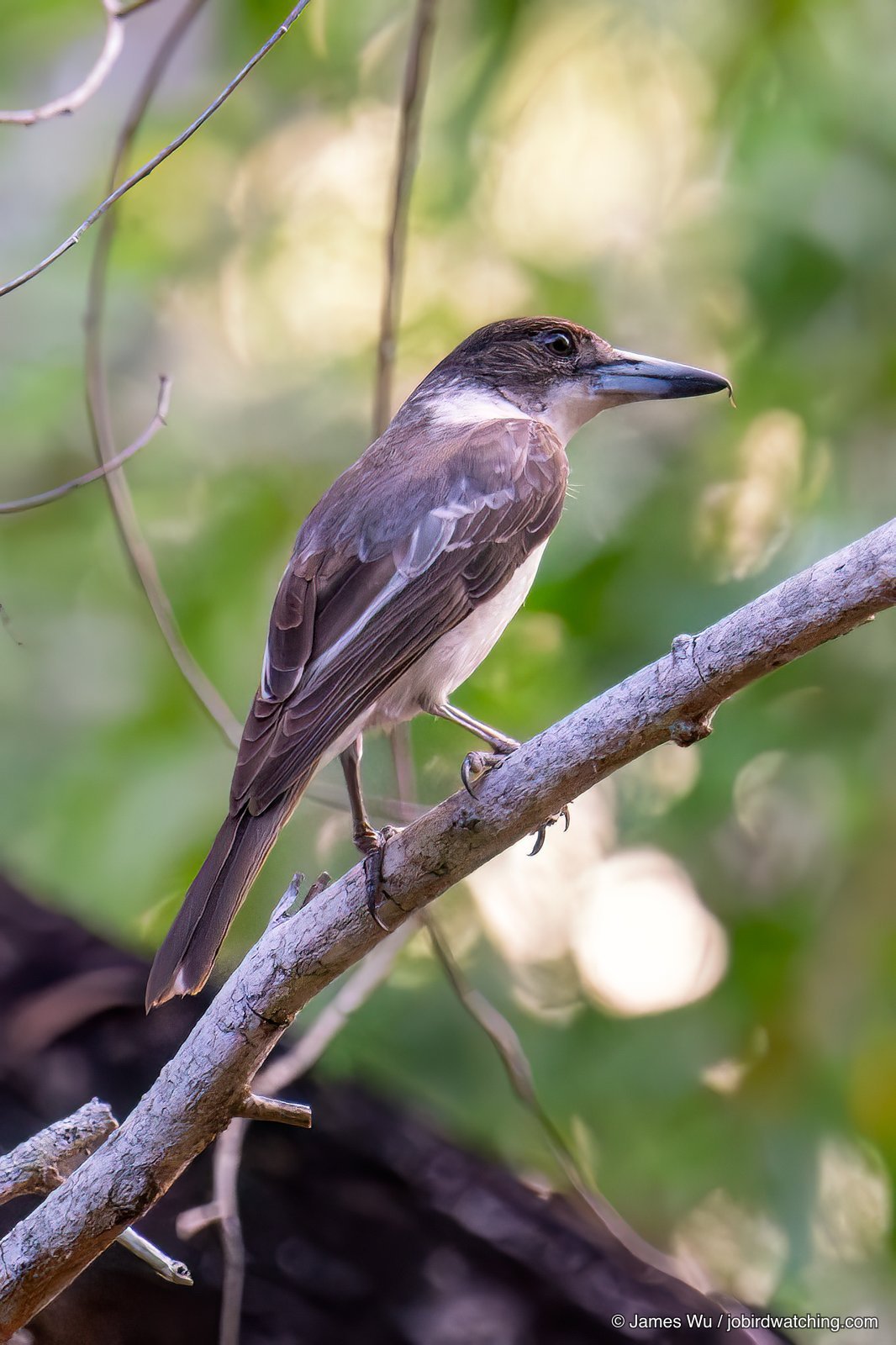
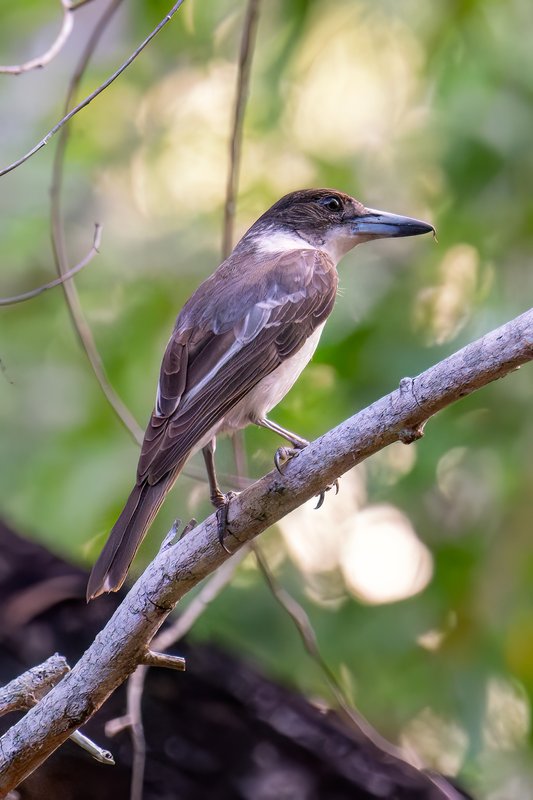
英文名:Silver-backed Butcherbird(学名:Cracticus argenteus),是雀形目燕鵙科钟鹊属的鸟类。主要特征为背部呈淡银灰色,头部黑色,脸部和颈后白色,喙长而带钩。分布于澳大利亚西北部和中北部地区。
Silver-backed Butcherbird
Two species recently separated:
Cracticus torquatus.
Cracticus argenteus.
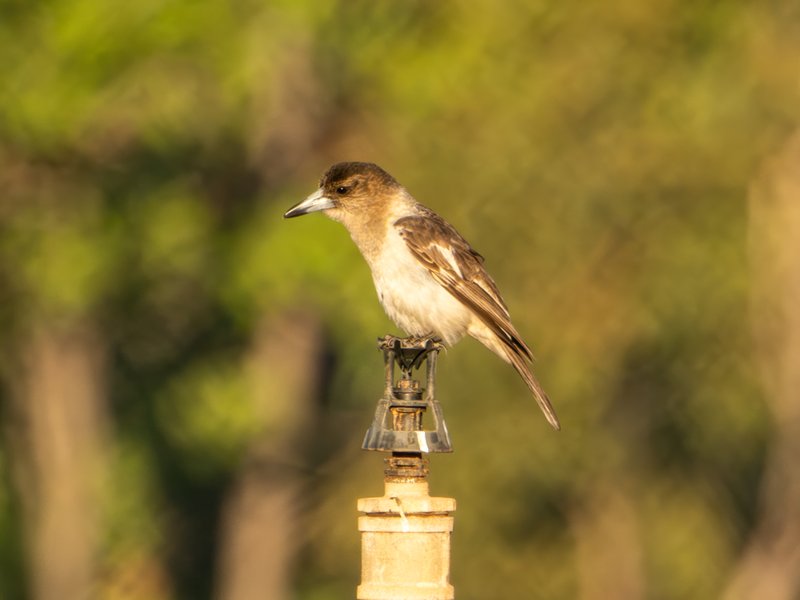
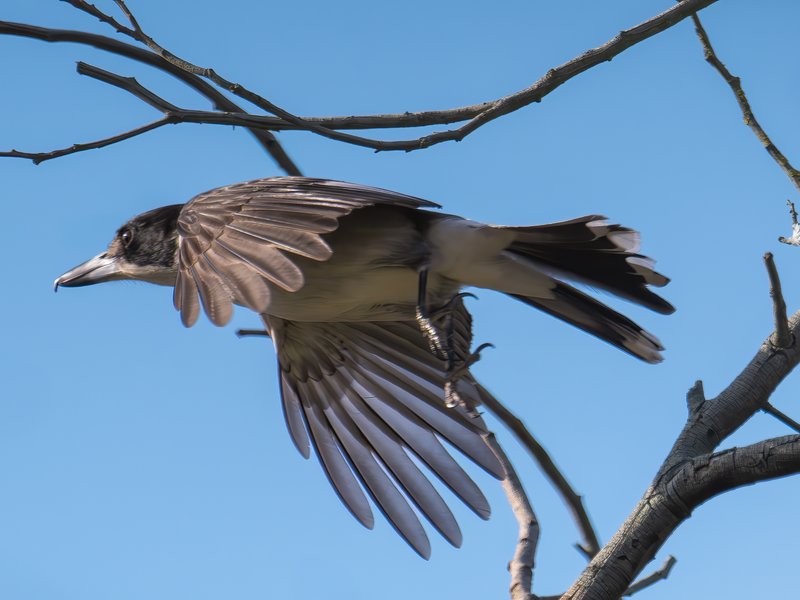
24-30 cm. Finely hooked blue-grey bill, tipped black; crown/cheeks black; partial white collar. Female: crown/upperparts browner. Immature: dark brown, white areas dirty fawn - resembles a 'little kookaburra'; bill dark grey. Birds in c. and nw. Aust. silver-grey above; underparts/collar pure white; in s. WA has partial black 'necklace'. Silver-backed Butcherbird: Kimberley (WA): black 'necklace' forms partial breastband; Singles, pairs, family parties: sits watchfully, darts to ground or through trees. Flight direct, with rapid shallow wingbeats; note whitish rump. Calls loudly in flight; wings quivering. Aggressive near nest.
- Other name
- Silver-backed Butcherbird; Derwent or Tasmanian Jackass.
- Similar Species
- Pied Butcherbird, imm.: shadowy buff-grey head/throat.
- Voice
- territorial song - loud, mellow piping, phrasing varies. In aggression, staccato, rollicking shriek; 'karr karr'.
- Habitat
- margins of rainforests, monsoon forest; vine-scrub, paperbarks, eucalypt forests, woodlands, coastal/inland scrubs; timber on roadsides and watercourses; shelter belts, golf courses, parks, gardens.
- Breeding
- July-Jan.
- Nest
- untidy, of twigs; lined with grass, rootlets; 2-10 m in sapling, scrubby tree.
- Eggs
- 3-5; dull green/light brown; speckled, blotched dull red, chestnut-brown.
- Range & Status
- Grey Butcherbird: widespread but patchy s. of Tropic, n. to s. C. York Pen.(Q); Mostly uncommon except Tas., where common in lowlands. Sedentary; locally nomadic. Silver-backed Butcherbird: race colletti Top End (NT); race argenteus n. Kimberley (WA).
- Distribution key to races
- 1. Cracticus argenteus argenteus 2. Cracticus argenteus colletti