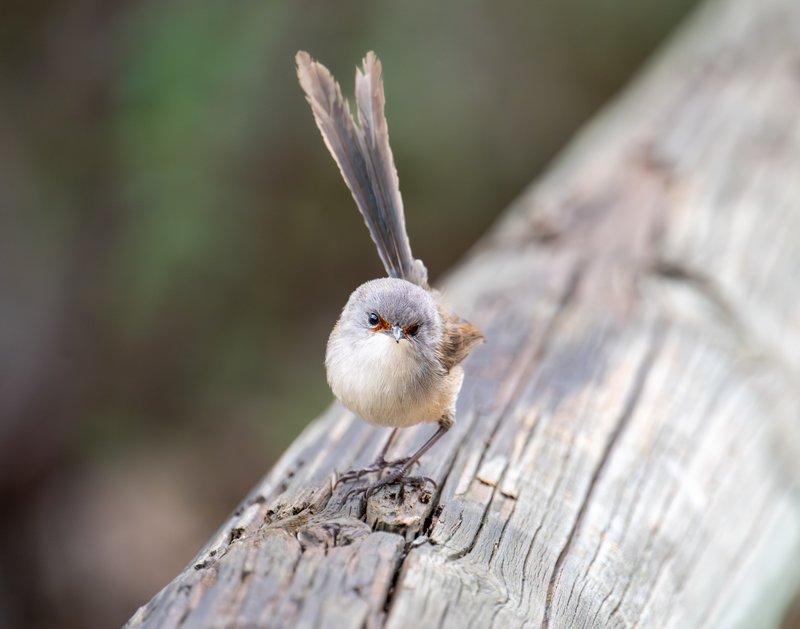
Red-winged Fairywren
Malurus elegans· 细尾鹩莺科(1 photos)
Photographed In:
Locations:
Red-winged Fairywren
14-16 cm. Largest, most robust fairy-wren. Male, breeding: like Blue-breasted but crown/cheek patch/mantle pale silvery blue; feathers of back have white bases, making mantle conspicuously blue-white; shoulder-patch pale chestnut, extensive. Male, eclipse: like female but lores black. Female: like female Blue-breasted but bill blackish; lores chestnut, giving head a 'different' look (G. Chapman, pers. comm.); crown and tail deep grey-brown; mantle washed chestnut. Immature: like dull female. Pairs, resident family groups: forages within low, dense, often marshy vegetation. Sometimes associates with Splendid Fairy-wren.
- Other name
- Marsh Wren.
- Similar Species
- Variegated Fairy-wren, male: deeper lilac-blue head and back. Female: tan bill, dark chestnut lores and eye-ring; bluish tail.
- Voice
- 3 or 4 short clear notes followed by trilling warble; 'pripping' notes sharper and louder.
- Habitat
- thick scrub and swamp vegetation, often with sword-grass and tea-tree, on margins of streams, freshwater swamps; swamp woodlands; understorey in jarrah-karri forest; moist gullies in ranges; nearby eucalypt woodlands; coastal dune vegetation; well-vegetated gardens, orchards.
- Breeding
- Sept.-Dec.
- Nest
- large, round, sturdily constructed, of grass, bark strips, leaves; usually in rush-clump in swampy vegetation; reeds, rushes over water or near ground in base of rush.
- Eggs
- 2-3; white, lightly spotted red-brown, mostly at large end.
- Range & Status
- confined to far sw. WA, from near Perth s. through Darling Ra., jarrah-karri forests in Busselton-Albany region, s. and e. to Albany-Stirling Ra. NP, e. to near Fitzgerald R. Moderately common; reduced by habitat disturbance. Sedentary.