Singing Honeyeater
OccasionalGBIF 10.0·Dongniao Rarity Index8.50
Singing Honeyeater (Gavicalis virescens)
Singing Honeyeater
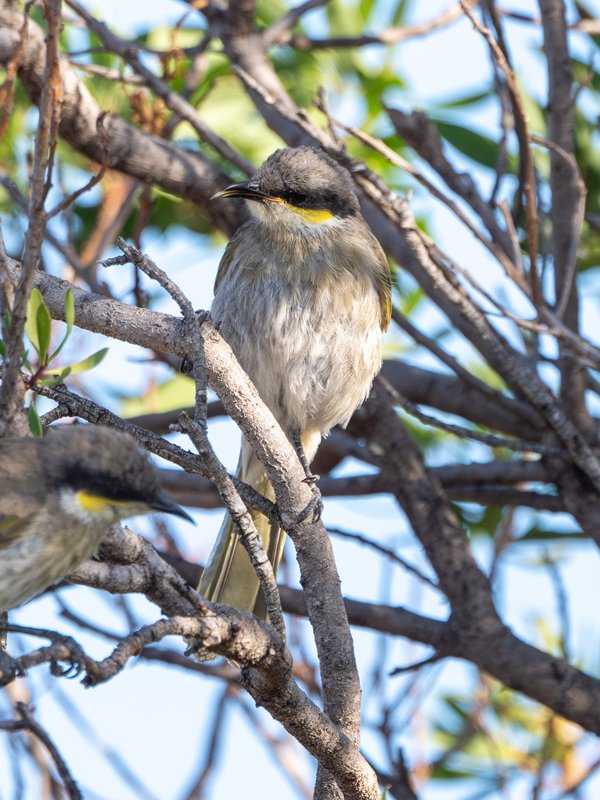
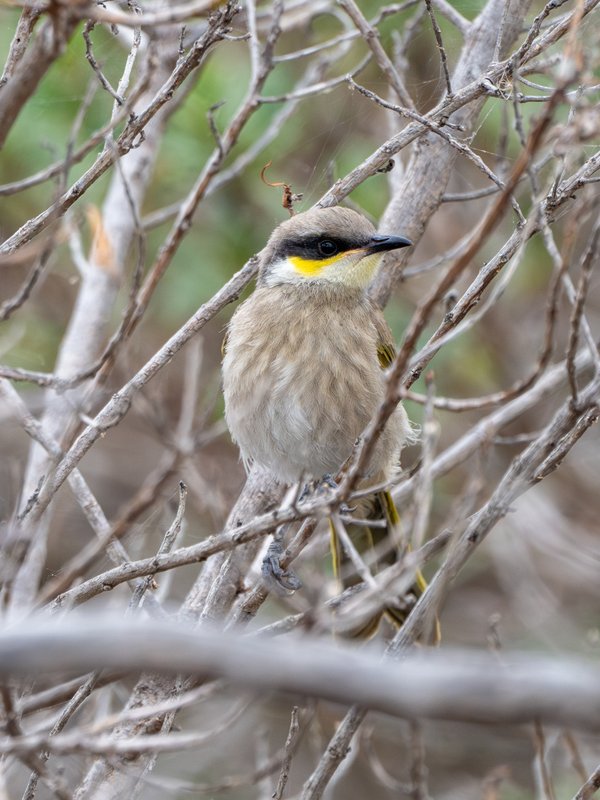
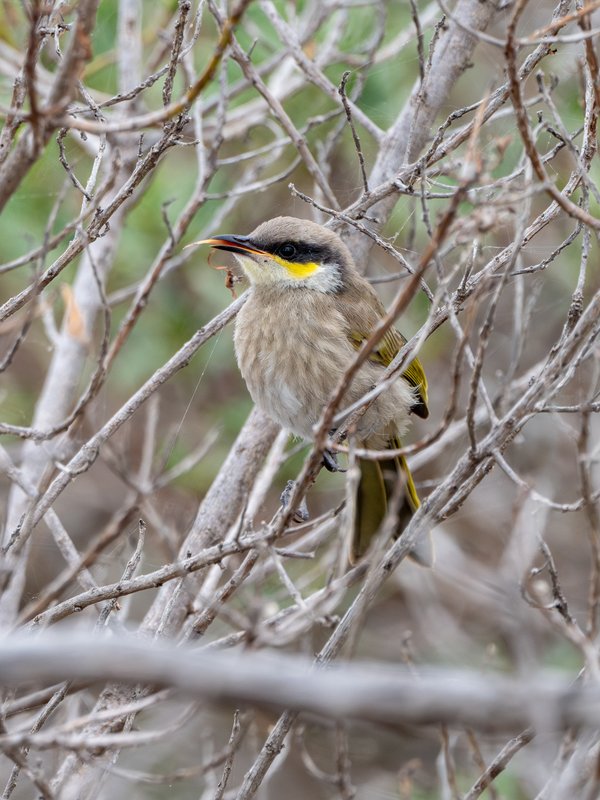
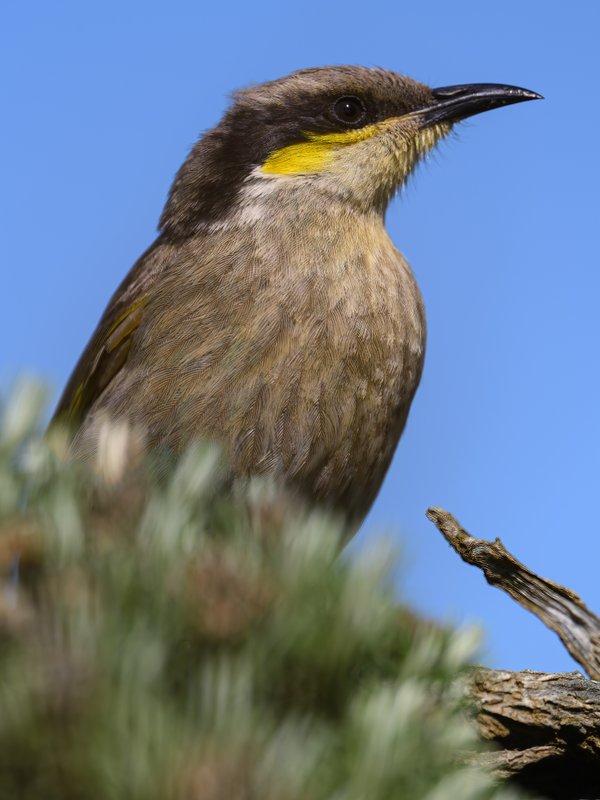
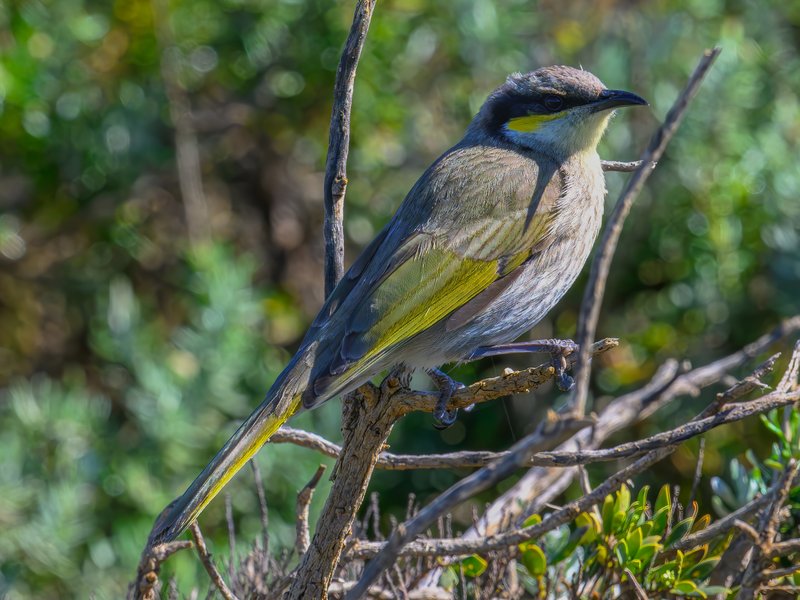
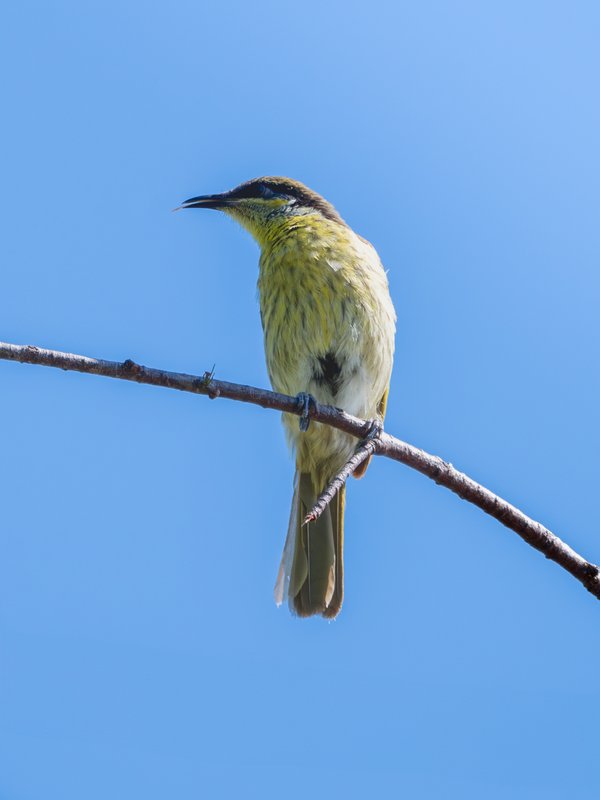
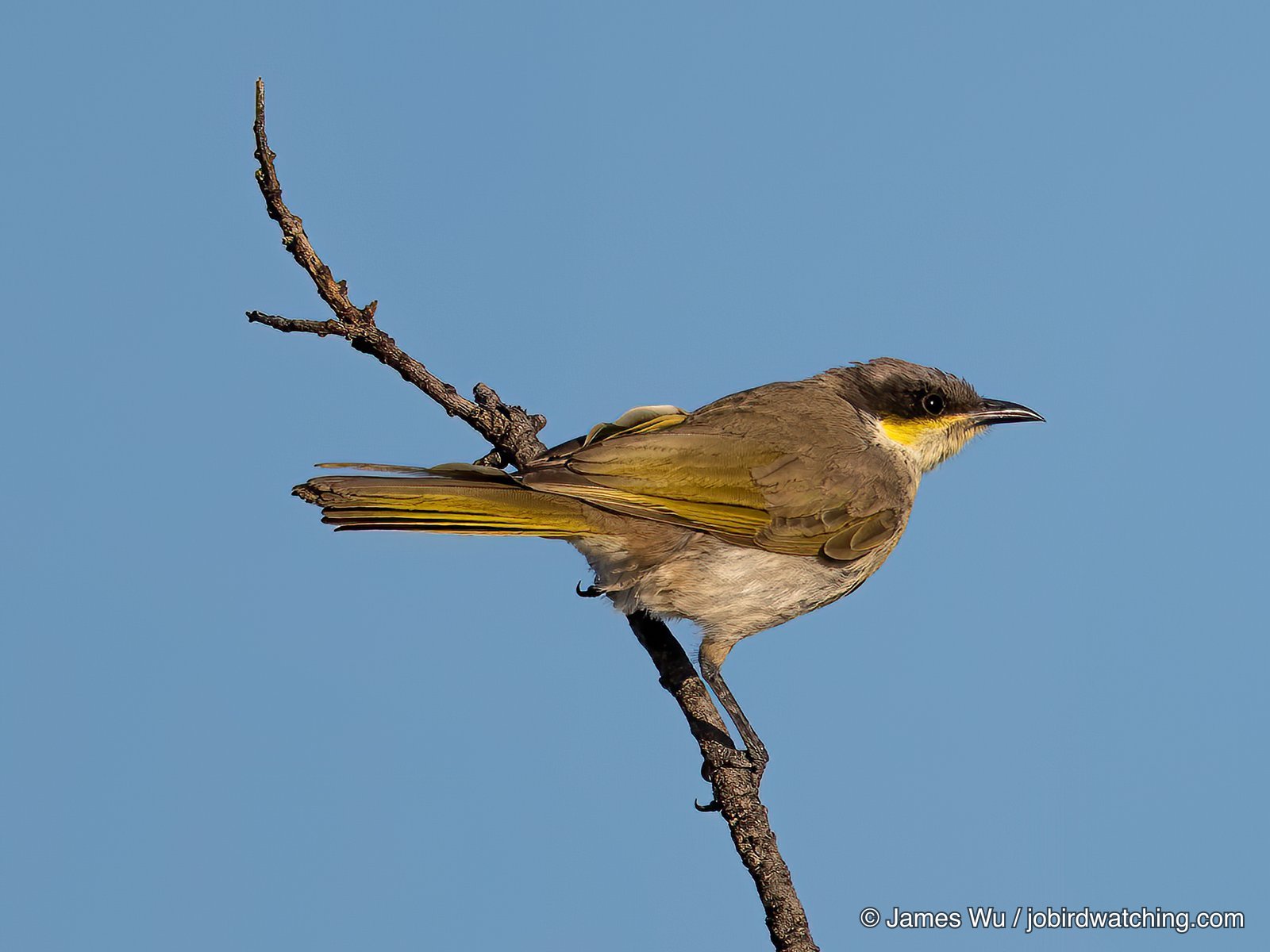
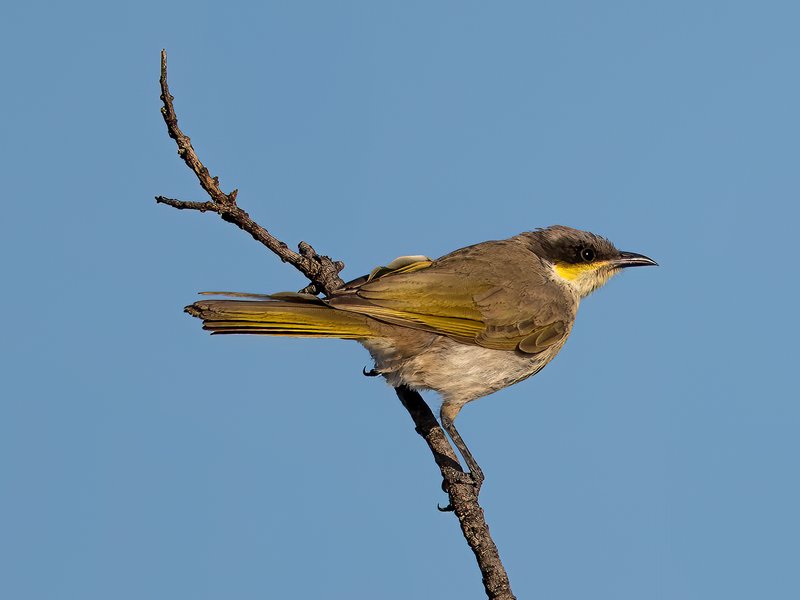
18-22 cm. Fawn-grey: bold black mask runs down neck; thinner line of yellow below ends in broad silvery white mark. Solitary, pugnacious: feeds in low, often isolated, flowering, berried shrubs; raids soft fruits, grapes.
- Other name
- Grape-eater or Grey Peter.
- Similar Species
- Yellow-faced; Varied, Mangrove Honeyeaters.
- Voice
- dry 'prrit prrit prrit', running, machinegun-like 'crik-crikit-crikit-crikit'; scratchy, peevish 'scree'.
- Habitat
- coastal dune vegetation; inland mulga, mallee scrubs; isolated shrubs, thickets on watercourses; orchards, vineyards, gardens.
- Breeding
- July-Feb., or after rain in n.
- Nest
- untidy cup of grass, plant stems, spiders' web; lined with hair, fur, plant down; in shrub 1-4 m high.
- Eggs
- 2-3; pink-white to yellow-buff, sparsely to thickly spotted red-brown.
- Range & Status
- Aust. mainland and drier islands. Absent from, or sparse on, e. coast except c. Rockhampton-Townsville (Q). Sparse C. York Pen. (Q), Top End (NT), Kimberley (WA). Extends e. along Vic. coast to Western Port. Common in suitable habitat. Sedentary.
- Distribution key to races
- 1. Gavicalis virescens cooperi 2. Gavicalis virescens sonorus 3. Gavicalis virescens virescens 4. Gavicalis virescens forresti