Diamond Dove
OccasionalGBIF 23.2·Dongniao Rarity Index9.05
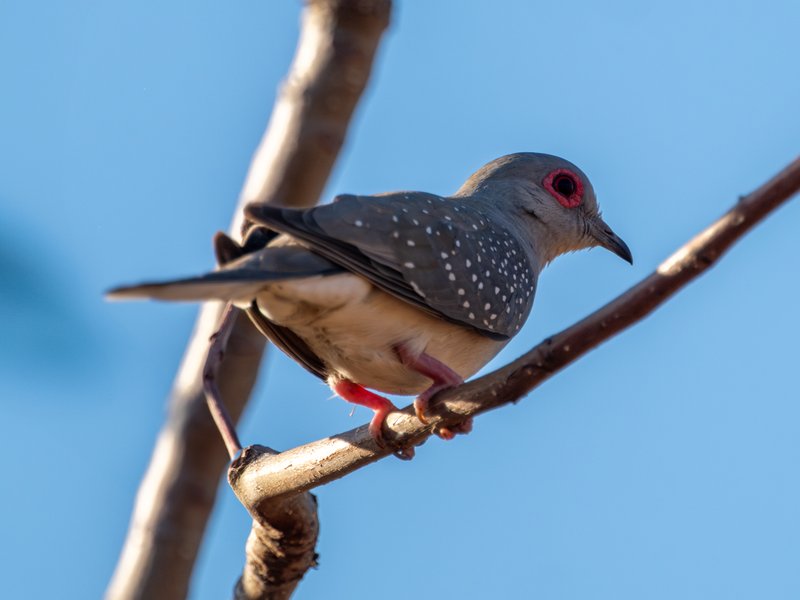
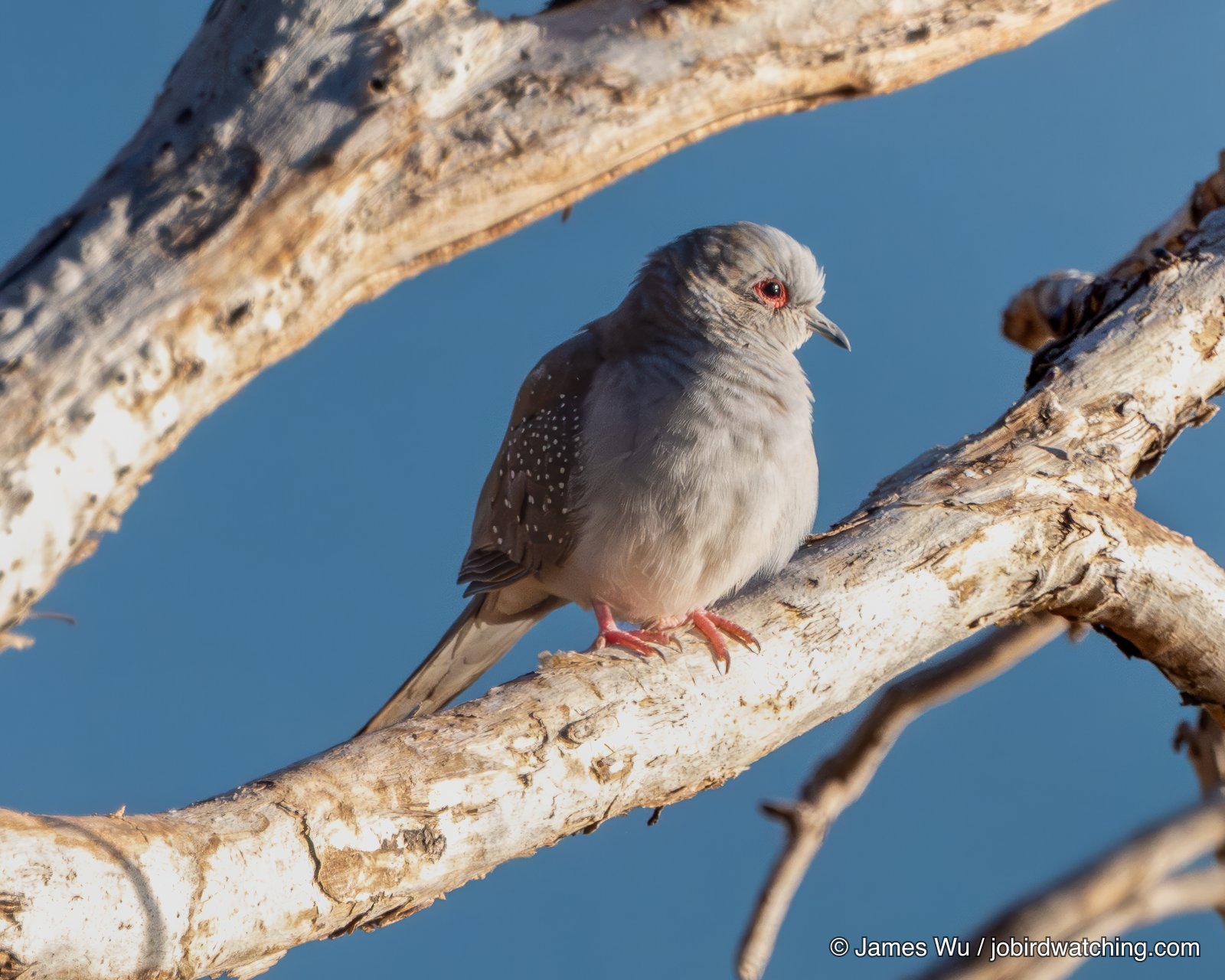
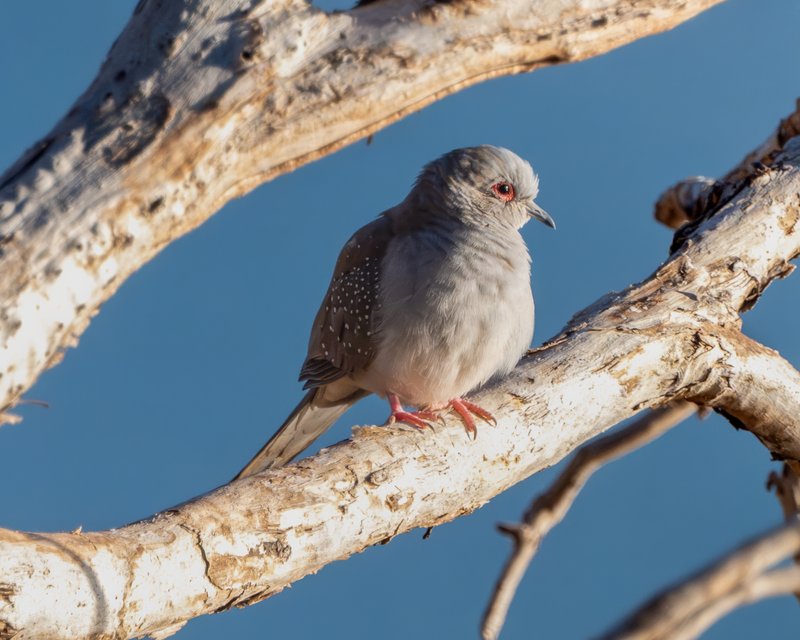
Diamond Dove(学名:Geopelia cuneata),是鸽形目鸠鸽科姬地鸠属的鸟类。又名: 宝石姬地鸠、钻石姬地鸠,是世界上体型最小的鸠类之一。分布于澳大利亚西部及半干旱沙漠地带,以其精致的外观和适应性强著称。
Diamond Dove
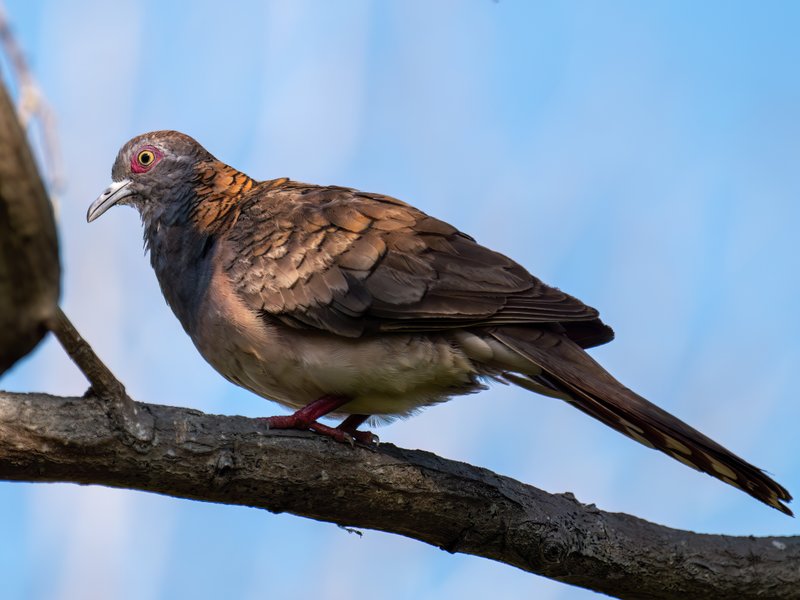
19-22 cm. Tiny blue-grey dove with red eye-ring and fine white spots on grey-brown wings. Female: eye-ring smaller; markings browner; some have uneven rufous wash. Juvenile: duller, browner; with irregular open, barred pattern of black, buff and grey-white on upperparts; some white spots on wings; eye-ring fawn; eye brown; legs grey. Pairs, parties, winter flocks: feeds on ground in quick, toddling run; often in hot sun. Flushes with whistling 'frrr' of wings: flight undulating, fast, direct, almost like Budgerigar, showing chestnut flight-feathers; white belly, white outer tail feathers more prominent than Peaceful Dove.
- Similar Species
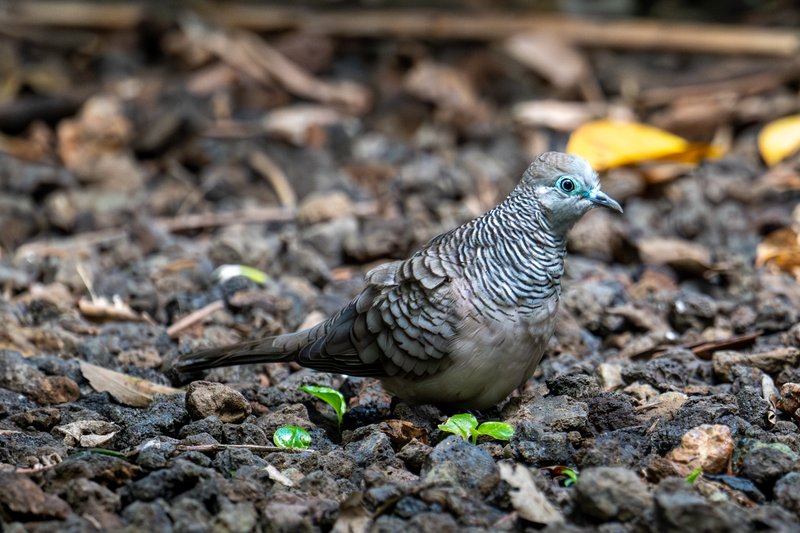
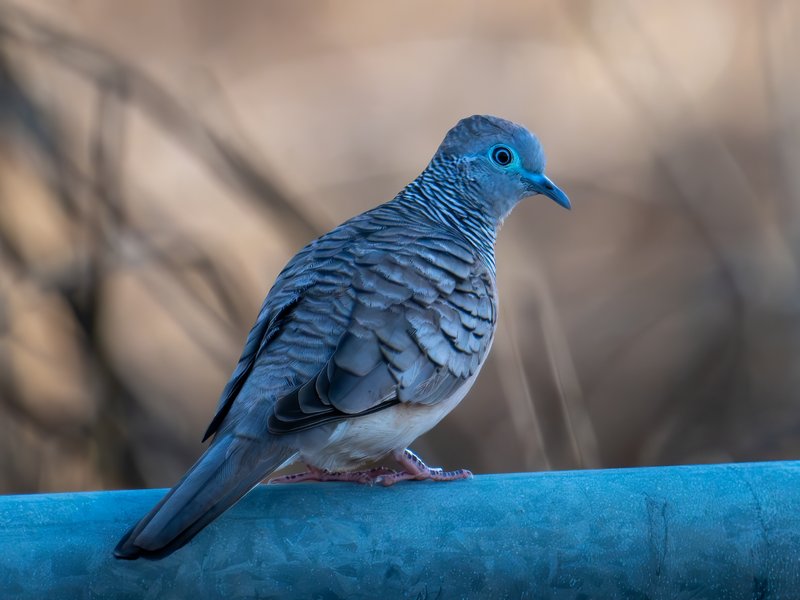
- Peaceful Dove: eye-ring blue-green; plumage closely scalloped black and white across breast; wing linings chestnut.
- Voice
- mournful, falsetto, slow, level four-note coo, 'oh-my-papa'; also plaintive, slow, high-pitched 'coo-cooooo'.
- Habitat
- drier grassy woodlands, scrub near water, wooded watercourses.
- Breeding
- any month after rain; mostly spring in s. Aust.
- Nest
- fragile platform of twigs, grasses, rootlets; in low shrub or scrubby tree; stump; occasionally on ground.
- Eggs
- 2; white, rounded.
- Range & Status
- drier parts of all mainland states, except driest deserts; mostly absent from coastal s. Aust., s. WA (s. of Murchison R.) and Nullarbor Plain: scarce C. York Pen. (Q). But moves coastwards during dry periods inland, mostly in summer in se. Aust., winter in n. Fairly common; patchy; nomadic.