White-eared Honeyeater
OccasionalGBIF 12.8·Dongniao Rarity Index8.71
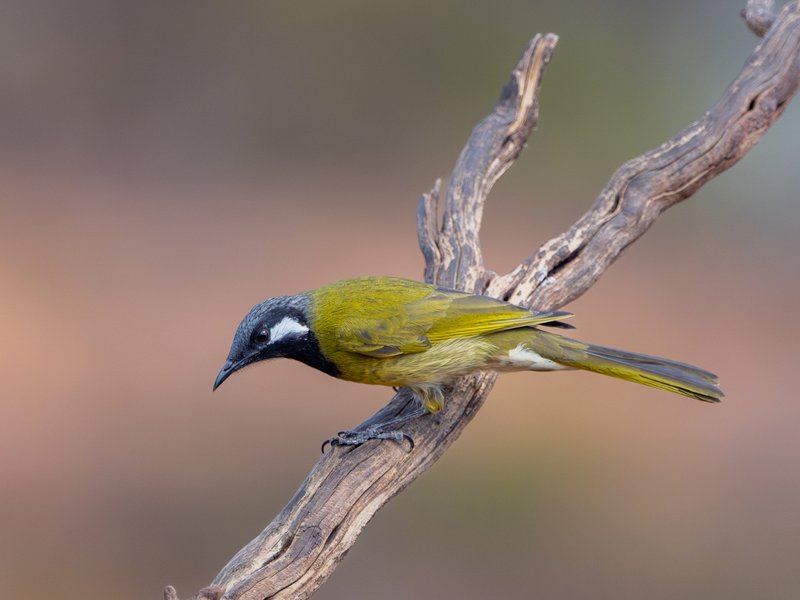
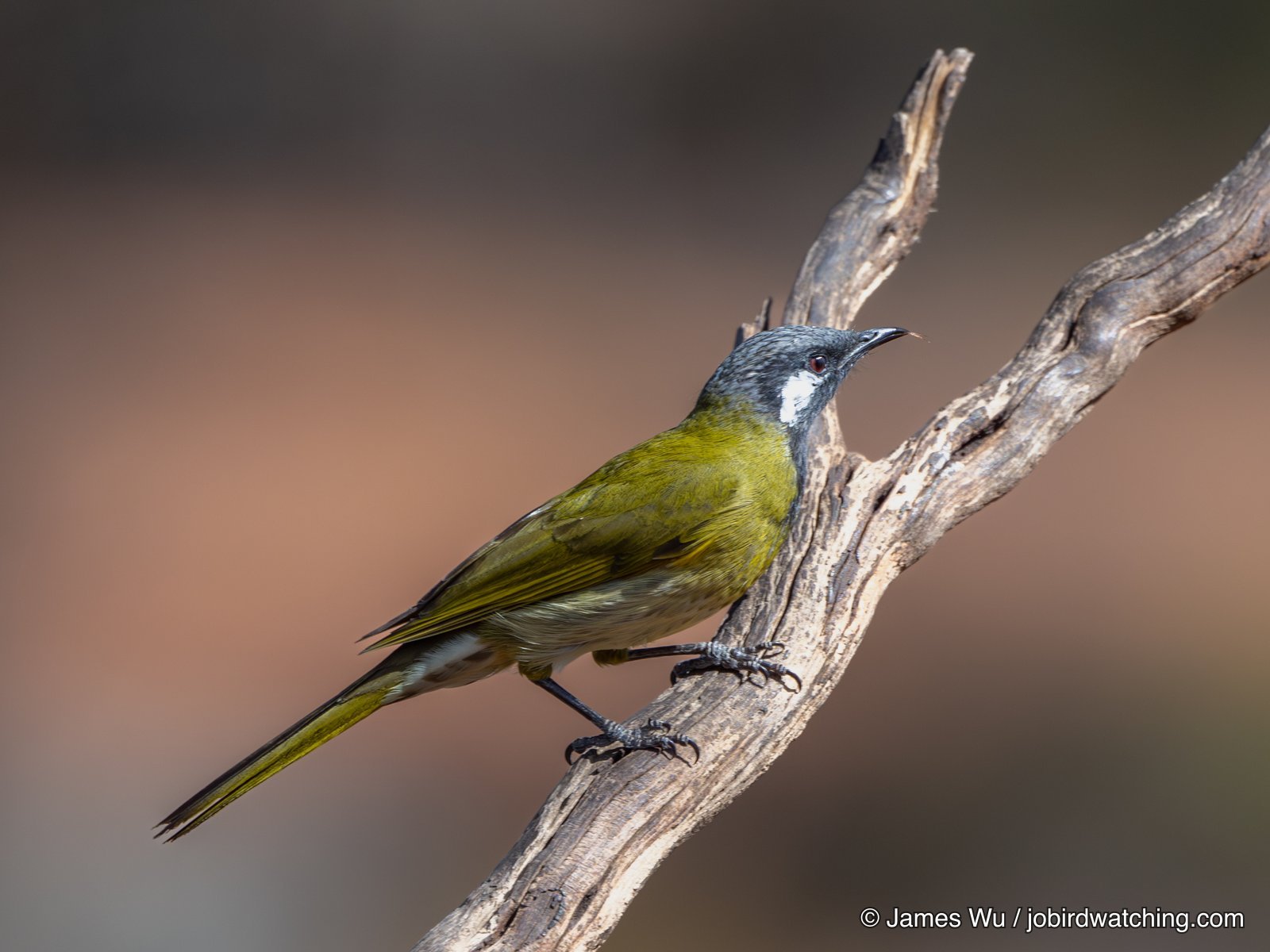
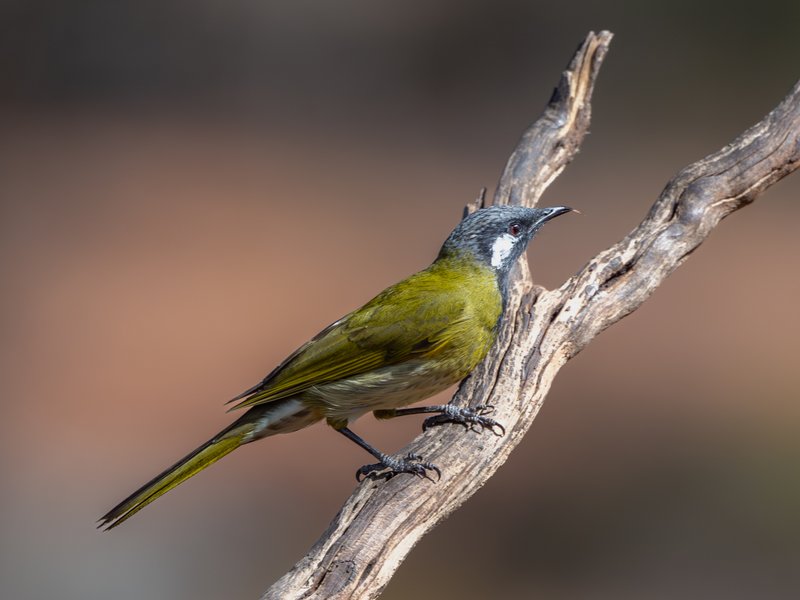
White-eared Honeyeater(学名:Nesoptilotis leucotis),是雀形目吸蜜鸟科白耳岩吸蜜鸟属的鸟类。这种中型吸蜜鸟以其橄榄绿的身体、黑色头部及醒目的白色耳斑而著称。分布于澳大利亚西南部、南部和东部,尤其偏好存在桉树的干燥森林和灌木丛生的环境。
White-eared Honeyeater
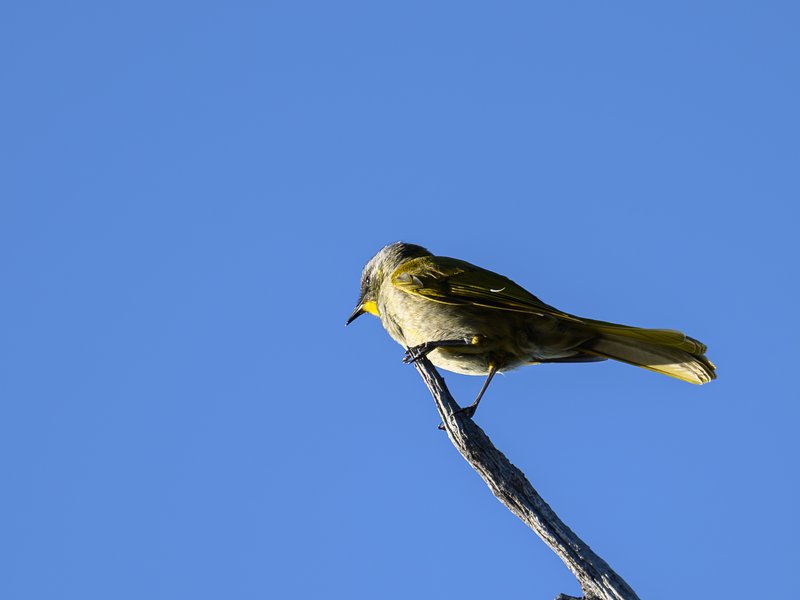
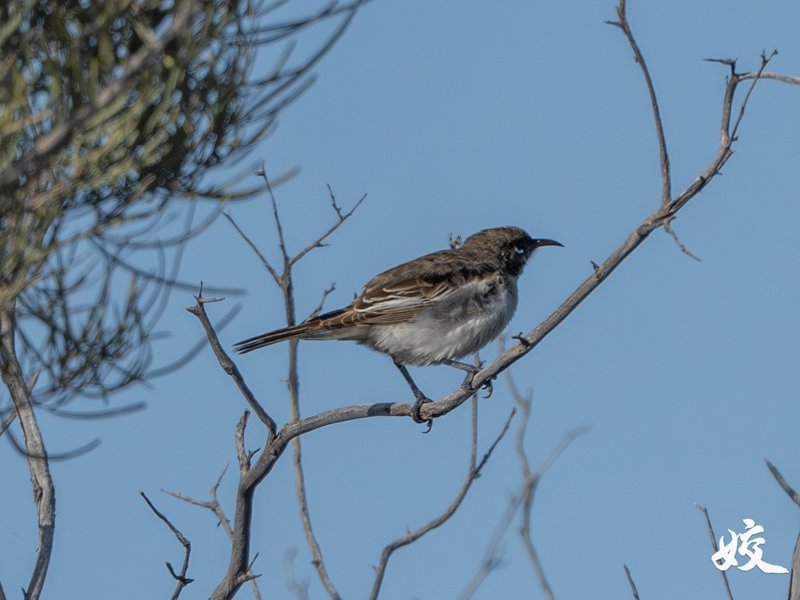
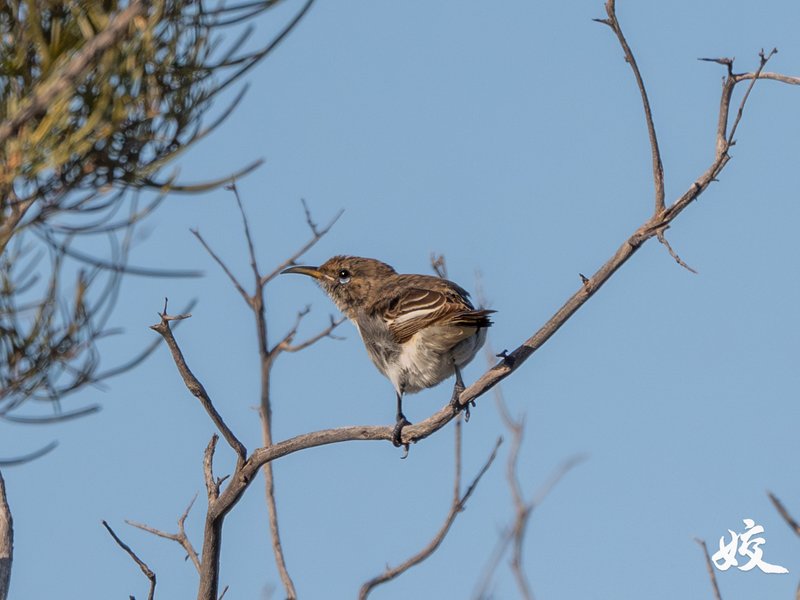
20-22 cm. Black from face to upperbreast, with large white ear-patch; crown grey; upperparts olive-green; underparts yellow-olive. Immature: duller; crown olive-green. Singles, pairs: nervously active; probes noisily under loose bark; makes 'flop-flop' of wings in flight; attacks fruit in orchards. Near nest, performs distraction display.
- Similar Species
- Yellow-throated Honeyeater: Tas. region only.
- Voice
- jarring, descending 'chung-chung-chung'; mellow 'chockup, chockup', or 'beer-brick, beer-brick'. Inland populations: lighter calls of more syllables, e.g. mellow 'cherrywheet, cherrywheet', or quick 'chittagong'; also rapid machinegun-like 'chock-chock-chock-chock-chock'; other calls when breeding.
- Habitat
- wet forests, woodlands, bracken, vegetation on streams, coastal heathlands/scrubs. In sub-inland: mallee, brigalow, belar. In s. WA: salmon-gum woodlands, tea-tree thickets around salt lakes.
- Breeding
- Aug.-Dec.
- Nest
- deep cup of bark-shreds, grass, spiders' web; lined with wool, fur, hair; 1-3 m high, or low in bracken.
- Eggs
- 2-3; whitish to pale cream, sparingly spotted, blotched red, red-brown.
- Range & Status
- widespread but patchy, in suitable habitat, s. from Hughenden-Charters Towers (Q), inland to Blackall-Carnarvon Ras.; e. NSW, inland to Pilliga Scrub, c. and sw. mallee areas; all Vic.; s. SA and Kangaroo I.; s. WA n. to Murchison R., except wetter sw. corner. Fairly common except in n. Sedentary; nomadic; in se. Aust., regular autumn-winter movement to coastal lowlands.
- Distribution key to races
- 1. Nesoptilotis leucotis leucotis 2. Nesoptilotis leucotis depauperata 3. Nesoptilotis leucotis thomasi 4. Nesoptilotis leucotis novaenorciae 5. Nesoptilotis leucotis schoddei