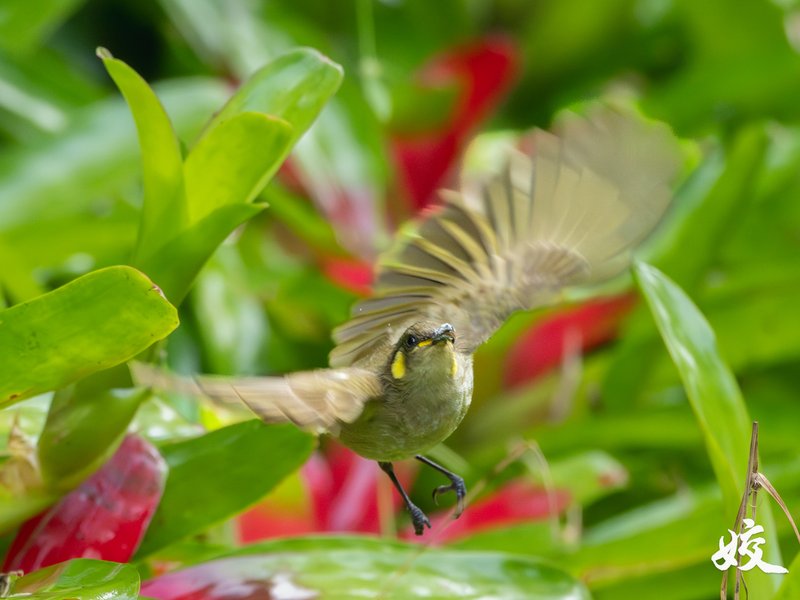
Cryptic Honeyeater
Cryptic Honeyeater
Two species recently separated:
Microptilotis gracilis.
Microptilotis imitatrix.
14-16.5 cm. Smaller than Lewin's and Yellow-spotted Honeyeatres; bill proportionately longer, slimmer; rounded cream ear mark; eyes blue-grey; brighter yellow-orange gape with thin yellow gape streak; paler olive-brown, cheeks/underparts greyer with pale yellow midline on belly; plumage softer, contours rounder. Singles, pairs: unobtrusive; feeds among foliage, blossoms; takes flying insects.
Microptilotis gracilis. ne. Q: from C. York s. to Edward R. on w. coast and Yarraden on e. coast. Sedentary. Also s. PNG, Aru Is.
Microptilotis imitatrix. from Cooktown in the north to Ingham-Hinchinbrook I. on e. coast; to above 600 m in Atherton region. Sedentary. Also s. PNG, Aru Is.
- Voice
- sharp 'tuck', or 'pick'; differs from Lewin's, Yellow-spotted. Calls of birds from n. of Cooktown 'incredibly varied' (L. Nielsen).
- Habitat
- rainforest, vine-scrubs, eucalypt woodlands, coastal scrubs, stream-vegetation, lantana, orchards, gardens.
- Breeding
- Oct.-Feb.
- Nest
- cup of grass, moss, lichen, spiders' web; lined with plant down; usually low, sometimes over water.
- Eggs
- 2; rich salmon-pink, dotted, spotted red, chestnut, purple-grey.
- Distribution key to races
- 1. Meliphaga gracilis 2. Meliphaga imitatrix