Satin Bowerbird
Satin Bowerbird
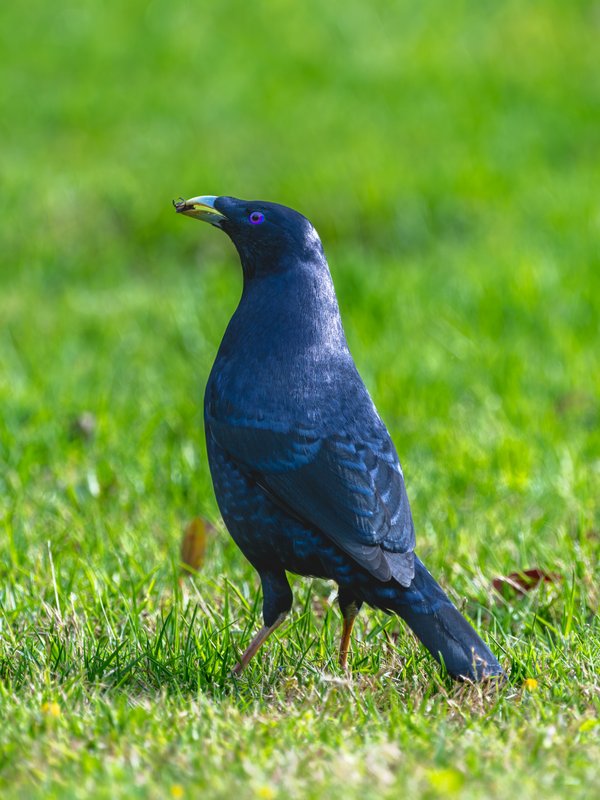
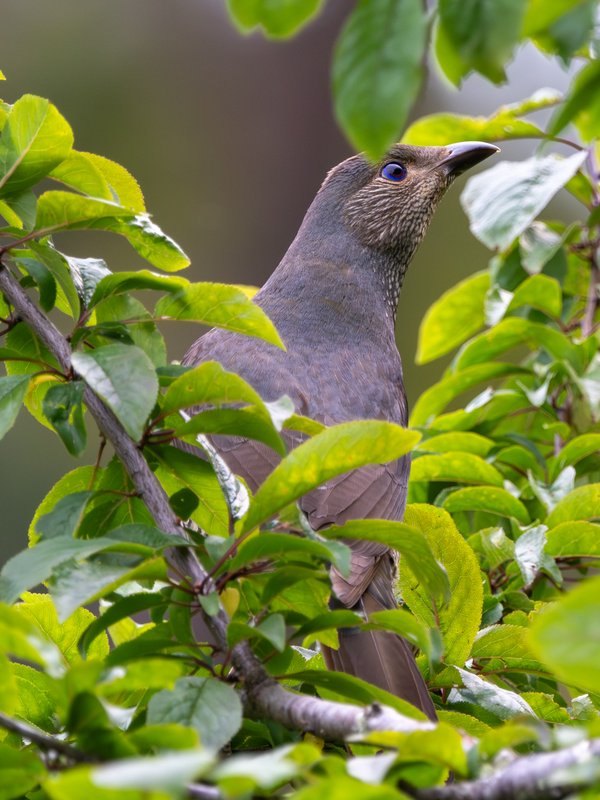
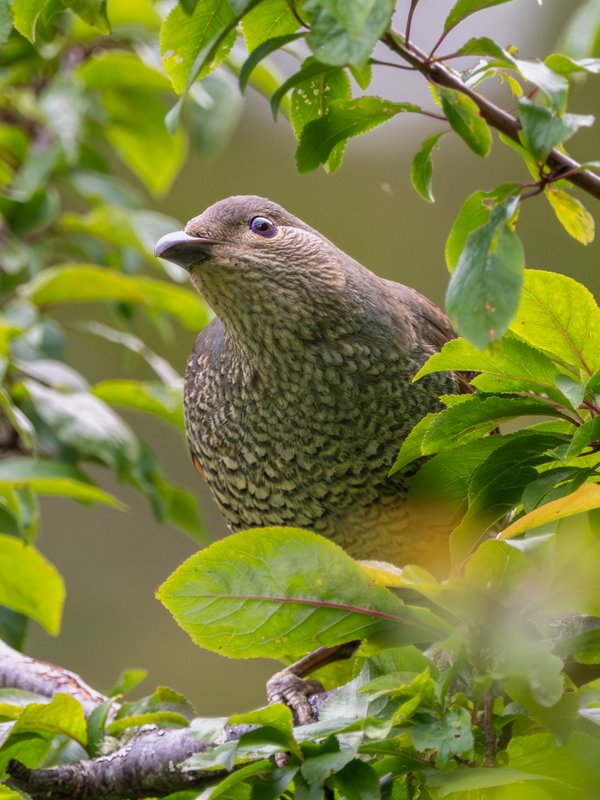
28-32 cm. Male: glossy blue-black; bill bluish white; eye blue; legs greenish white; tail short. Female: bill dark brown; eye blue; legs grey-brown; upperparts olive grey-green; wings/tail rufous-brown; underparts washed yellow buff, with fine brown scaly pattern on throat becoming bolder on breast/flanks. Immature: like female; third- and fourth-year males acquire green throat, with fine white spots, streaks; green zone across upperbreast. Bill progressively paler; adult plumage in sixth/seventh year. Singles, winter flocks of 20-50+, mainly 'green birds': robustly active; feeds on lilly pilly, crab apples, grapes, seedlings, blossom nectar. Hops vigorously; leaps between branches; flies strongly, wingtips upswept on each downstroke. Bower: avenue-type; layer of twigs on ground 5-7.5 cm deep. Two parallel arched walls of twigs form avenue c. 35 cm high, 45 cm long. Display-objects mostly blue or yellow: flowers, feathers, berries, glass, plastic, etc. Male seizes objects in bill, adopts trance-like poses, head low, eyes suffused lilac-pink, leaps sideways, flares wings/tail, utters wheezing, whirring notes; mates with females attracted.
- Similar Species
- Koel, Spangled Drongo, Green Catbird.
- Voice
- in ne. NSW-se. Q, dingo-like 'wee-ooo'; harsh scolds, wheezes, rattles.
- Habitat
- rainforests, eucalypt forests/woodlands; in autumn-winter, open woodlands, scrubs, paddocks, orchards, parks, gardens.
- Breeding
- Sept.-Jan.
- Nest
- saucer of sticks; lined with leaves; in fork, mistletoe, 2-16 m high; near active bower.
- Eggs
- 2 (1-3); cream; blotched, streaked brown, slate-grey.
- Range & Status
- (1) race minor: highlands of ne. Q, above c. 900 m, from Big Tableland (s. of Cooktown) to Seaview Ra., near Townsville, inland to Herberton Ra.; (2) race violaceus: coastal se. Aust., from Kroombit Tops NP (se. Q) to c. Benalla-Gembrook-Strzelecki Ras. (Vic.); casual Mt Macedon; (3) Otway Ras. (Vic.), sw. from c. Aireys Inlet. Common. Autumn dispersal to lowlands. Sedentary; seasonally nomadic.
- Distribution key to races
- 1. Ptilonorhynchus violaceus violaceus 2. Ptilonorhynchus violaceus minor