Eastern Whipbird
Psophodes olivaceus· 啸冠鸫科(3 photos)
Photographed In:
Locations:
Eastern Whipbird
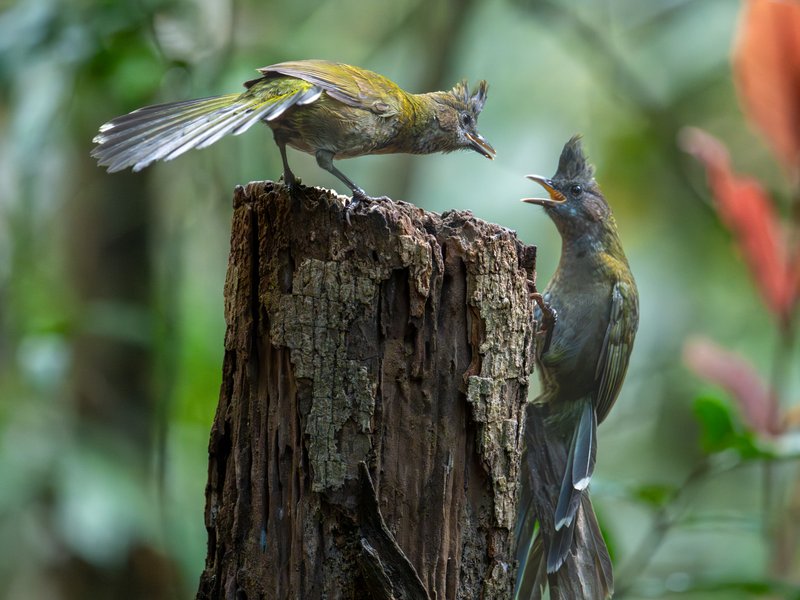
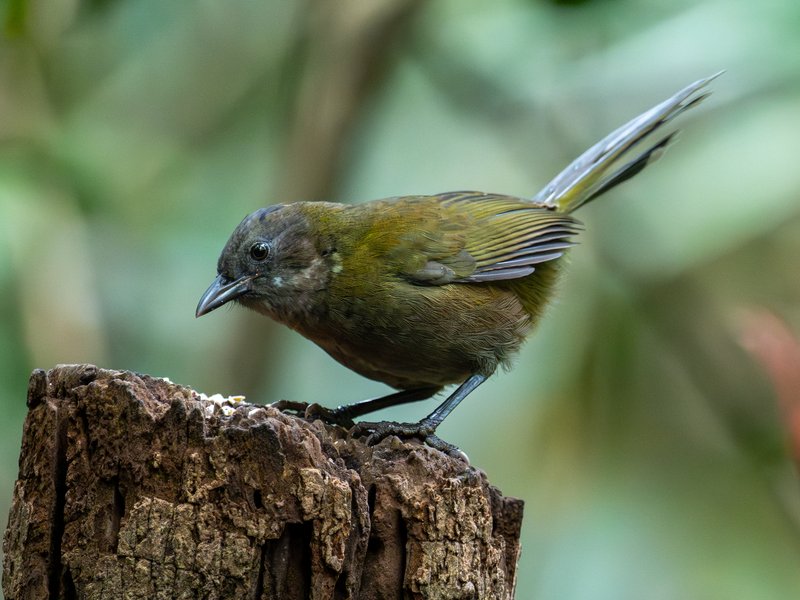
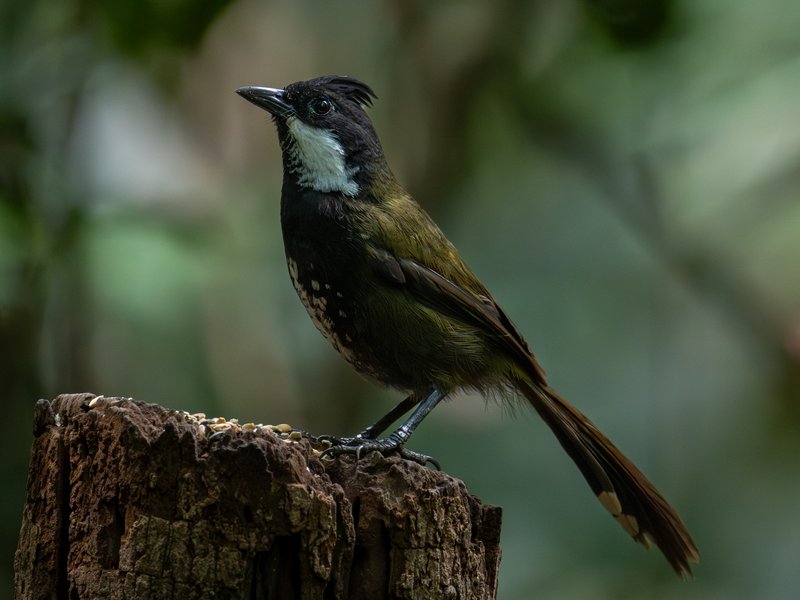
25-31 cm. Male larger. Noisy but secretive black and olive-green crested bird with white patch on side of throat; longish white-tipped fantail. Juvenile: dull olive-brown; no white on throat. Immature: browner; throat mottled whitish. Pairs, family parties: well known by whipcrack call. Hops briskly through undergrowth; probes rotten wood, throws leaves aside. Flight not strong; rarely sustained.
- Voice
- male's long, explosive whipcrack instantly answered by female with 'choo-choo', 'weece-weece', 'awee-awee' or 'witch-a-wee', differing locally; scolding chuckles; clucks, croaks.
- Habitat
- rainforests; wetter eucalypt forests/woodlands; coastal scrubs; blackberries, bracken, lantana, overgrown gardens.
- Breeding
- Aug.-Dec.
- Nest
- flattish cup of sticks, grass, bracken; lined with rootlets; 1-2 m+ in undergrowth, bracken.
- Eggs
- 2-3; blue-white/green; with black/blue-grey hieroglyphic markings.
- Range & Status
- coastal e. Aust., from n. and e. of Melbourne through e. and ne. Vic.; in NSW on and e. of Divide; in se. Q, inland to Bunya Mts NP-Toowoomba, n. to c. Byfield; coastal islands. Race lateralis: ne. Q, from Mt Spec to near Cooktown, inland to Atherton Tableland; mostly above 300 m, but to coast in parts. Common. Sedentary.
- Distribution key to races
- 1. Psophodes olivaceus lateralis 2. Psophodes olivaceus olivaceus