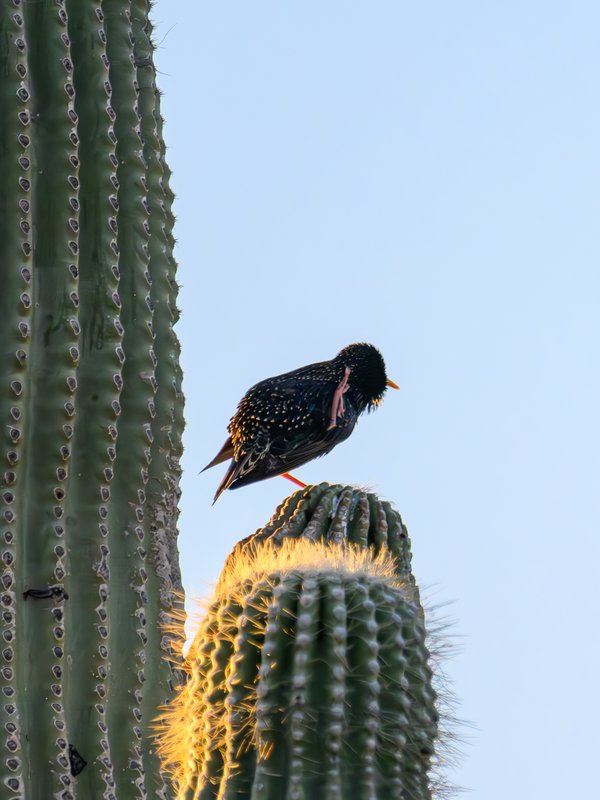
Common Starling
Sturnus vulgaris· 椋鸟科(5 photos)
Photographed In:
Common Starling
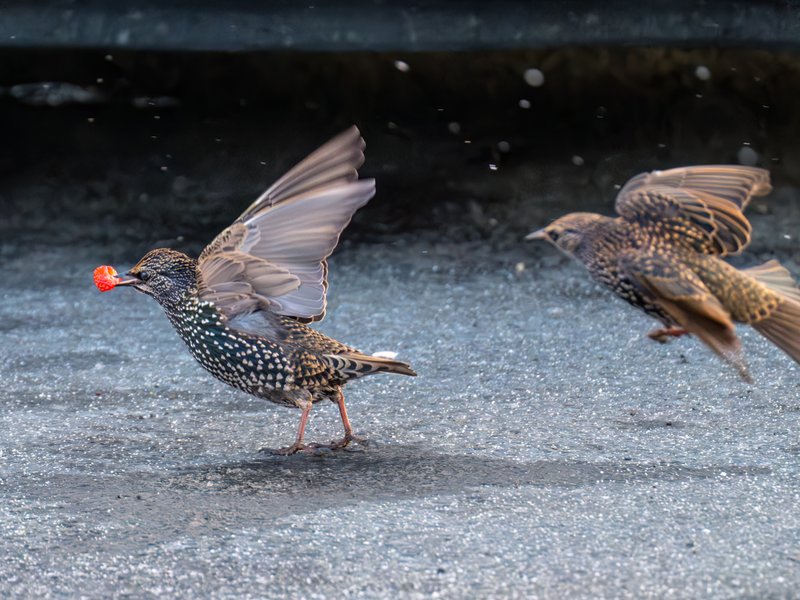
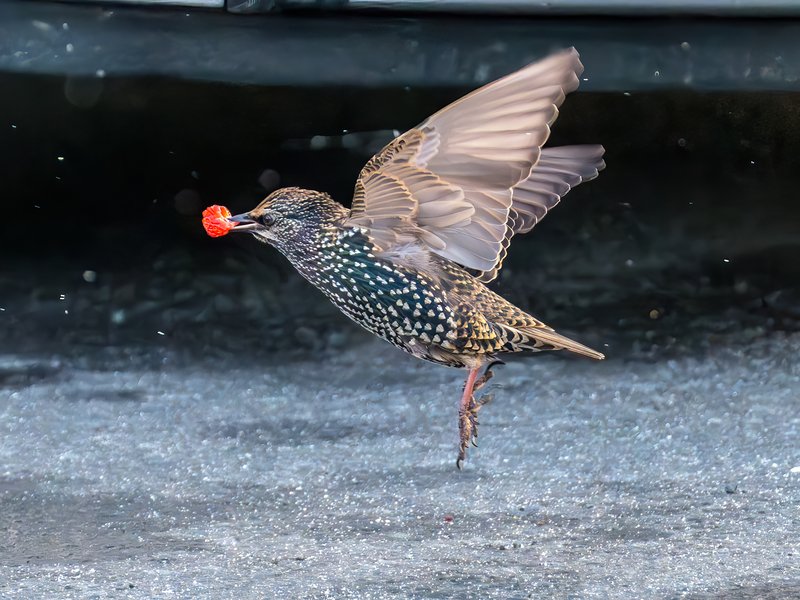
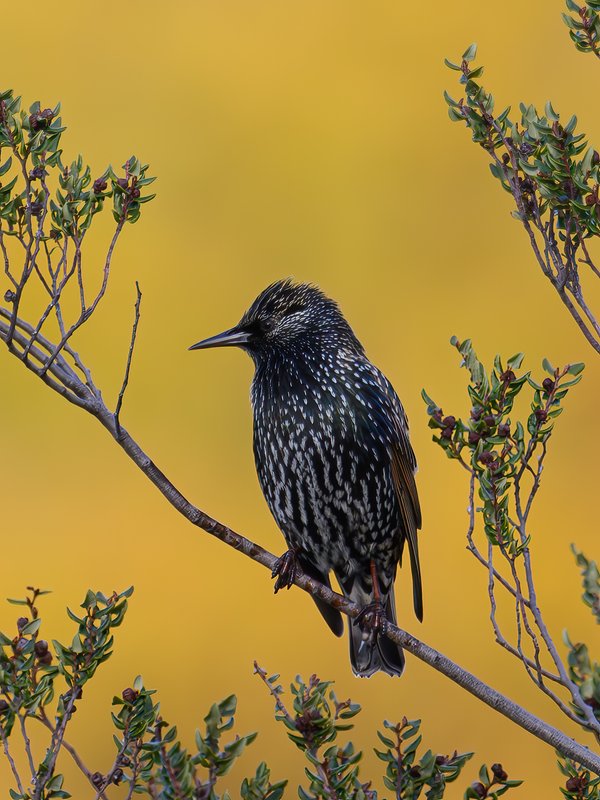
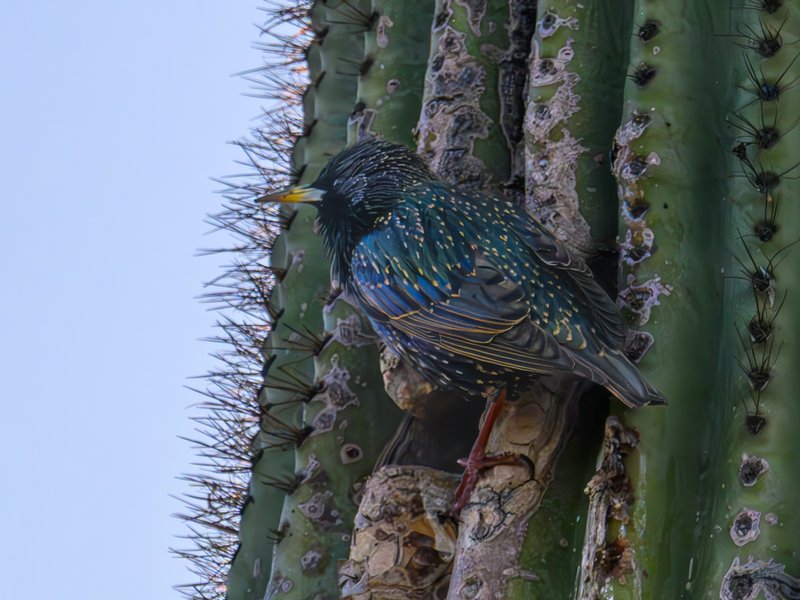
21 cm. Note longish fine, pointed bill and short tail; plumage blackish, glossed bronze-green and purple. In autumn, feathers tipped buffish, underparts tipped white, giving finely spotted appearance. By spring, tips worn, birds appear glossy black. Bill pale yellow in summer (base blue-black in male, pinkish in female); bill blackish in winter; legs red-brown. Immature: plain dull mouse-brown; whitish on throat; bill/legs blackish. Singles to large flocks. Runs about jerkily with quick jabs of open bill into soil in sewing machine action. Flight swift; flocks rise and fall. Conspicuous at roosts in reedbeds, street trees, city buildings. Sings from high vantage.
- Other name
- European Starling .
- Voice
- sings with slowly flapping wings: wheezes, clicks, rattles; loud descending whistle; mimics; harsh descending 'tcheer'; sharp 'dick!'.
- Habitat
- urban areas, pastoral country, mown grass, reedbeds, mudflats, beaches, islands, gardens, orchards.
- Breeding
- Aug.-Jan.
- Nest
- rough, cup of grass, straw, wool, feathers, leaves; in cavity, natural or man-made. Nests harbour vermin hazardous to human health.
- Eggs
- 4-5; plain blue-white.
- Range & Status
- native to Europe, n. and w. Asia. Established throughout se. Q, NSW, Vic., Tas., s. SA, w. to Bight coast. In n. NT, Q, s. WA, slowly expanding n. and w. Common; abundant. Dispersive; nomadic; migratory. Vagrant Lord Howe I.
- Distribution key to races
- 1. Sturnus vulgaris vulgaris