Flame Robin
Petroica phoenicea· 鸲鹟科(7 photos)
Flame Robin
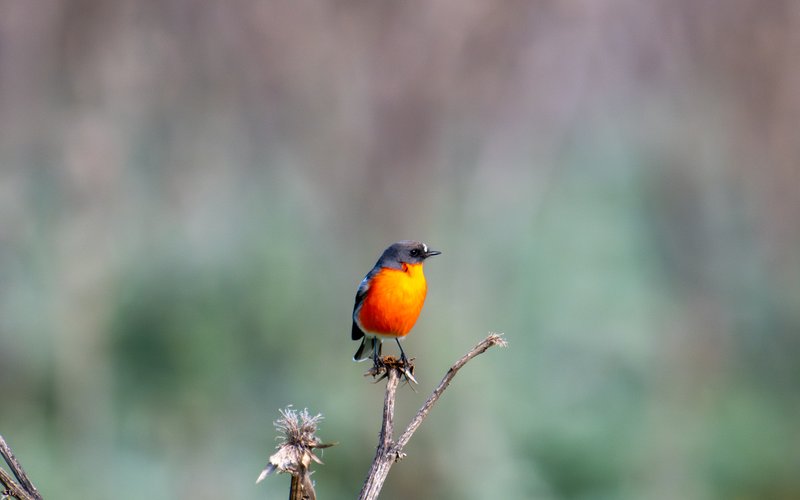
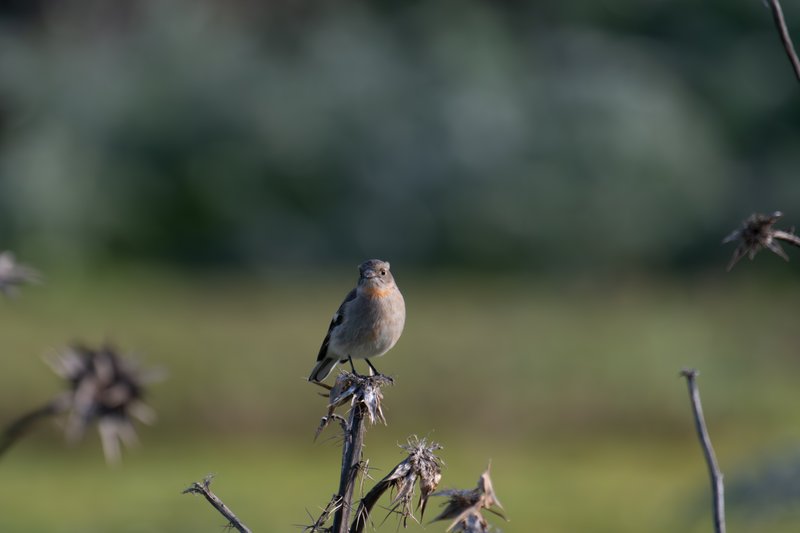
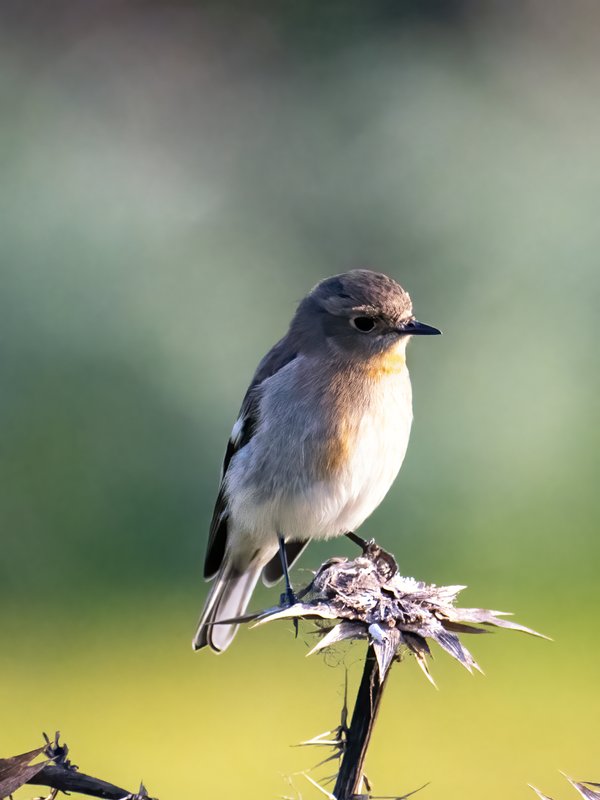
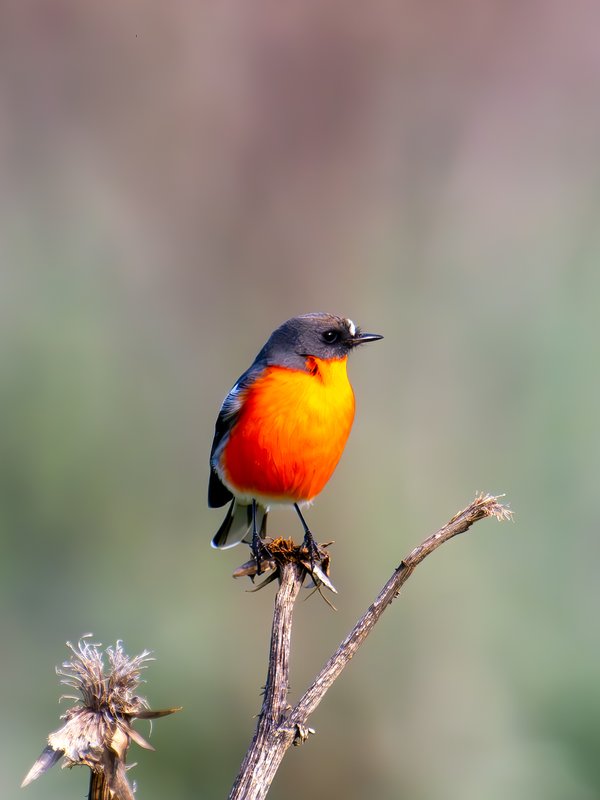
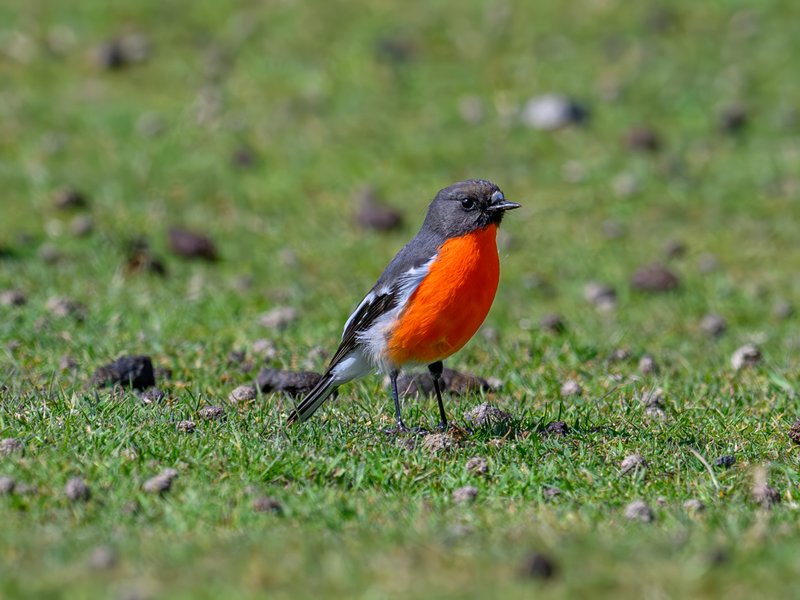
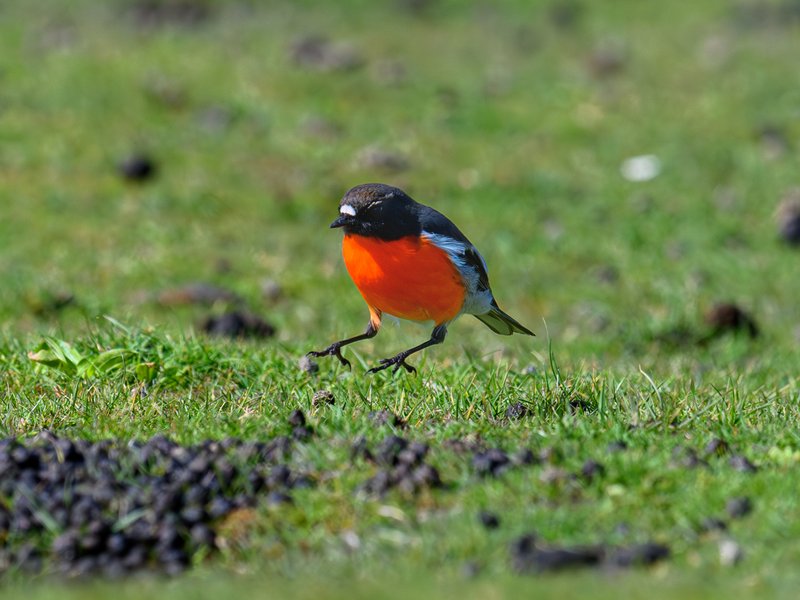
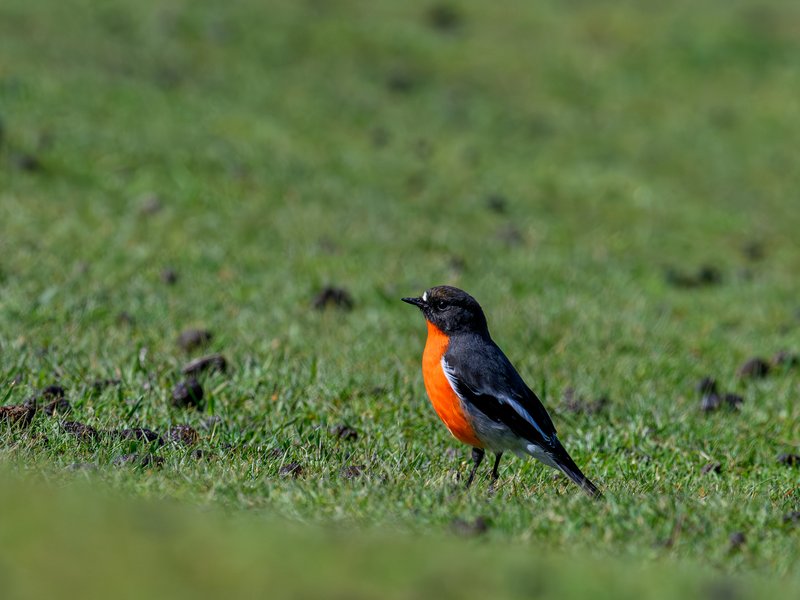
12.5-14 cm. Male: differs from male Scarlet Robin in dark grey upperparts with small white mark over bill; flame-red underparts start at throat. Female: pale brown above, small white mark over bill; buff-white broken-arrow wingmark; breast buff-brown; outer tail feathers white. Immature: like female; some are washed yellow-orange on breast. Pairs in spring-summer; open companies in autumn-winter; perches upright on thistles, stumps, fence-posts; bright males conspicuous; roosts communally in thickets, orchards.
- Similar Species
- Scarlet Robin, female: large white forehead patch; breast pale red.
- Voice
- high-pitched, lilting 'you may come, if you will, to the sea'. 'Brown birds': brief 'peep'.
- Habitat
- summer: forests, woodlands, scrubs, from sea level to c. 1800 m. Autumn-winter: open woodlands, plains, paddocks, golf courses, orchards, parks.
- Breeding
- Aug.-Jan.
- Nest
- bulky rough cup of bark, grass, spiders' web, moss, lichen or hanging bark strips; lined with fur, hair, plant down; in tree cavity, often charred; broken tree fork to 20 m; behind bark, overhung bank, rock fissure, upturned roots, woodpile, shed, mineshaft.
- Eggs
- 3-4; green-white; freckled, spotted yellow-chestnut, lilac, in zone.
- Range & Status
- se. Aust. and Tas.: breeds timbered foothills to high country of Gt Divide, from n. NSW tablelands to Vic., islands of Bass Strait, Tas., possibly se. SA. Widespread autumn-winter dispersal, w. to Kangaroo I. (SA), n. to Balranald-Hay (NSW); Chinchilla (Q). Sedentary in high country n. of Blue Mts (NSW). Some Tas. birds annually migrate across Bass Strait. Sedentary, dispersive, migratory.