Brolga
Brolga
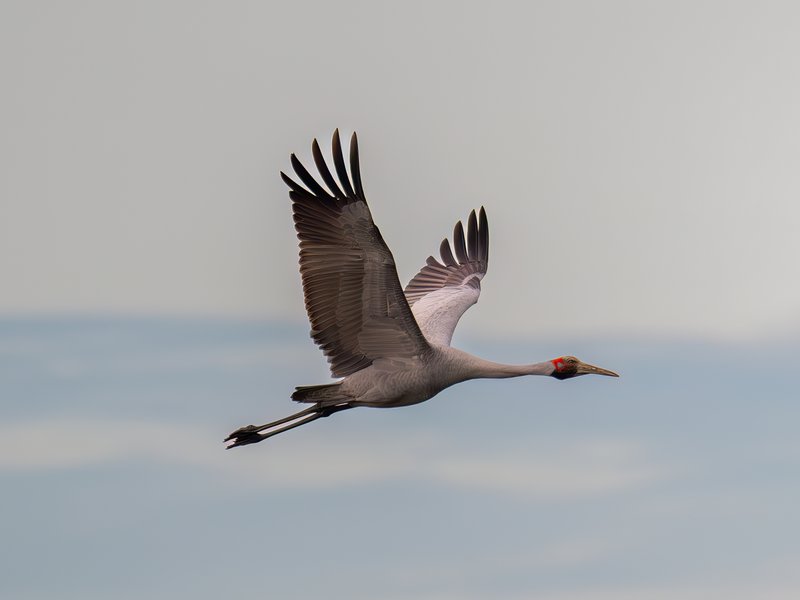
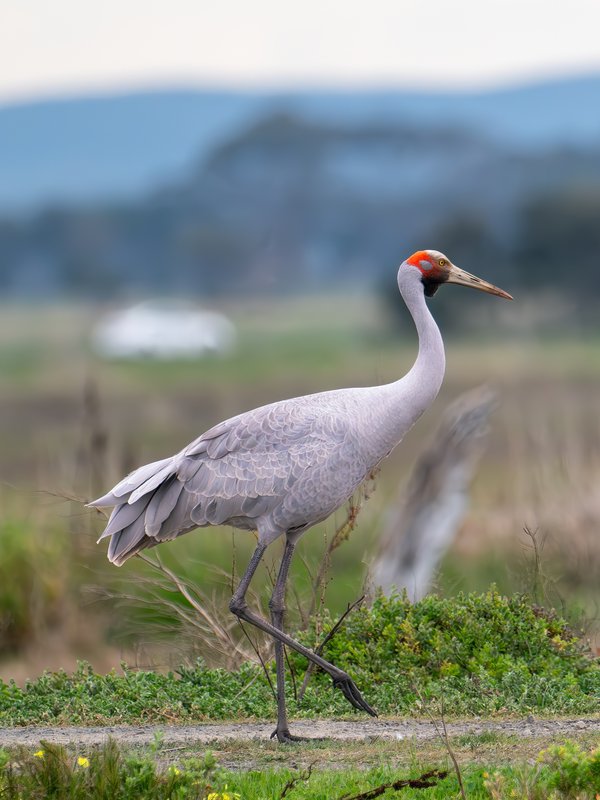
70 cm-1.3 m; span 1.7-2.4 m. Tall, mid-grey to silver-grey native crane with 'bustle' of feathers over rump; bill straight, horn-coloured; eye yellow; bare head pale grey on forehead and crown, pale red around rear of head, with distinctive blackish 'haired' dewlap under chin (larger in male); legs dark grey. Juvenile: bill brownish; head lightly feathered buff-grey. Immature: skin of rear of crown flesh-pink, later becoming pale orange; no dewlap. Pairs, parties to companies of many hundreds; in n. Aust, occasionally thousands. Wades in shallow, vegetated wetlands, plunges head underwater to dig for roots, corms; also in grasslands, claypans, crops, grain stubbles. Famed for 'dancing' displays. Flight distinctive: neck and legs extended, wingbeats slow, majestic, often with upward flick; all flight feathers dark. Post-breeding companies of hundreds, consisting of families and unmated birds, congregate annually in flocking areas, often remote from nest sites.
- Other name
- Australian Crane; Native Companion. Note that White-faced Heron is incorrectly called a 'blue crane'.
- Similar Species
- Sarus Crane: larger; no dewlap; deeper scarlet extends down neck; legs pink; in flight, only primaries darker than rest of wing.
- Voice
- far-carrying whooping trumpet, uttered in flight or when standing; mated pairs point bills skyward in antiphonal duets, ending in staccato cacophony; male lifts wings in 'tent' while calling; also yelps, hoarse staccato croaks. Calls at distance confusable with Channel-billed Cuckoo.
- Habitat
- well-vegetated shallow freshwater wetlands; small, isolated swamps in eucalypt forests; floodplains, grasslands; paddocks, ploughed fields, irrigated pastures, stubbles, crops; desert claypans; bore drains; environs of towns in n. and inland Aust.; sometimes tidal areas, mangroves, beach wastes. Roosts at night in shallow, bare swamps, fresh or saline.
- Breeding
- July-March, s. Aust.; Sept.-June, n. Aust.
- Nest
- usually of grasses, plant stems, sticks; on small island in wetland or standing in shallow water; eggs occasionally laid on bare ground.
- Eggs
- usually 2; white, often spotted and blotched brown and lavender.
- Range & Status
- n. and e. Aust.; vagrant NZ. Now sparse, uncommon or rare, except in n. Aust., where still abundant. Locally, seasonally migratory; dispersive. Also s. PNG.