Royal Spoonbill
Platalea regia· 鹮科(2 photos)
Locations:
Royal Spoonbill
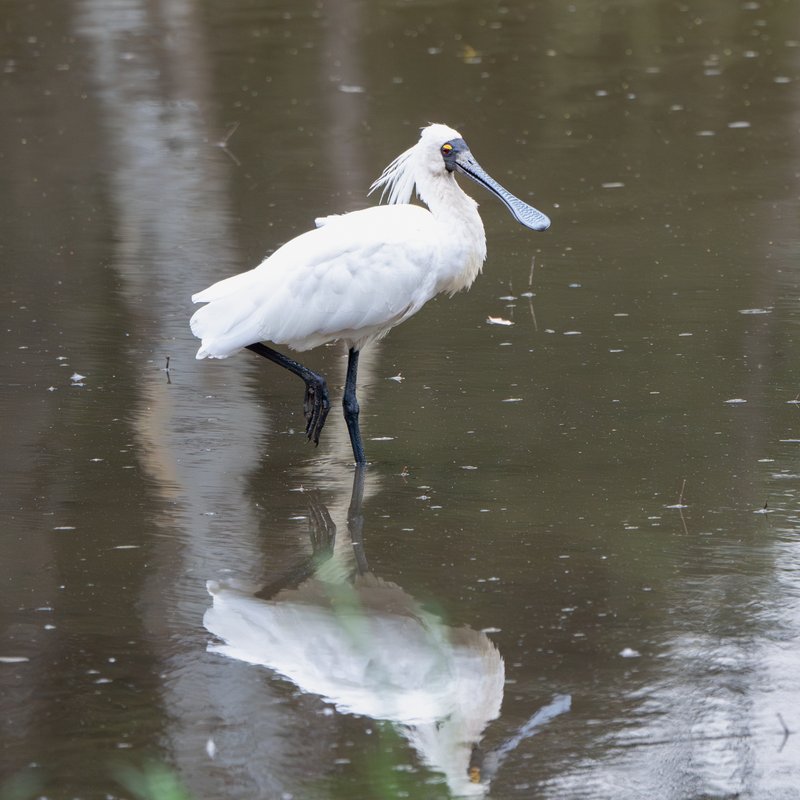
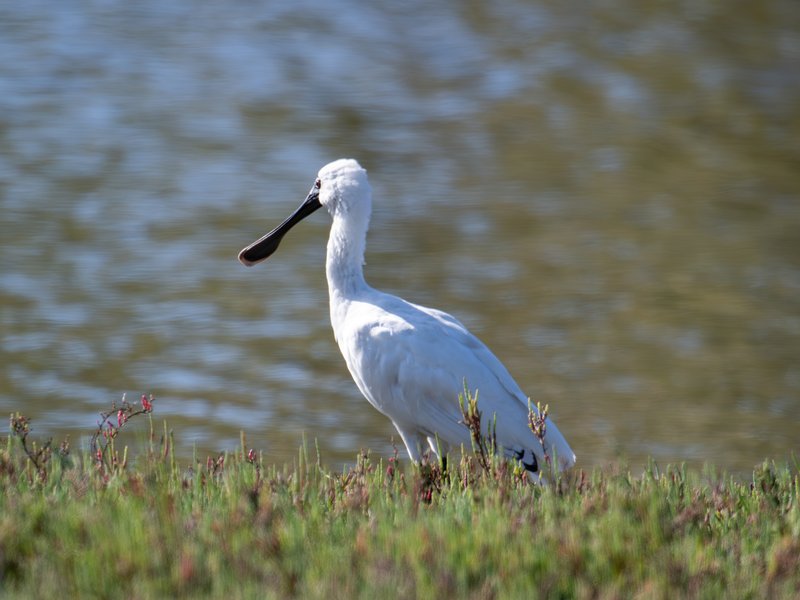
74-80 cm. Usually spotless white bird with distinctive black spoon-bill and black legs. Breeding Plumage: small red mark along black forehead; rich yellow mark above each eye and conspicuous flowing white head plumes; breast lightly washed buff. Non-breeding: lacks coloured markings and head plumes; retains black bill and legs. Juvenile: bill shorter; tips of flight feathers black. Singles; small to occasional large flocks in suitable habitat. Flies with steady wingbeats; silhouette rather flat, with extended neck inclined upwards, legs extended. Flocks fly in echelons, occasionally soar high.
- Similar Species
- Yellow-billed Spoonbill: always has whitish bill, greyer legs.
- Voice
- usually silent; near nest, soft purring grunts.
- Habitat
- larger shallow waters, inland and coastal: well-vegetated shallow freshwater wetlands; floodplains, billabongs, sewage ponds, irrigation storages, tidal mudflats, estuaries, saltmarshes, saltfields, mangroves, islands. Visits farm dams less frequently than Yellow-billed.
- Breeding
- Sept.-Nov. in s.; Feb.-April in n.
- Nest
- shallow platform of sticks; in small, loose colony, often with other waterbirds, usually over water in heads of trees such as paperbarks, mangroves; also in lignum, cumbungi.
- Eggs
- 3 (4); dull white, spotted yellow-brown or red-brown.
- Range & Status
- e. and n. Aust., except waterless, treeless and densely vegetated regions; scarce in s. WA; rare nomadic visitor, Tas.; vagrant Lord Howe and Norfolk Is. Sedentary; dispersive. Vagrant Indonesia, PNG; self-introduced NZ.