Australian Rufous Fantail
Rhipidura rufifrons· 扇尾鹟科(4 photos)
Australian Rufous Fantail
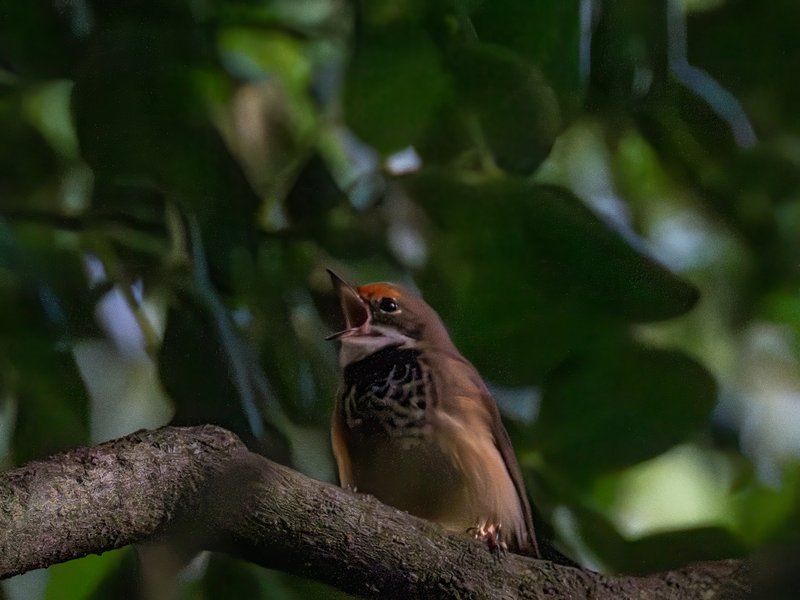
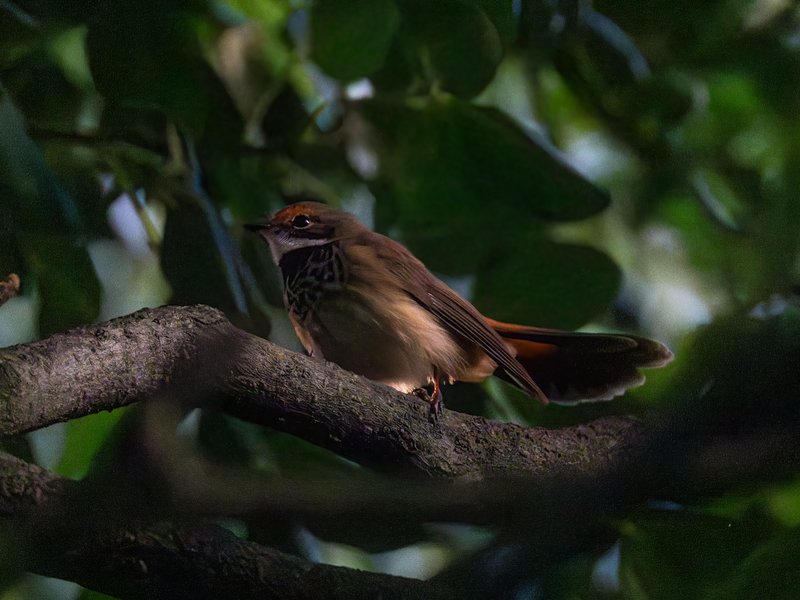
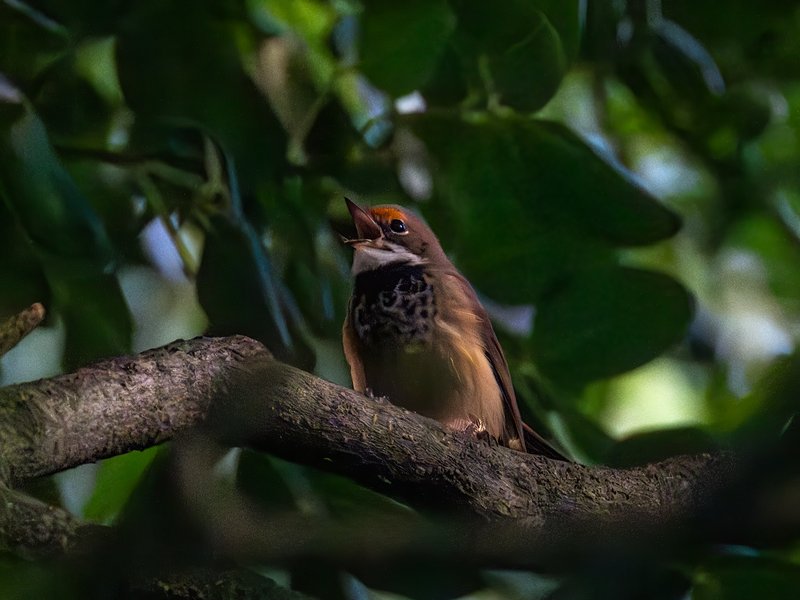
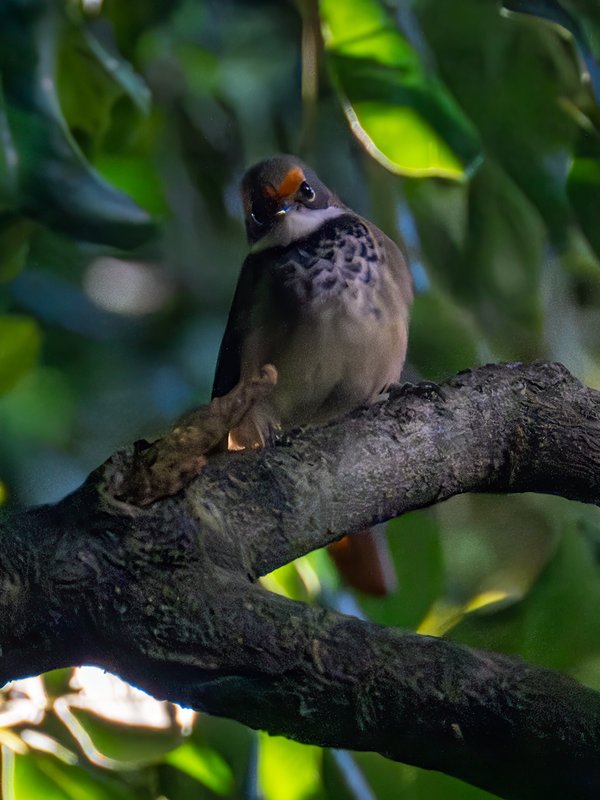
15–16.5 cm. Looks like darting flame with its fiery rufous rump/tail. Forehead/eyebrow orange–rufous; white breast crossed by band of blackish spots. Immature: duller; wing feathers edged rufous. Singles, pairs, migrant parties: less active than Grey Fantail, forages lower in undergrowth. Foraging flights quick, jerky; gleans from leaves, branches, ground, logs.
- Voice
- squeak, accelerating into brisk, descending squeaky song, higher-pitched than Grey.
- Habitat
- undergrowth of rainforests/wetter eucalypt forests/gullies; monsoon forests, paperbarks, sub-inland and coastal scrubs; watercourses; parks, gardens. On migration, farms, streets, buildings.
- Breeding
- Oct.–Feb.
- Nest
- neat, fawn-coloured, tailed cup of bark strips, moss, grass, spiders’ web; in shaded fork, low to 5 m+.
- Eggs
- 2–3; glossy; stone-coloured, speckled brown, lavender–grey.
- Range & Status
- coastal e. Aust., and islands. Breeding migrant (Oct–April) to se. Aust., mostly on and coastward of Gt Divide, w. to Grampians NP–sw. Vic.; casual w. to Mt Lofty Ras.; vagrant Tas. Extends well inland in river red gum forests of Murray Valley/Riverina–Hay–Dubbo (NSW); Darling Downs (Q). Altitudinal migrant in ne. NSW–e. Q, leaving mountain rainforests March–April, returning Sept.–Oct. Regular autumn–winter migrant to Trans-Fly region of PNG. Also resident Solomon Is., Micronesia.
- Distribution key to races
- 1. Rhipidura rufifrons intermedia 2. Rhipidura rufifrons rufifrons