Chestnut-breasted Mannikin
Lonchura castaneothorax· 梅花雀科(3 photos)
Photographed In:
Locations:
Chestnut-breasted Mannikin
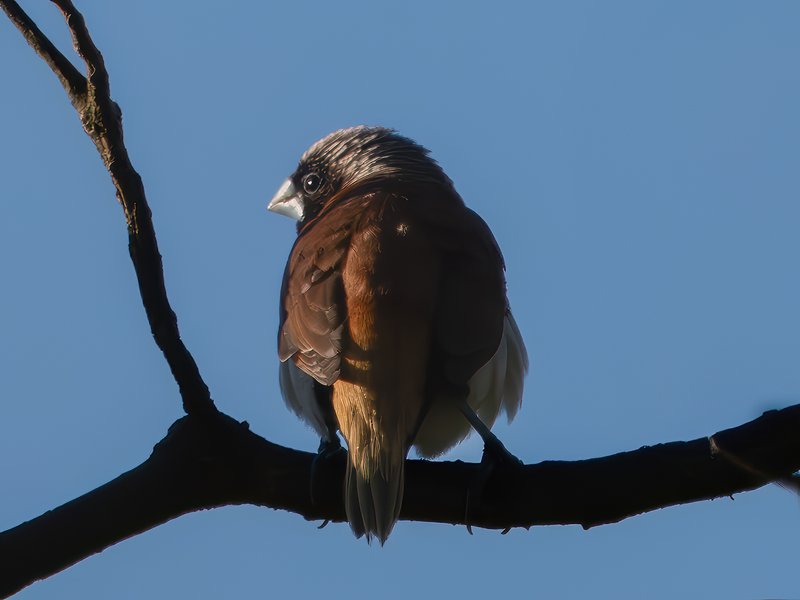
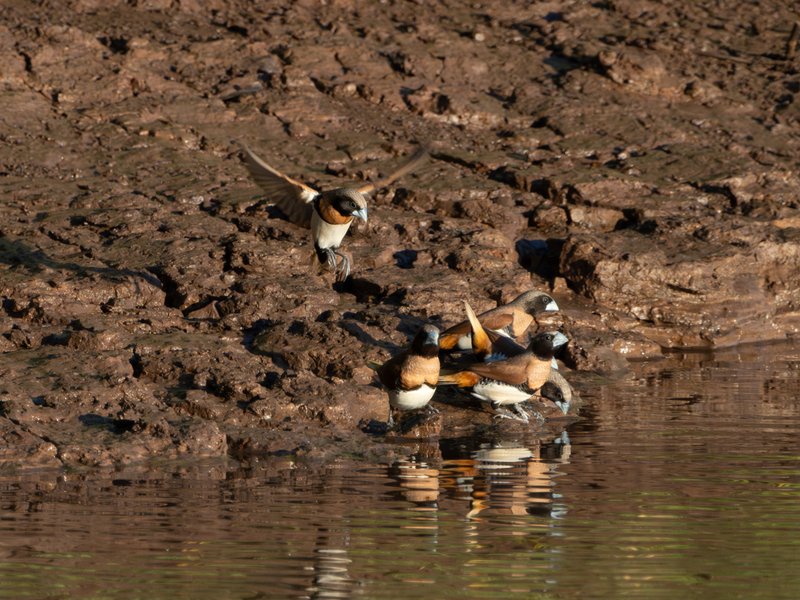
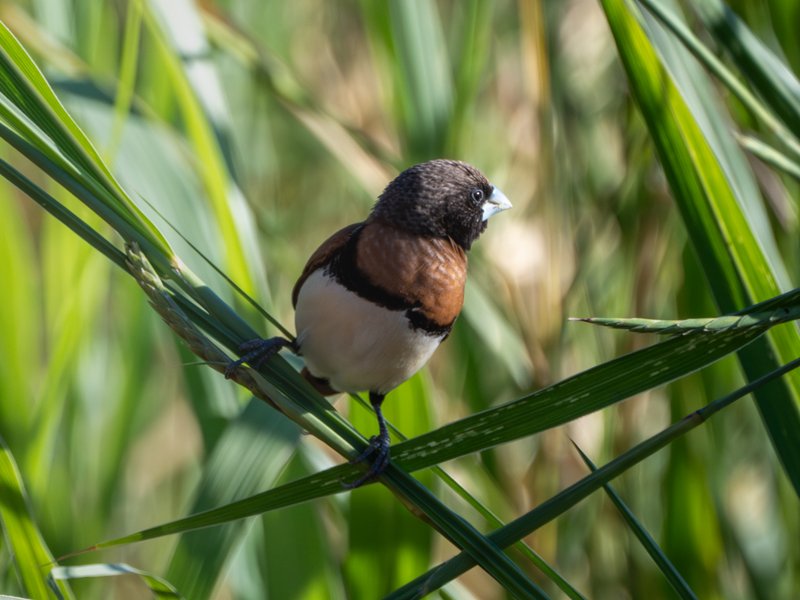
11.5-12.5 cm. Robust silver bill/black face; upperbreast chestnut, separated from white underparts by black band; flanks barred black; undertail-coverts black; rump/tail yellow-chestnut. Female: paler, duller. Immature: bill darker; underparts plain brownish buff; tail ashy-brown. Pairs, flocks, imms. predominating. Feeds on tall seeding grass, rice, sorghum, millet; roosts in reeds, ricefields; takes flying insects. Normal flight undulating, but large flocks fly fast with swift turns. Forages, roosts, interbreeds with Yellow-rumped Mannikin.
- Other name
- Chestnut-breasted Munia
- Voice
- bell-like tinkling.
- Habitat
- grasslands near water; swamp vegetation, coastal heaths, mangroves, wastelands, roadsides, lantana thickets, canefields, ricefields, sorghum, millet.
- Breeding
- Nov.-April; any month.
- Nest
- small, globular; of green/dry grass; lined with grass, plant down; low in long grass, reeds, crop, shrub, bamboo.
- Eggs
- 5-6; white, oval.
- Range & Status
- from Kimberley (WA), Top End (NT), e. on Gulf coast to C. York Pen. (Q), s. on e. coast to Shoalhaven R. (NSW); inland to Richmond-Carnarvon Ras. (Q); Glen Innes-Gloucester (NSW). Sedentary, seasonally nomadic. Feral colonies from aviary escapes reported elsewhere. Also PNG. Introduced New Cal., Tahiti.
- Distribution key to races
- 1. Lonchura castaneothorax castaneothorax