Spotted Harrier
Circus assimilis· 鹰科(2 photos)
Photographed In:
Locations:
Spotted Harrier
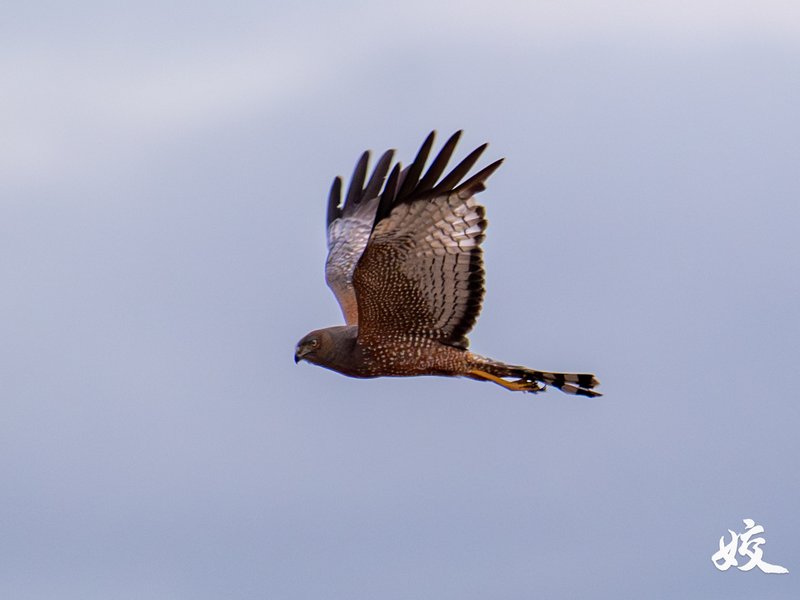
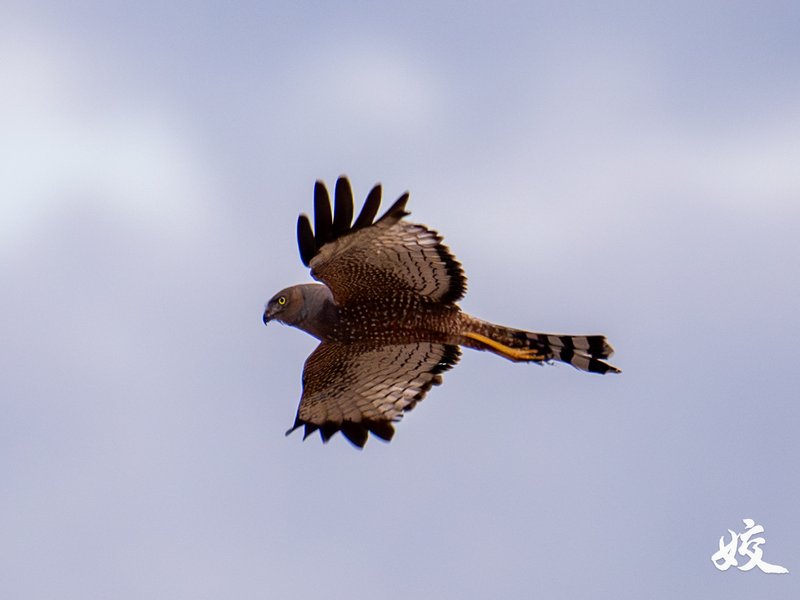
50-61 cm; span to 1.2 m. Smoke-grey above; facial disc chestnut, outlined in grey; underparts chestnut, plentifully spotted white; long, grey tail, with four or five bold black bands and broad black tip; legs long, yellow.
Singles or pairs: flies, glides slowly and low over grassland and crops, on broad, upswept wings, head downpointed; note long, boldly barred, trough-shaped tail, bluntly wedge-shaped at tip. Hovers low with wings slowly beating, tail fanned, long legs trailing. Soars high, often lowers legs; overhead, note contrast of black, unbarred spread 'fingertips' and white undersides of flight feathers, regularly barred black. Unlike other harriers, perches and nests in trees.
- Other name
- Smoke Hawk.
- Juvenile
- very different - reddish buff; facial disc outlined with blackish streaks; buff mark on nape; upperparts mottled and barred black; cluster of buff crescents on 'shoulder' becomes a pale upperwing-band in flight. Flight-feathers black; rump mottled paler; tail banded dark grey; underparts paler buff, finely streaked blackish on breast, with broader red-brown streaks below. N.B. juvs. moulting into imm. plumage briefly have whitish buff body, with head and neck heavily streaked dark brown, giving a hooded appearance (Marchant & Higgins, 1993).
- Immature
- grey upperparts with buff feather margins; underparts chestnut, streaked paler; tail dark grey, barred darker.
- Similar Species
- Swamp Harrier: old, pale males (some with grey hoods) confusable, but rump always white; most have unbarred grey tails (but barred wingtips).
- Voice
- at nest 'a sharp, high-pitched "wik wik wik" (Hollands, 1984).
- Habitat
- grassy plains, crops and stubblefields; bluebush, saltbush, spinifex associations; scrublands, mallee, heathlands; open, grassy woodlands.
- Breeding
- Aug.-Dec. or Feb.-April.
- Nest
- usually in live tree.
- Eggs
- 3-4; white or blue-white, smeared, blotched rusty.
- Range & Status
- mostly inland and sub-inland e. and se. Aust. and coastal WA. Dry season visitor to coastal n. Aust.; summer-autumn (and irregular winter) visitor to coastal s. Aust. Vagrant Tas. Nomadic; irruptive in response to local abundance of rodents, quail, etc. Sedentary; dispersive; irruptive; part-migratory.