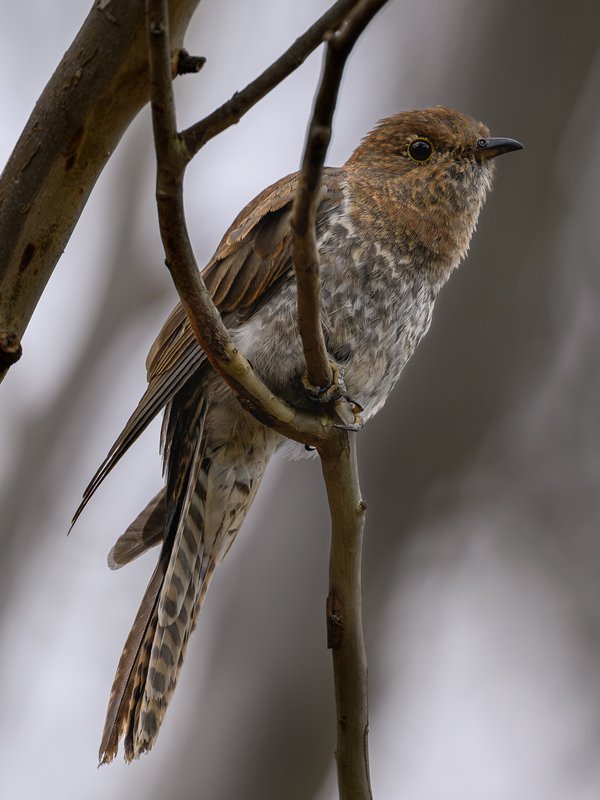
Fan-tailed Cuckoo
Cacomantis flabelliformis· 杜鹃科(1 photos)
Fan-tailed Cuckoo
25-27 cm. Slate-grey above; throat and upperbreast pale to warm cinnamon-buff; underparts paler; tail slim, infrequently fanned; feathers wavily notched white on both edges. Eye brown; eye-ring yellow; legs/feet olive-yellow. Female: duller, greyer below. Juvenile: differs - lustrous rufous-brown above; underparts dull white, finely mottled, barred, black, grey and brown. Singles, pairs: sits motionless, calling from high branches, stumps, overhead wires; posture upright, tail downpointed. Flight easy, undulating; note pale wingbar; tilts tail on alighting.
- Similar Species
- Brush Cuckoo: plainer; eye-ring and feet grey; less notching on (squarer) tail feathers. Brush Cuckoo juvenile: pattern of upperparts more variegated than imm. Fan-tailed; paler below with clearer fine bars. Chestnut-breasted Cuckoo: darker, richer-coloured; note range and calls.
- Voice
- sad, leisurely, downward trill, 'pee-eeer'; also slow, rising, quiet, 'get-woorrk'. Female: brisk, shrill 'too-brrreeet'.
- Habitat
- denser than Pallid: rainforest, river red gum forests, mangroves, open woodland, paddocks, roadsides, orchards, gardens.
- Breeding
- July-Jan.
- Eggs
- 1; mauve-white with red/brown spots at large end; deposited in domed nest of fairy-wren, thornbill, scrubwren; less often in cup nest of honeyeater, flycatcher.
- Range & Status
- e. Aust. and sw. WA, from C. York (Q) to Tas. and s. Eyre Pen. (SA), inland to c. Cunnamulla (Q)-Bourke (NSW); also s. WA., e. along Bight coast, and n. to Shark Bay. In se. Aust. and sw. WA, inland autumn migration. Common; part-migratory. Also Fiji, PNG, Aru Is.; vagrant NZ.