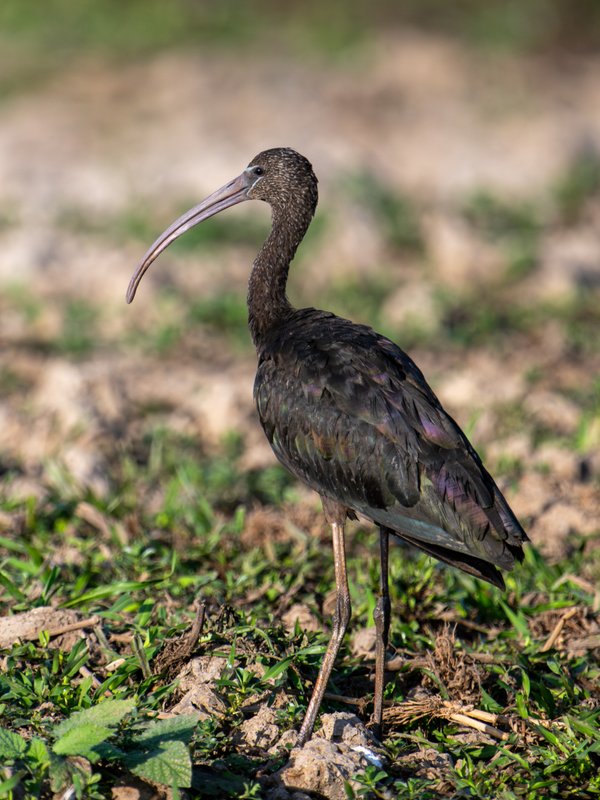
Glossy Ibis
Plegadis falcinellus· 鹮科(1 photos)
Glossy Ibis
48-61 cm; span c. 90 cm. Small dark ibis: at a distance looks like a black curlew.
- Breeding
- rich purplish brown, glossed bronze or green; distinctive white line borders facial skin. Non-breeding: browner and duller; facial border less bold; head and neck streaked white. Juvenile: bill shorter, straighter; white mark on crown; plumage browner; pale mottlings on head and neck. Flocks of dozens to hundreds: feeds in shallow wetlands. Flies in long, swift, undulating lines, Vs, or bunches; often dashes about erratically, with sudden glides. Flocks can resemble Little Black Cormorants, but note drooping bills, necks and legs.
- Voice
- long, harsh, crow-like croak; grunts.
- Habitat
- well-vegetated wetlands, wet pastures, ricefields, floodwaters, floodplains; brackish or occasionally saline wetlands, mangroves, mudflats; occasionally dry grasslands.
- Breeding
- Oct.-Dec. in s. Aust.; Feb.-April in n.
- Nest
- shallow platform of leafy sticks; in colony (some very large) over water in trees (incl. mangroves), shrubs, cumbungi, lignum or reeds, trampled into platforms. Often with other waterbirds.
- Eggs
- 3-6; dull, deep green-blue.
- Range & Status
- n. and e. Aust., most numerous in n.; movements often erratic but fairly regular spring-summer breeding migrant to s. Murray-Darling region (NSW, Vic.) and adjacent se. SA. Most breeding occurs in this region, Macquarie Marshes (NSW) and in s. Q. Many apparently move n. in autumn, and range far inland after good rains. Non-breeding visitor to sw. WA and Tas. Migratory, nomadic and irruptive. Cosmopolitan; vagrant NZ.