Pink Cockatoo
Cacatua leadbeateri· 凤头鹦鹉科(6 photos)
Photographed In:
Locations:
Pink Cockatoo
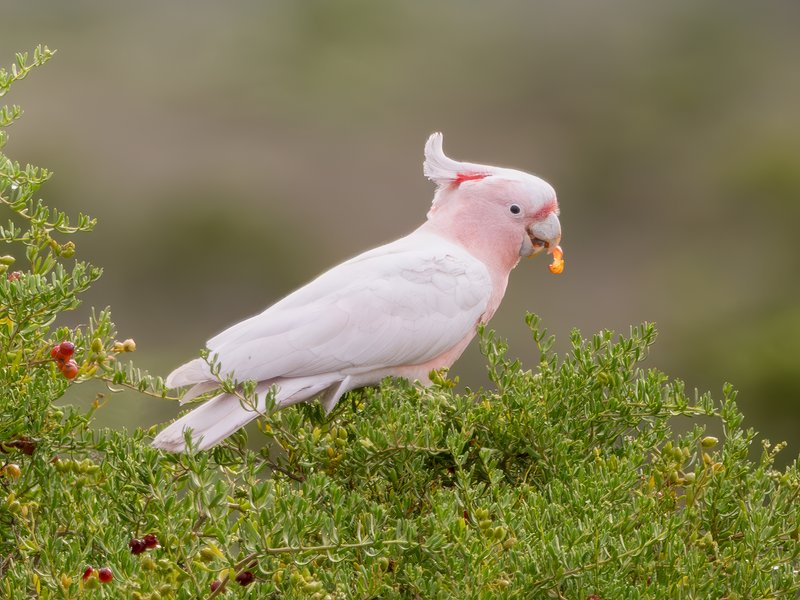
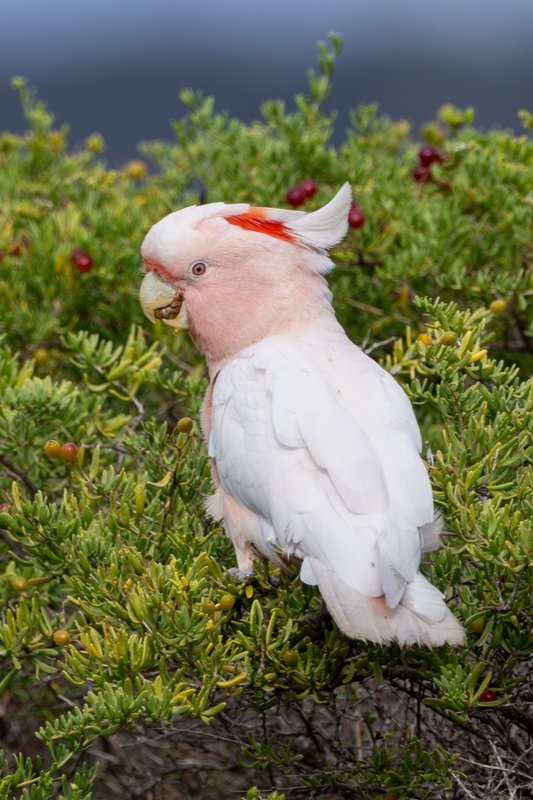
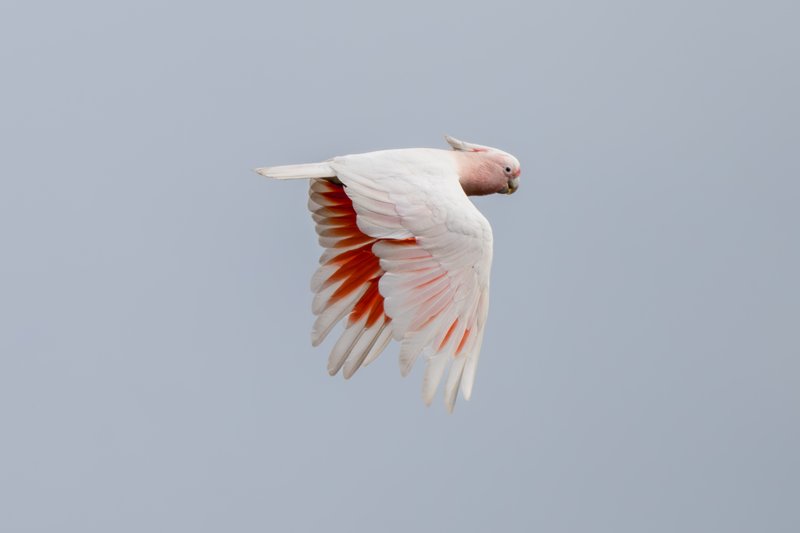
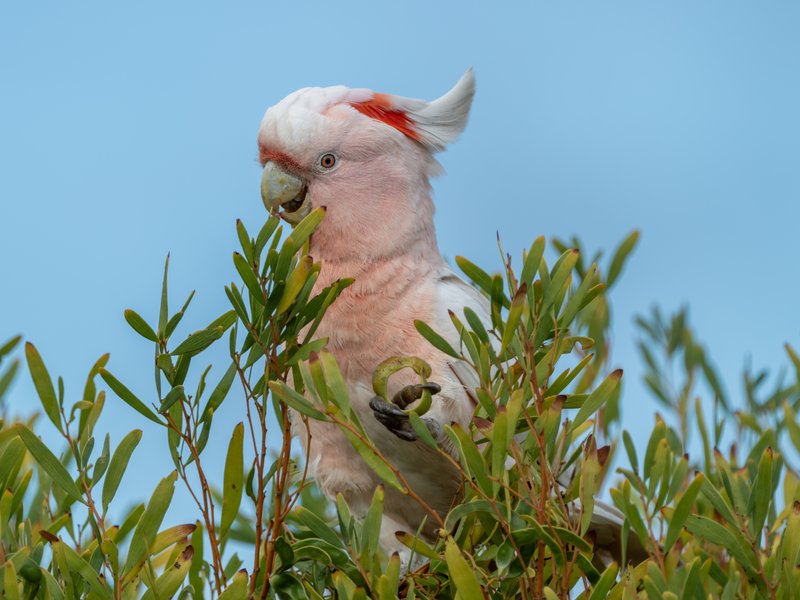
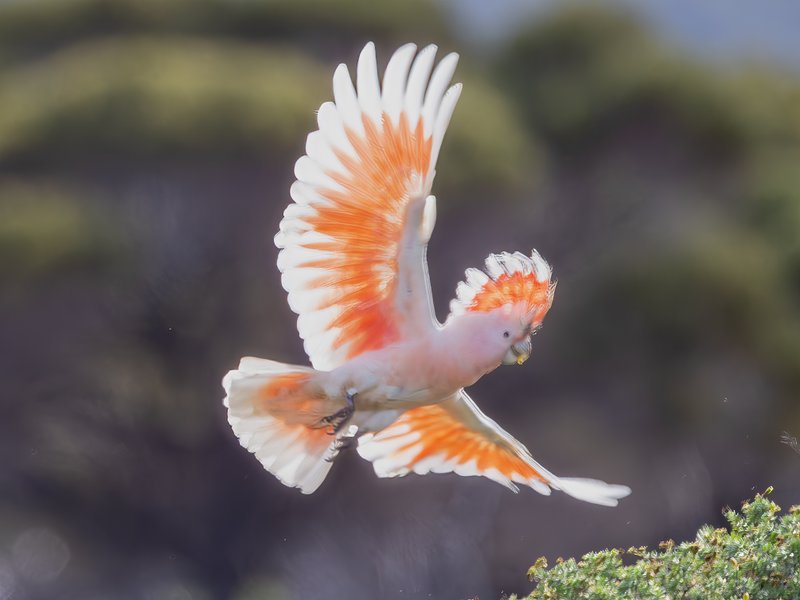
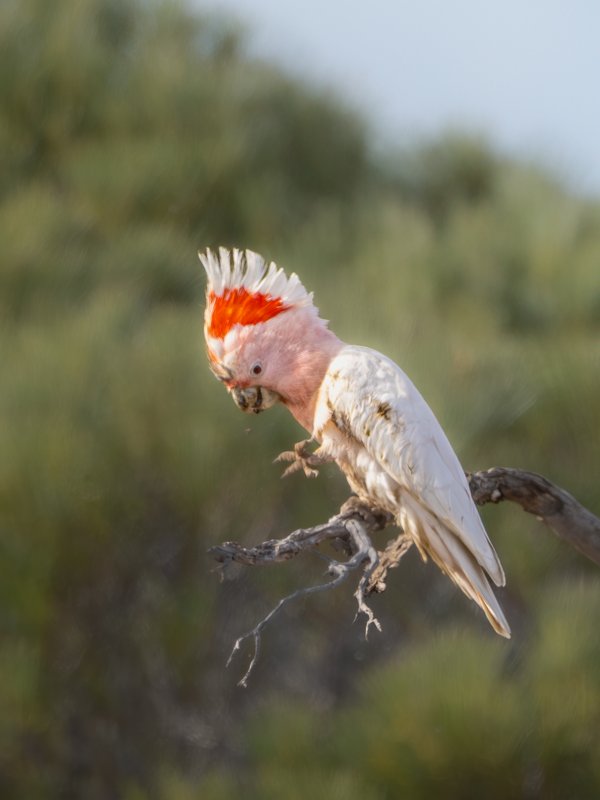
35-40 cm. Beautiful pink-washed white cockatoo with whitish bill; upswept whitish crest spreads in bands of scarlet and yellow. Male: eye dark brown. Female: eye red; crest has broader yellow band (except in WA race mollis, which has little or no yellow in crest). Pairs to family parties; flocks of several hundreds where food abundant. Feeds on ground, on seeds of small melons; in foliage on seeds, e.g. of acacias, saltbush, native cypress. Wingbeats shallow, fluttering and irregular, with glides on downcurved wings; note sunset-pink underwing and undertail. Often with Galahs, Little Corellas.
- Other name
- Major Mitchell; Pink Cockatoo.
- Similar Species
- Sulphur-crested Cockatoo: whiter; bill black; crest yellow; underwings washed yellow. Little and Long-billed Corellas.
- Voice
- distinctive stuttered, quavering, falsetto cry; in alarm, harsh screeches.
- Habitat
- near water on timbered watercourses; surrounding grasslands, gibber, saltbush; mulga and other acacias; stands of native cypress, casuarinas; larger mallee eucalypts with suitable nest-hollows; mallee associated with riverine woodlands, e.g. of black box, coolibahs, river red gums.
- Breeding
- Aug.-Dec. in s. Aust.; May-Aug. in Q; April-June in n. Aust.
- Nest
- on decayed debris, bark fragments, pebbles; in tree-hollow.
- Eggs
- 2-4; white, oval.
- Range & Status
- arid and semi-arid interior Aust., from inland Q, NSW and Vic., to w. Coast (WA) and Gt Aust. Bight. Widespread, but much less abundant than other white cockatoos. Sedentary; locally nomadic.
- Distribution key to races
- 1. Lophochroa leadbeateri leadbeateri 2. Lophochroa leadbeateri mollis