Superb Fairywren
Malurus cyaneus· 细尾鹩莺科(11 photos)
Superb Fairywren
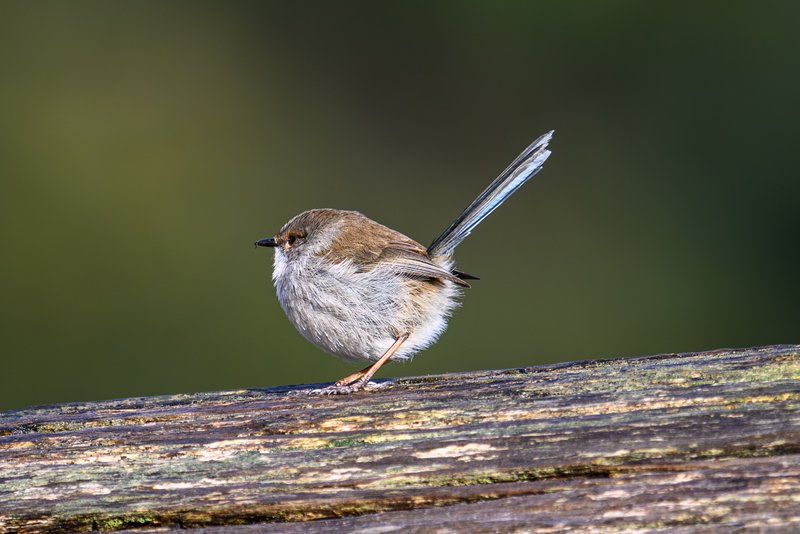
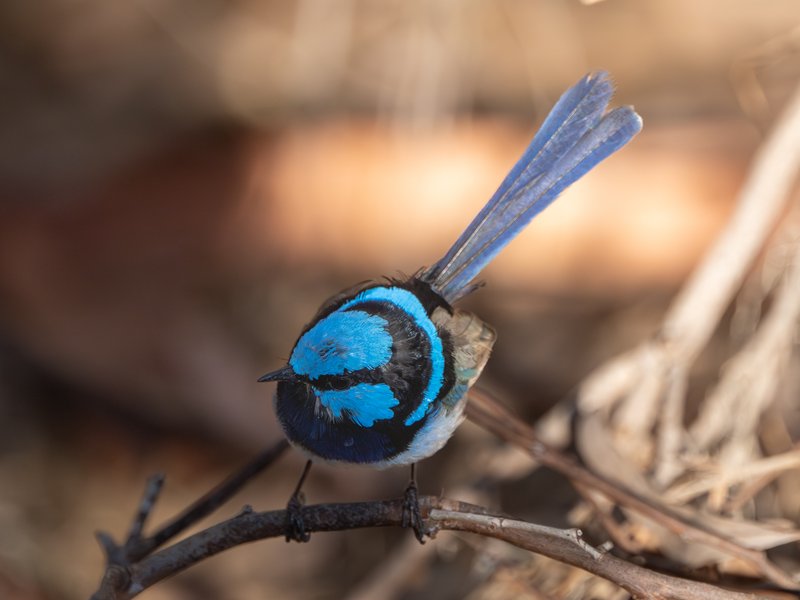
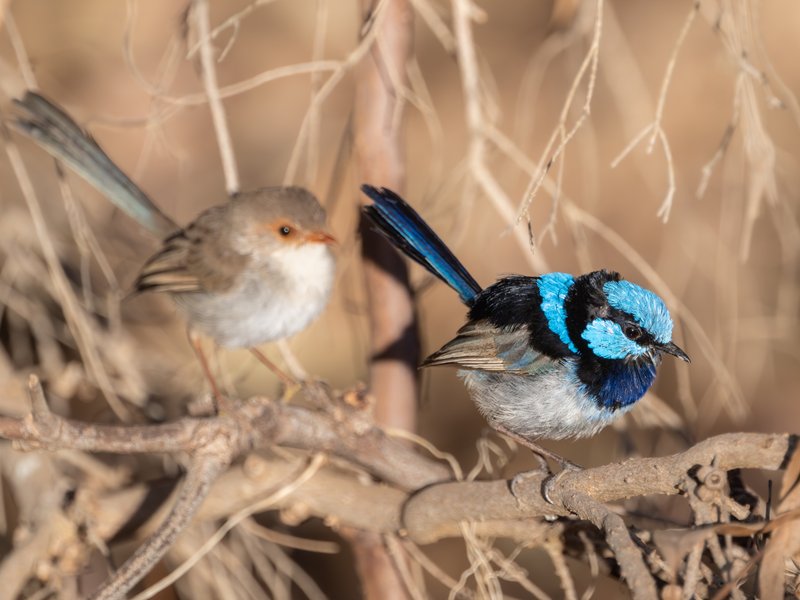
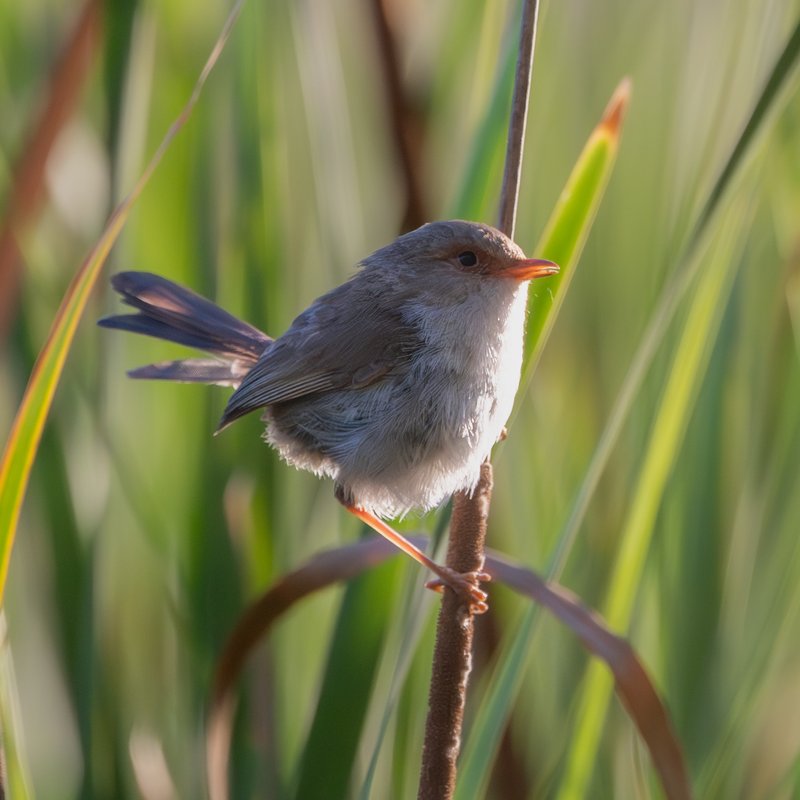
13-14 cm. Well-loved 'blue wren' of se. Aust. Male: blue cap and back; blue-black throat and chest; grey-white underparts; tail dark blue. Male eclipse: slightly darker olive-brown above than female; bill black; no red-brown around eye; tail deep blue. Female: mouse-brown; throat/breast whitish; underparts washed fawn; bill, lores and eye-ring red-brown; tail brown, washed greenish blue. Immature: like female, with plain brown tail; young males acquire blackish bill and blue tail before first winter, richer olive-brown upperparts, then coloured plumage during first breeding season. Pairs, family parties: moves briskly through thickets; hop-searches over short grass; sings briskly from tops of shrubs, thickets, fences.
- Other name
- Blue Wren; Jenny Wren; Superb Blue Wren.
- Similar Species
- other predominantly blue male fairy-wrens have either chestnut shoulder-patch or blue underparts.
- Voice
- accelerating series of 'pips' breaking into loud, brisk merry reel; often like tinny alarm clock. Contact-call and scolding: brisk, splintered 'prip-prip' of varying urgency. Alarm call: high-pitched 'seee'.
- Habitat
- dense low cover with areas of short green grass: coastal heaths, saltmarsh, riverside thickets, bracken, undergrowth of forests, woodlands, blackberry thickets, lantana; margins of roads, tracks, road reserves, shelter belts; golf courses, orchards, parks, gardens. In sub-inland, margins of mallee, bluebush, riverside vegetation, lignum, wetland plants over water.
- Breeding
- June-Feb.
- Nest
- domed; of grass, moss, rootlets, twigs, spiders' web/egg-sacs; low in tussock, shrub or bracken; occasionally to 6 m in foliage.
- Eggs
- 3-4; pink-white, spotted red-brown, mostly at large end.
- Range & Status
- se. Aust. and Tas., from Kangaroo I. and s. Eyre Pen. (SA) to Tropic in e. Q. Inland in SA to Mt Lofty Ras.-Murray mallee. Throughout Vic. except drier nw. districts; e. NSW; widespread in s. Riverina, in riverside or swampy areas or about homesteads and towns, w. to Balranald-Willandra NP-Nyngan-Walgett. In Q, w. to Mungindi-Morven-Springsure, n. to c. the Tropic e. to Eidsvold-Kilcoy-Brisbane suburbs and coast. Common. Sedentary; young females dispersive.
- Distribution key to races
- 1. Malurus cyaneus cyaneus 2. Malurus cyaneus samueli 3. Malurus cyaneus elizabethae 4. Malurus cyaneus cyanochlamys 5. Malurus cyaneus leggei 6. Malurus cyaneus ashbyi
Related Bird Works
- 001Superb FairywrenCommon7.40
- 002Superb FairywrenCommon7.40
- 003Superb FairywrenCommon7.40
- 004Superb FairywrenCommon7.40
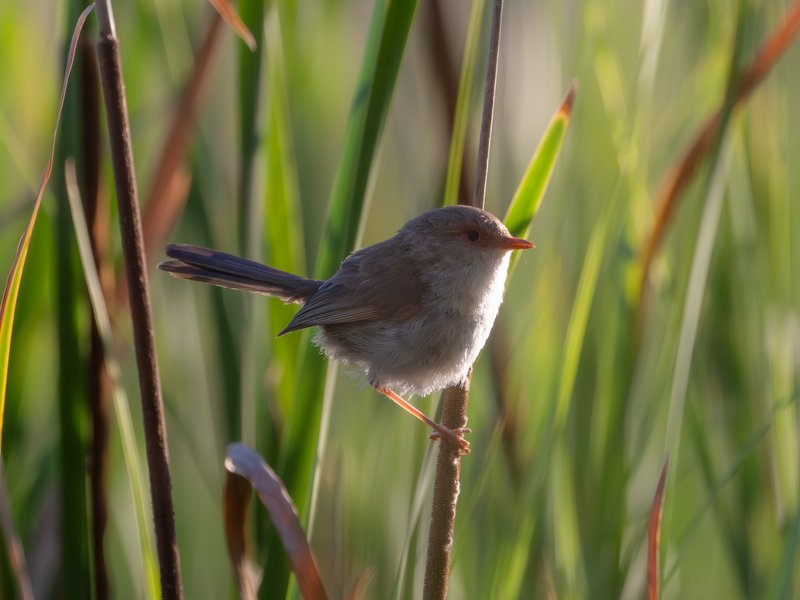
- 005Superb FairywrenCommon7.40
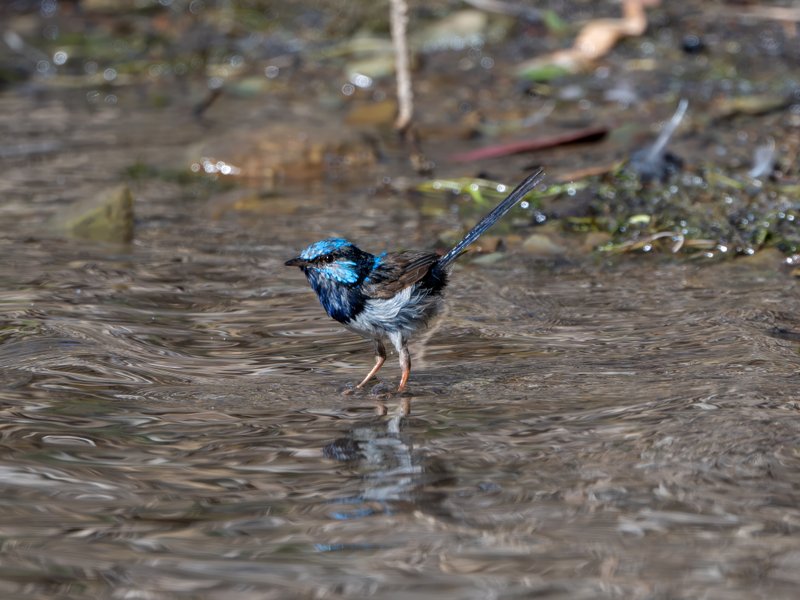
- 006Superb FairywrenCommon7.40
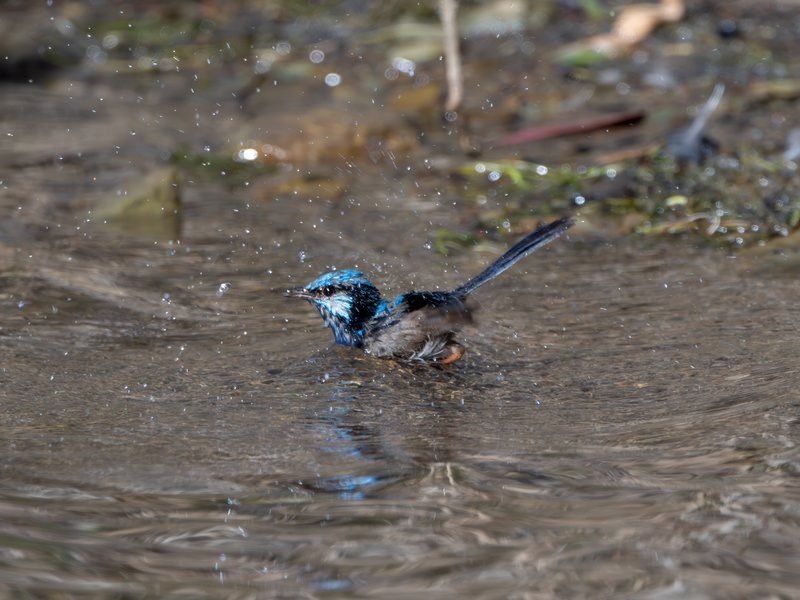
- 007Superb FairywrenCommon7.40
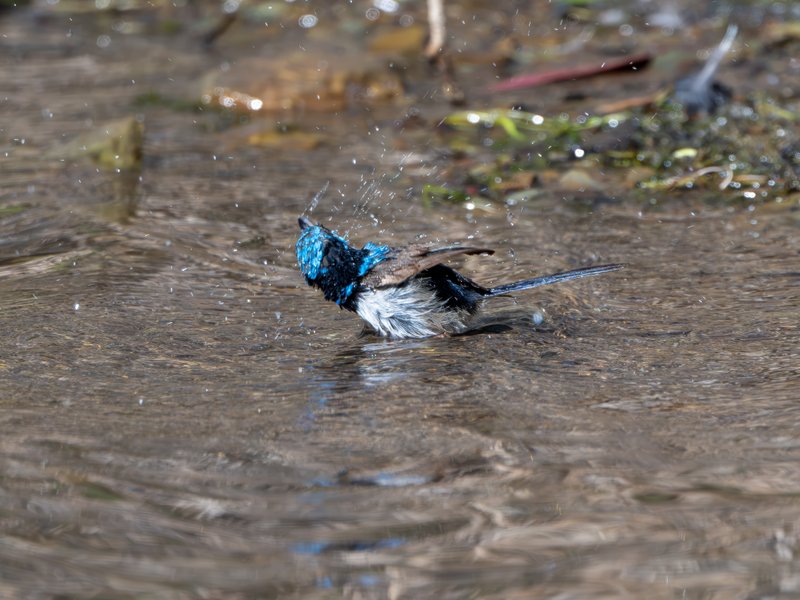
- 008Superb FairywrenCommon7.40
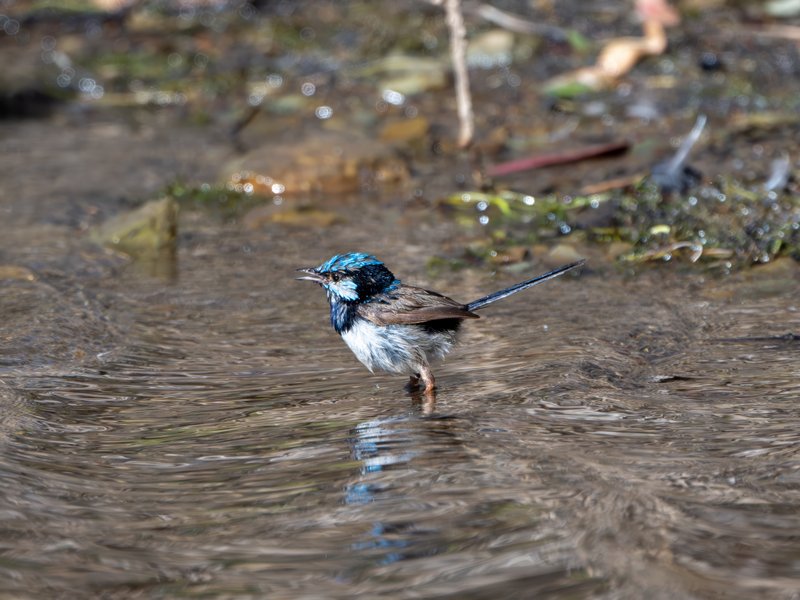
- 009Superb FairywrenCommon7.40
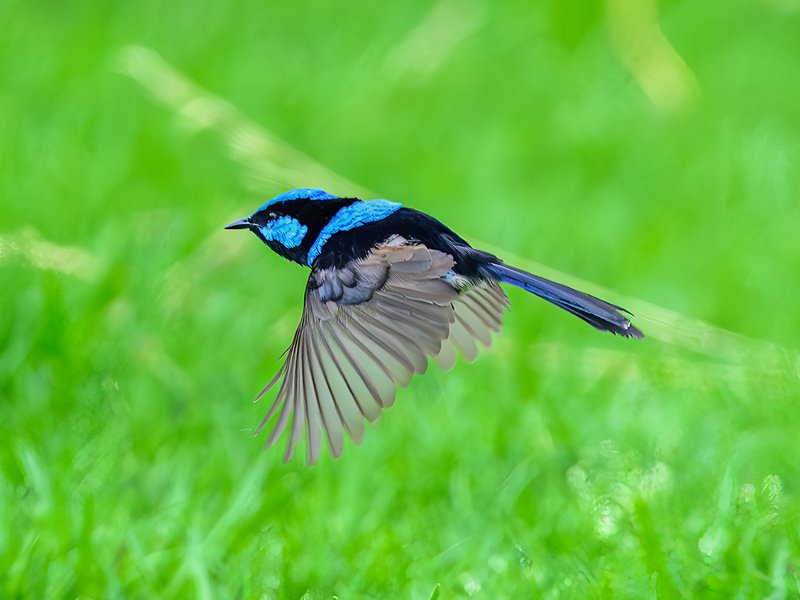
- 010Superb FairywrenCommon7.40
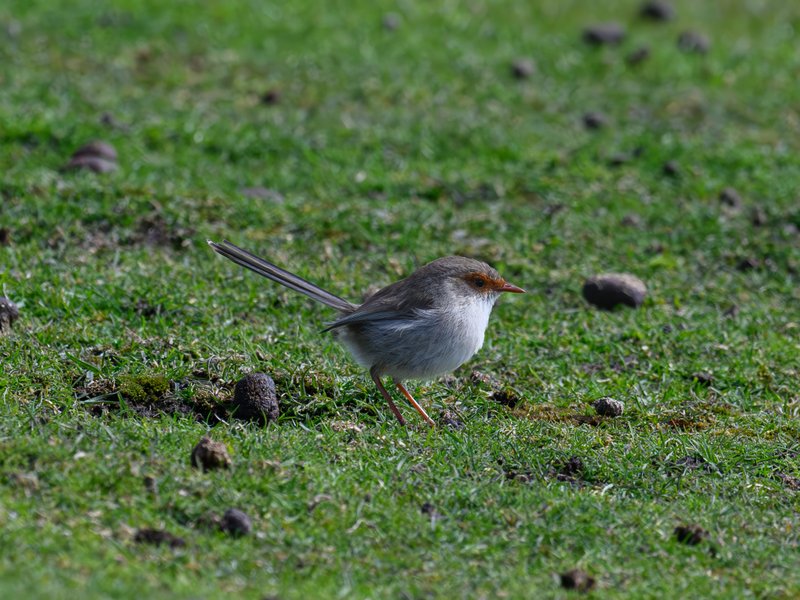
- 011Superb FairywrenCommon7.40