Australian Magpie
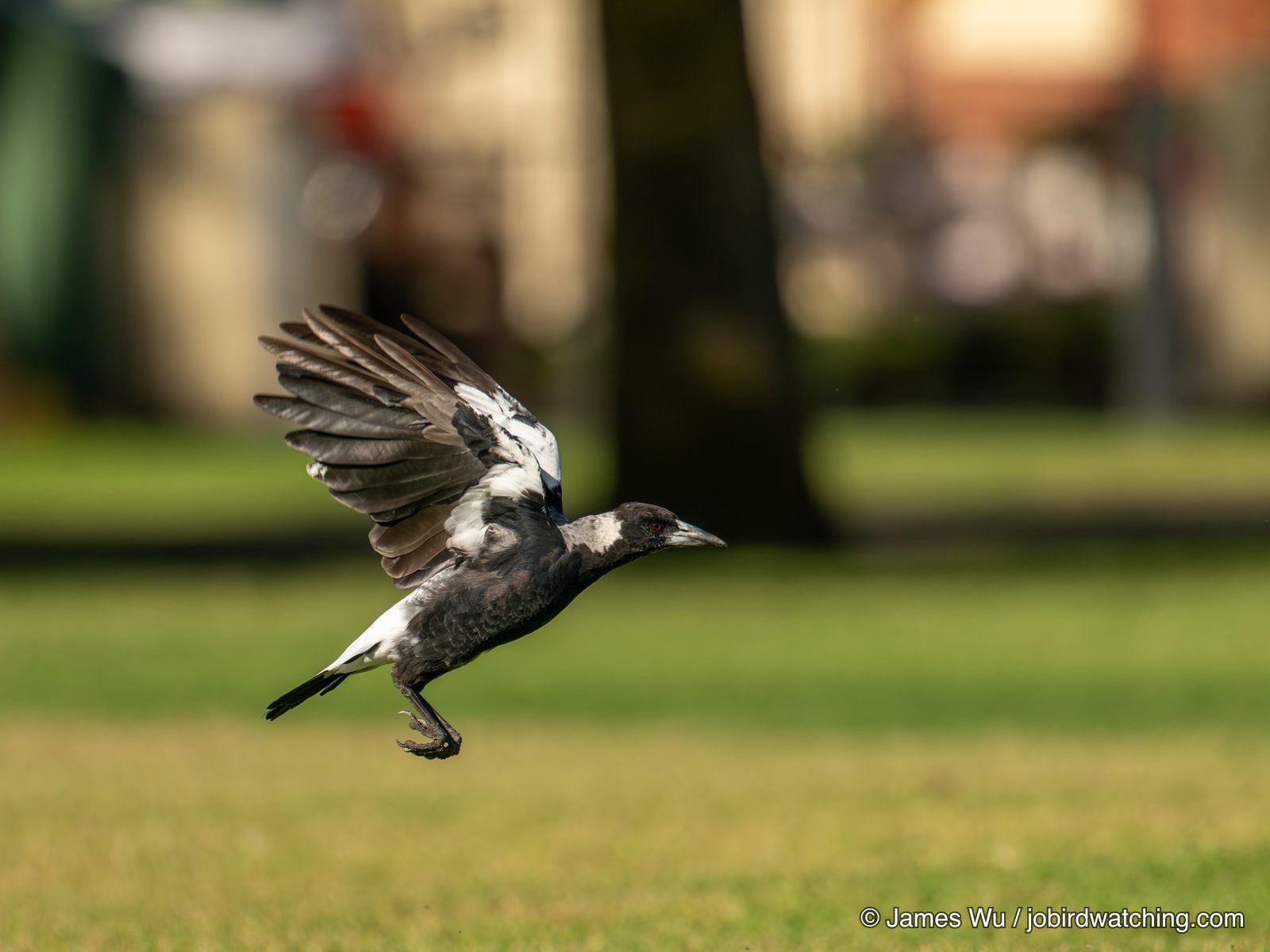
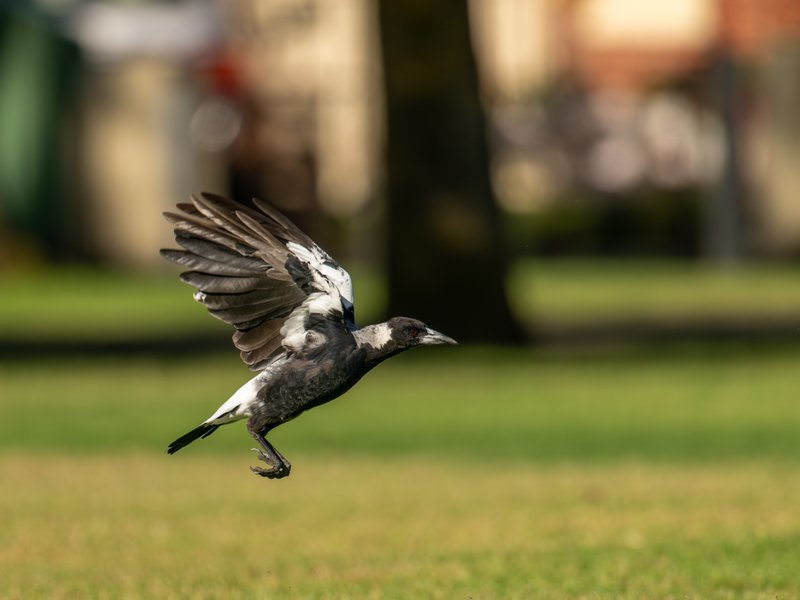
英文名:Australian Magpie(学名:Gymnorhina tibicen),是雀形目燕鵙科澳洲钟鹊属的鸟类。别名: 也叫做黑背钟鹊,广泛分布于澳大利亚和新几内亚南部,也是新西兰的引进物种。其身长约37至43厘米,拥有醒目的黑白色羽毛,以及独特的蓝白相间、尖端略带黑色的长喙。该鸟种分为九个已确认的亚种,以群体形式占据领地,活跃于开阔地带,如草地、公园和农田,与人类居住区紧密相连。
Australian Magpie
38-44 cm. Conspicuous large black-and-white bird with pointed whitish, black-tipped bill. A species of eight different races with three distinctive forms:
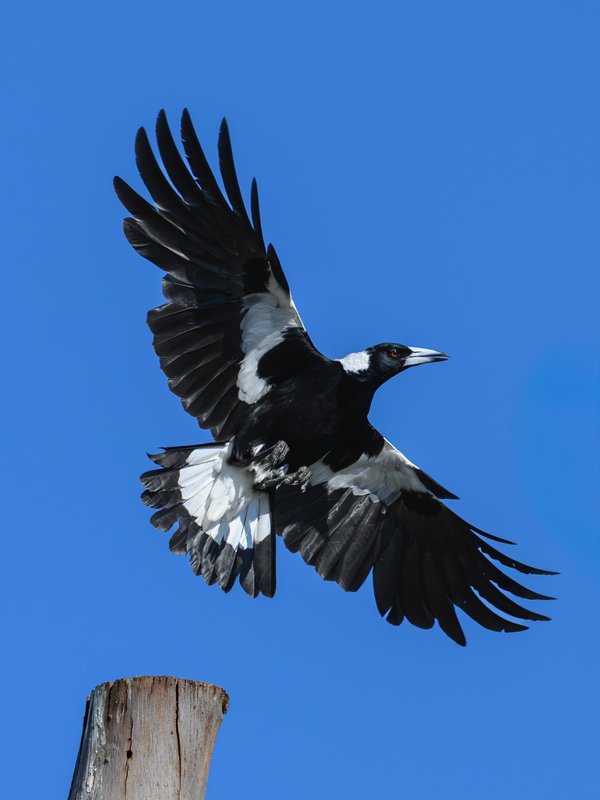
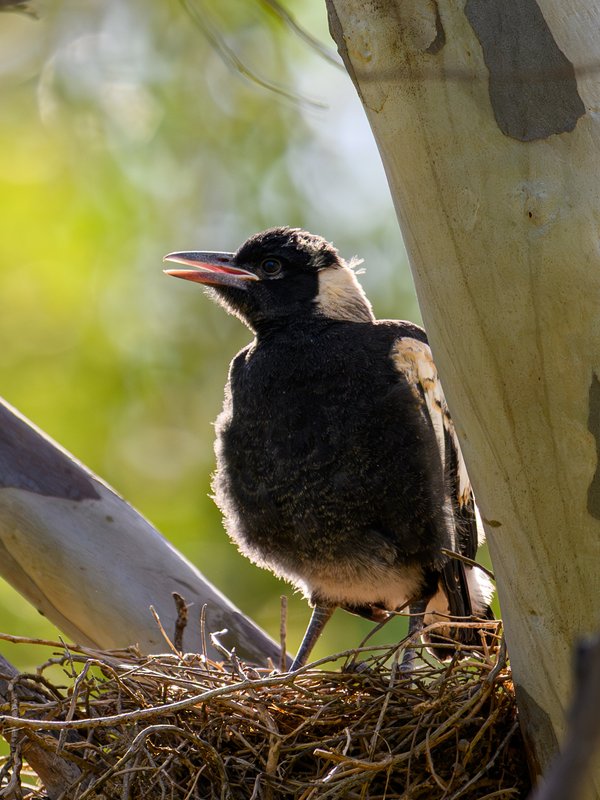
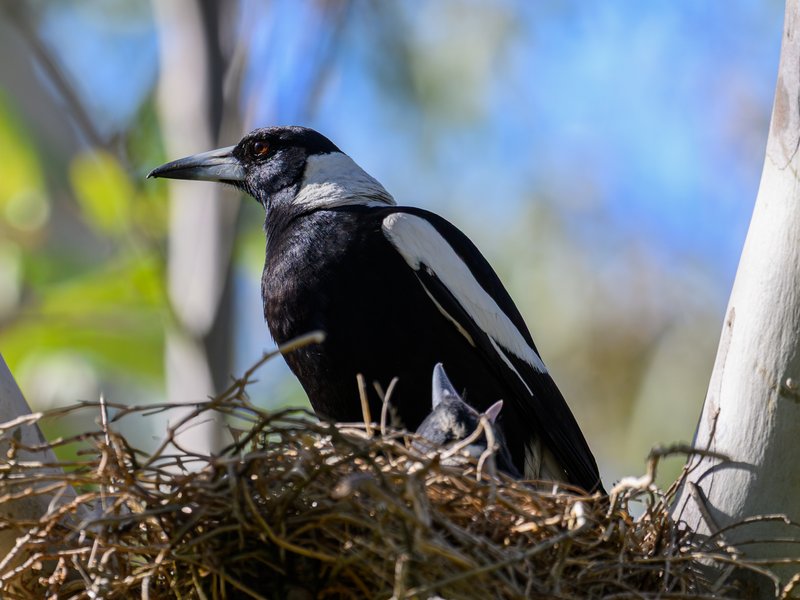
nominate race tibicen, race terraereginae, race eylandensis, race longirostris. Male: mostly glossy black with prominent white nape, shoulder, rump, wing-band, udertail-coverts and white tail broadly tipped black; eye red-brown. Female: duller black, nape greyer. Immature: duller, mottled, bill shorter, grey, eye black. Range: Across most of continent. Race tibicen from c. Moreton Bay (Q) to c. Bateman's Bay (NSW); race terraereginae: much of central and eastern Australiaexcept se. and s.coast and ranges; race eylandensis: Kimberley region (WA) through northern central NT to nw. Q; race longirostris: Pilbara region s. to c. Shark Bay (WA).
race hypoleuca, race tyrannica, race telenocua. Male: back pure white from nape to tail. Female: white upperparts mottled grey. Immature: like dull, mottled female; bill shorter, grey; eye black. Range: s. Aust. Race tyrannica from se. NSW w. through Vic., King I. (Tas.) to se. SA; race hypoleuca: Tas. mainland and Furneaux Group; race telenocua: Yorke and Eyre Pens. (SA) to head of Gt. Aust. Bight.
: race dorsalis. Male: like White-backed. Female: back black, feathers edged white, in contrasting scalloped pattern. Immature: like White-backed. Range: sw. WA.
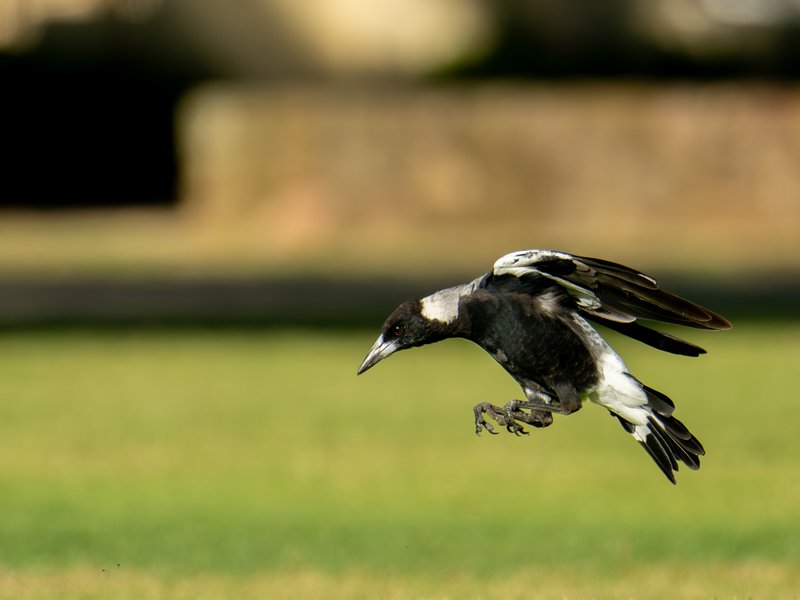
Familiar: feeds mostly on ground; resident territorial groups and other aggregations noisily play and skirmish; flight swift, direct, with characteristic noisy lashing of wings, showing angled white bar on black underwing. Aggressive to humans near nest; kills smaller birds, house mice. Tame in parks, gardens.
- Other name
- Australasian, Black-backed, Western or White-backed Magpie.
- Voice
- rich, mellow, organ-like carolling, often by several, at night. Quiet sub-song includes mimicry. In aggression, brisk high-pitched yodel. Alarm-call: short harsh shout, repeated; also drawn-out, descending 'pew, pew'.
- Habitat
- almost wherever there are trees and open areas of bare soft ground or grass; orchards, golf courses, playing fields, suburban areas, gardens, crops.
- Breeding
- June-Dec.
- Nest
- compact shallow bowl of sticks, twigs; lined with grass, rootlets, wool, hair; occasionally of wire; in fork or branch in outer part of tree 5-16 m high; sometimes in shrub near ground; rarely on ground.
- Eggs
- 2-3 (5); variable - grey, brown, pale blue; typically blue-green spotted brown.
- Range & Status
- Entire continent except driest deserts, and tropical far north. The principal mainland races readily hybridise, producing intermediates with varying amounts of black and/or white on their backs (observable along the Melbourne-Sydney highway). Has benefited greatly from land-clearing and establishing of crops, pastures, waterholes. Common and now very abundant in developed farming/cropping country of e. Aust.; rare, sparse (and shyer) in inland and n. Aust. Sedentary; locally nomadic. Also PNG; introduced NZ
- Distribution key to races
- 1. Gymnorhina tibicen eylandtensis 2. Gymnorhina tibicen terraereginae 3. Gymnorhina tibicen tibicen 4. Gymnorhina tibicen tyrannica 5. Gymnorhina tibicen hypoleuca 6. Gymnorhina tibicen telonocua 7. Gymnorhina tibicen dorsalis 8. Gymnorhina tibicen longirostris