White-browed Woodswallow
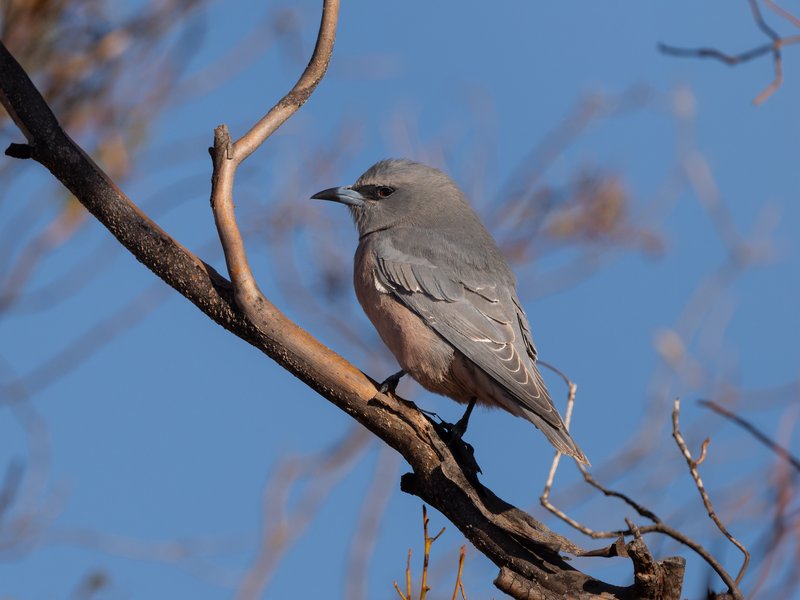
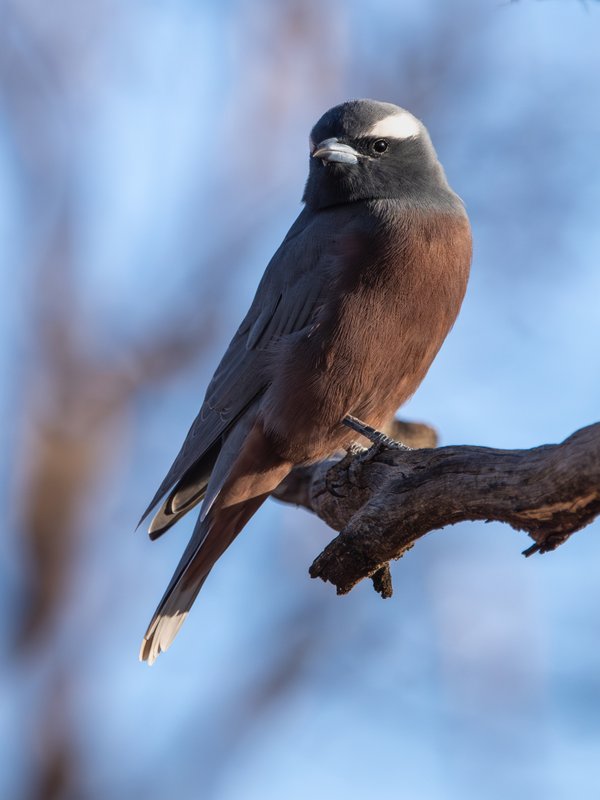
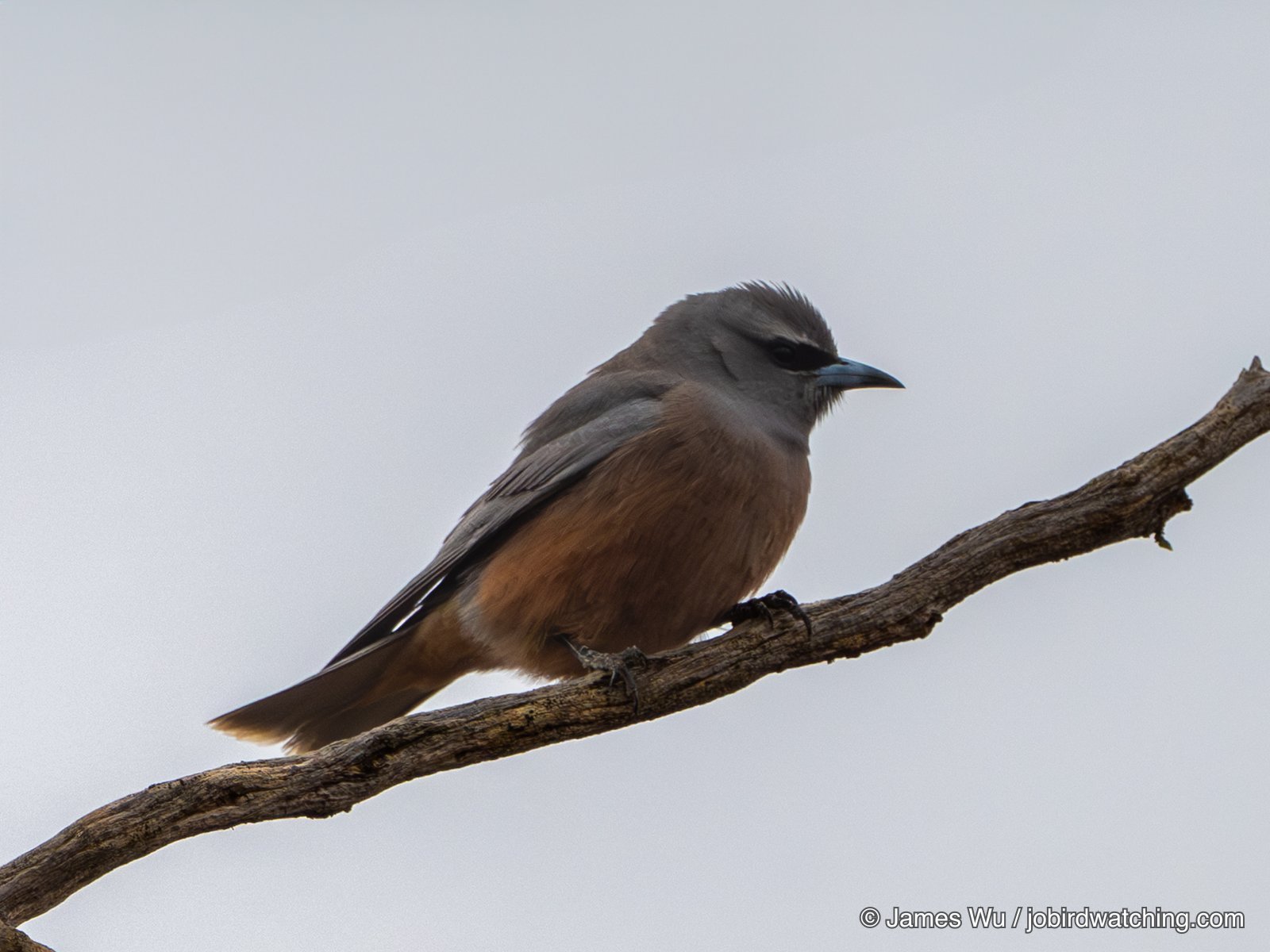
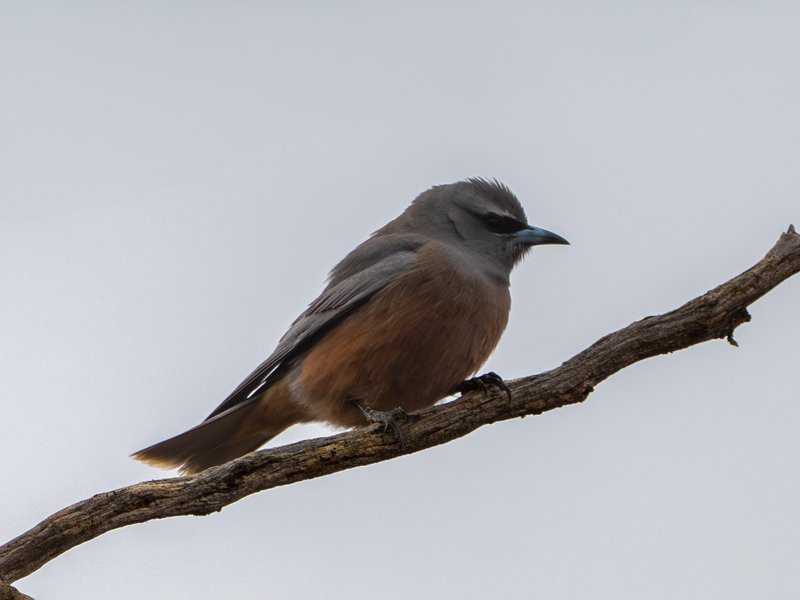
White-browed Woodswallow (Artamus superciliosus) 是雀形目燕鵙科燕鵙属的中型鸟类。主要分布于澳大利亚大陆中部与东部地区。其最显著的特征是白色的眉毛,覆盖在黑色头部之上,上体深蓝灰色,下体栗色。雌鸟相比雄鸟颜色较淡。
White-browed Woodswallow
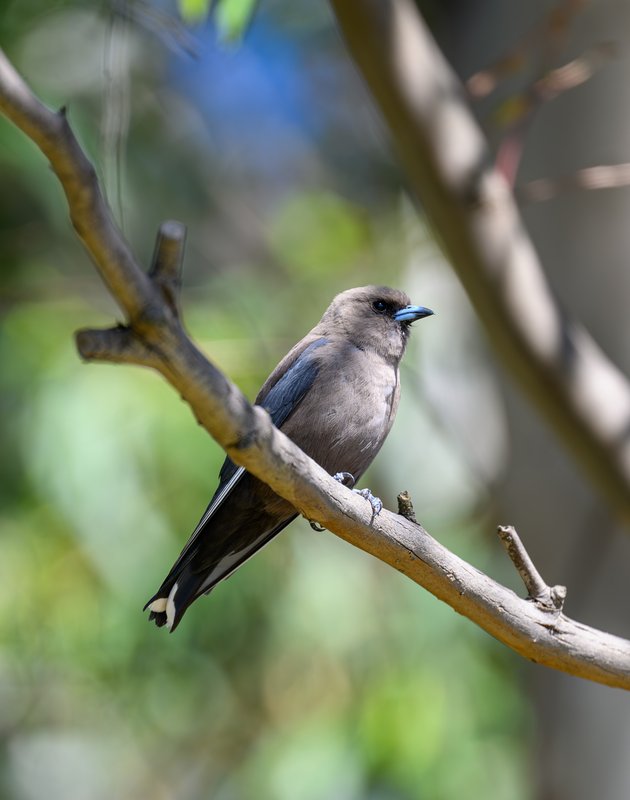
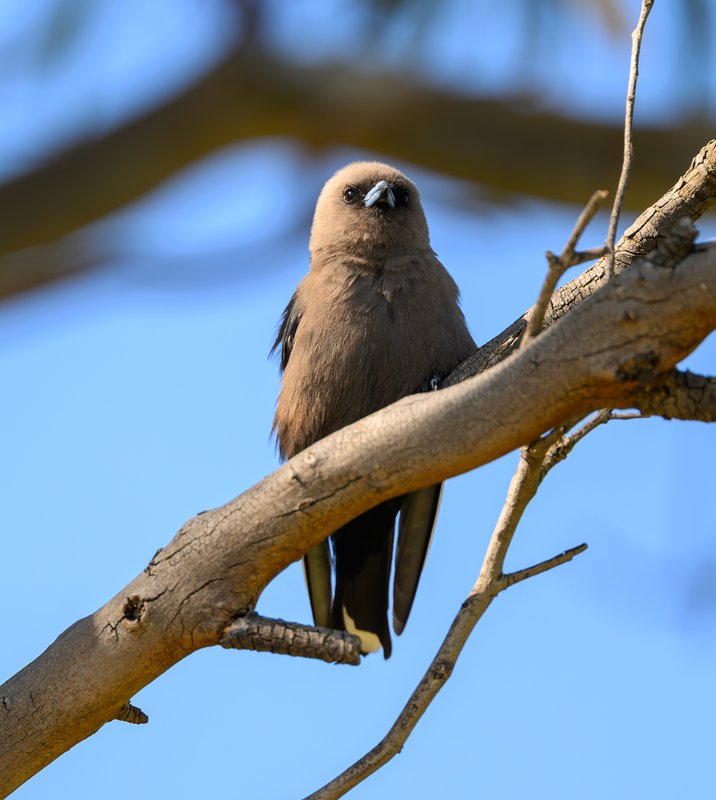
18-21 cm. Male: strong white eyebrow over small black mask; upperparts/upperbreast deep blue-grey, cut off sharply by chestnut to pale rufous underparts; rump/tail paler grey above, tail broadly tipped white. Female: paler, duller. Immature: like female; streaked, scalloped paler. Pairs, parties, flocks of thousands: on warm days drifts high overhead, rich underparts contrast with whitish underwings. Noisy at water or in woodlands abundant with insects, e.g. grasshoppers, hatching termites; nectar. Forages with bee-eaters, trillers, honeyeaters. In e. Aust., flocks include small numbers of Masked Woodswallows; ratio reversed in WA.
- Other name
- Blue Martin; Summerbird.
- Similar Species
- Masked Woodswallow.
- Voice
- musical 'chap chap' (or 'chyep'); sweet, miner-like notes; rattling scolds; quiet song includes mimicry.
- Habitat
- margins of rainforests; woodlands, inland/coastal scrubs; vineyards, orchards, golf courses, parks, suburban streets.
- Breeding
- Aug.-Dec., or after rains.
- Nest
- flimsy, of twigs, grass, rootlets; in fork, bark against tree-trunk, spout, stump, cavity in fence post, 1-6 m high.
- Eggs
- 2-3; buff-white/grey-green; spotted, blotched brown-grey.
- Range & Status
- Aust., mostly w. of Gt Divide; absent n. C. York Pen. (Q); irregular visitor Top End (NT). Mostly absent from WA, except for regular small numbers with flocks of Masked Woodswallows, ratio reversed in e. Aust. Loose colonies breed mostly from s. Q to c. Vic.-se. SA, arriving irregularly mid-late spring, departing Feb.-March, movement modified by temperature/rainfall. In drought, large flocks irrupt into coastal e. and se. Aust., including suburbs of Brisbane, Sydney, Melbourne; may breed where previously unrecorded. Vagrant Kangaroo I. (SA), Bass Strait islands, n. Tas. Common to uncommon. Highly nomadic.