Brush Cuckoo
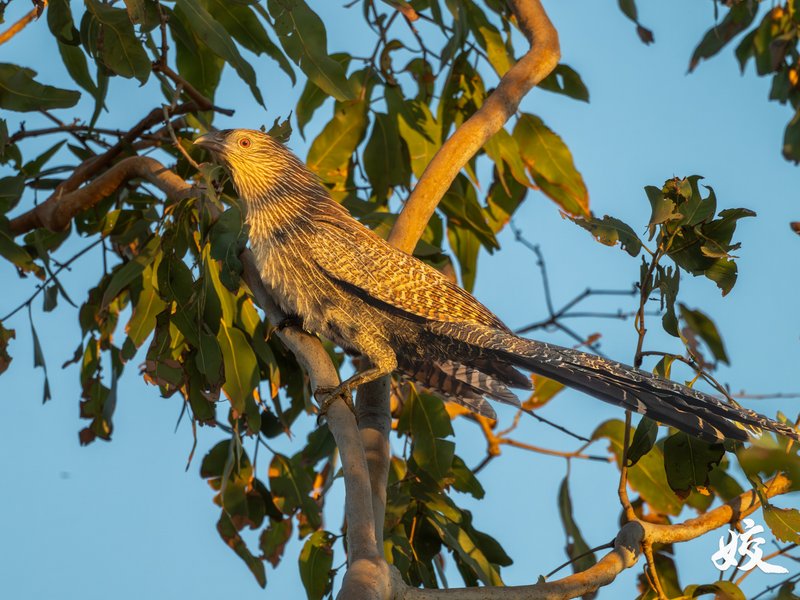
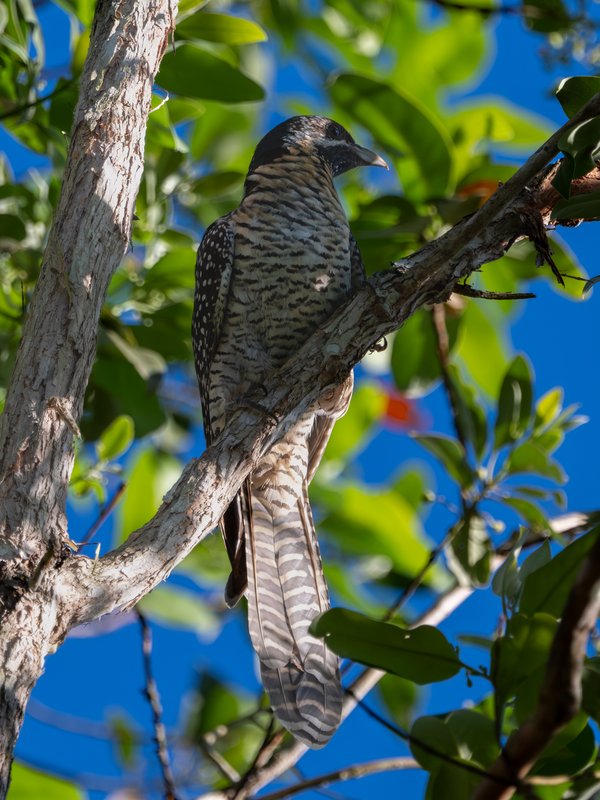
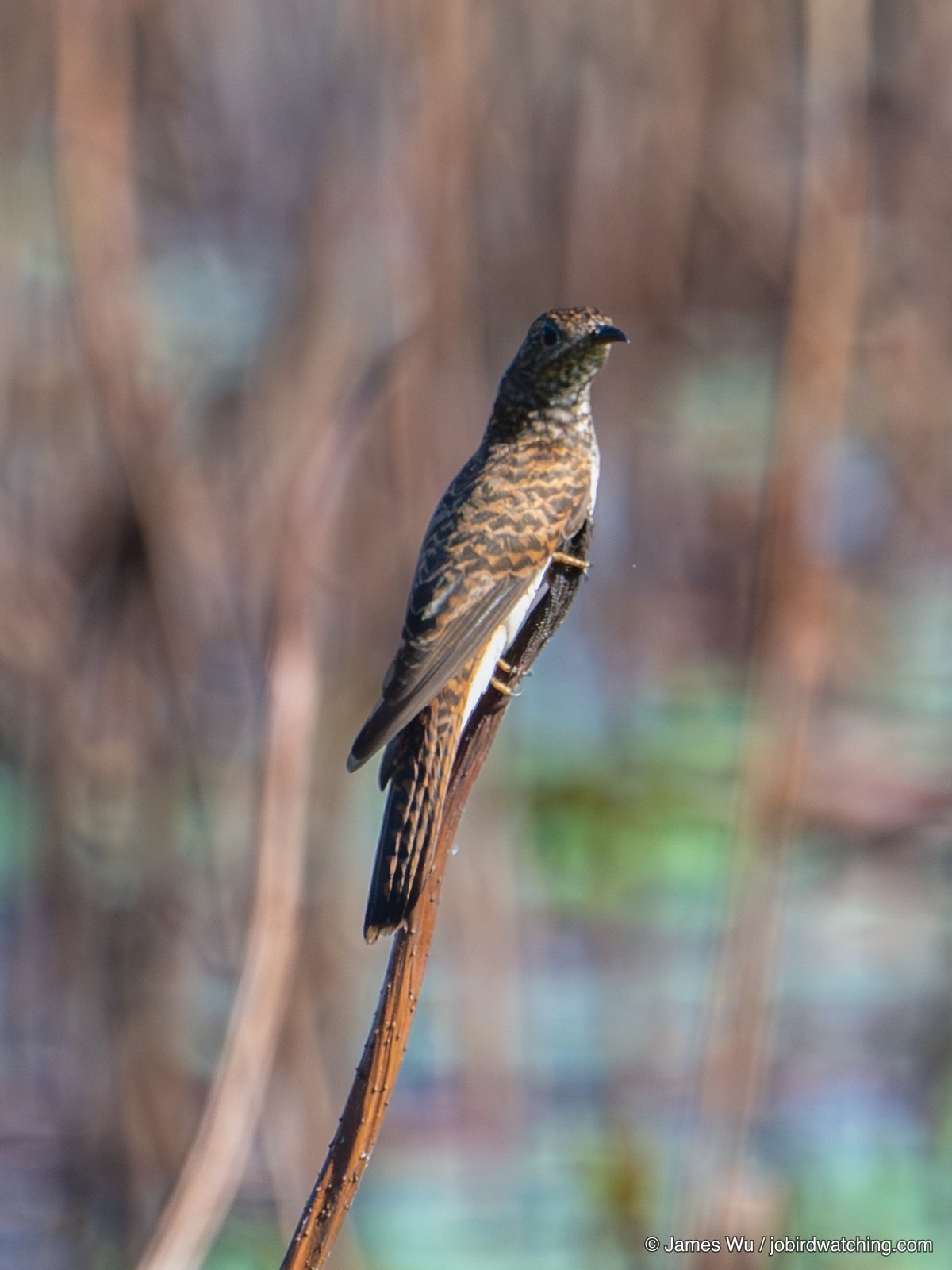
Brush Cuckoo(学名:Cacomantis variolosus),是鹃形目杜鹃科八声杜鹃属的鸟类。原生于华莱西亚东部,新几内亚,澳大利亚北部与东部,俾斯麦群岛和所罗门群岛。其显著特征为灰褐色外观与淡色胸部,叫声在澳大利亚与印尼丛林中常见。
Sahul Brush Cuckoo
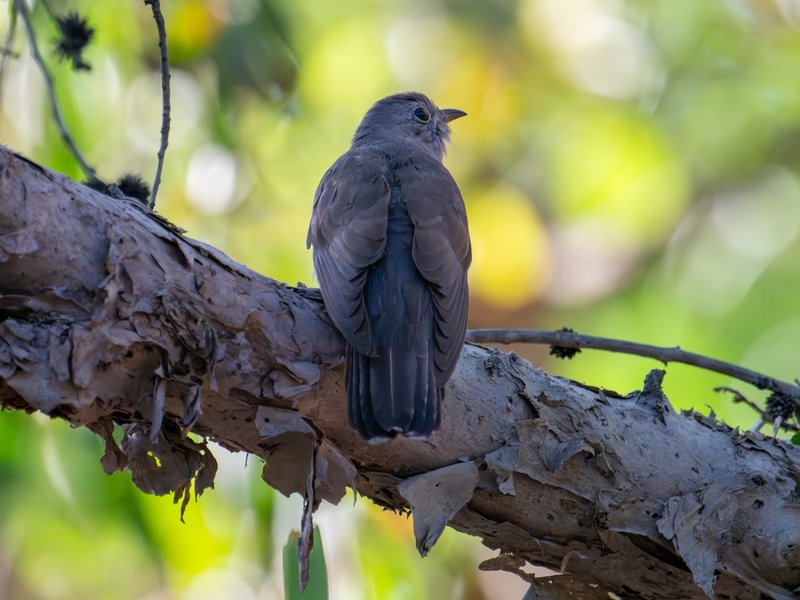
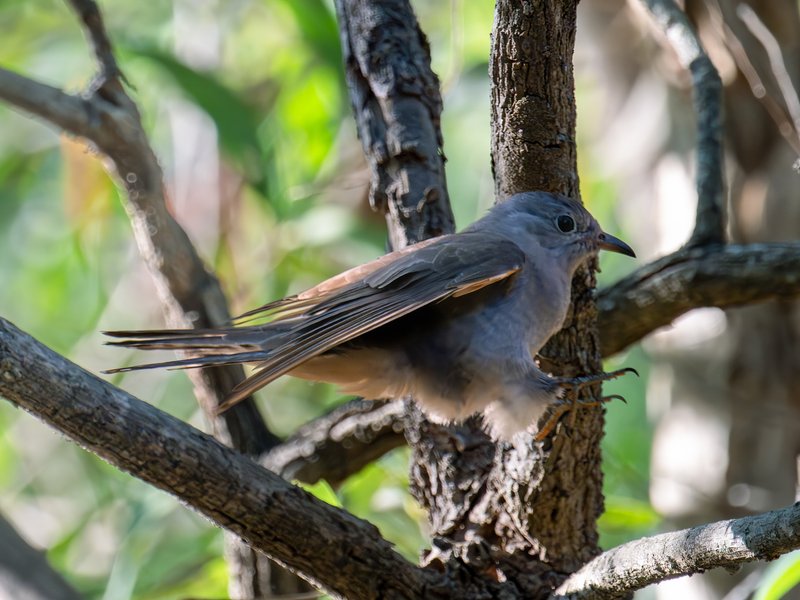
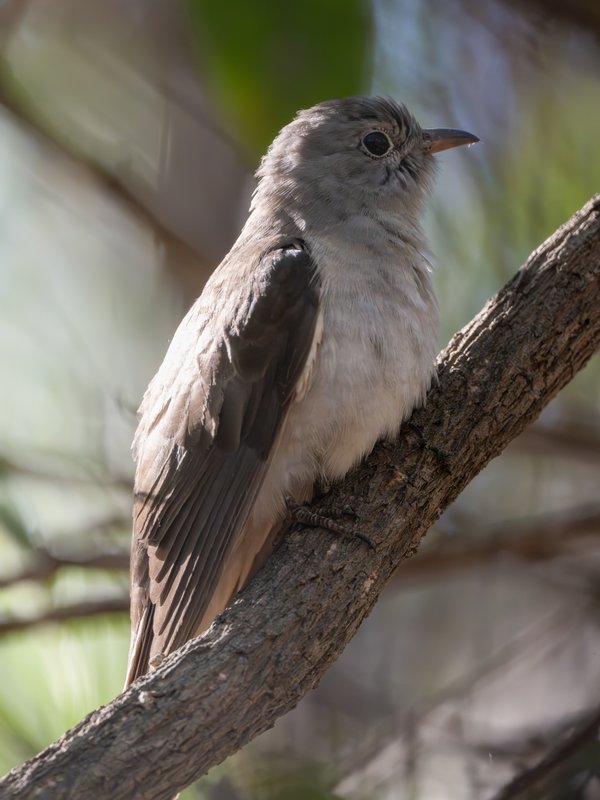
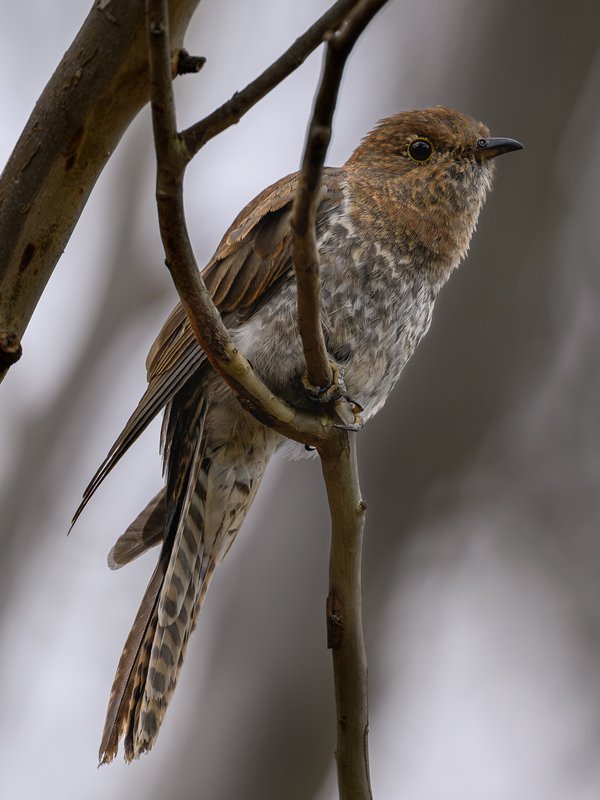
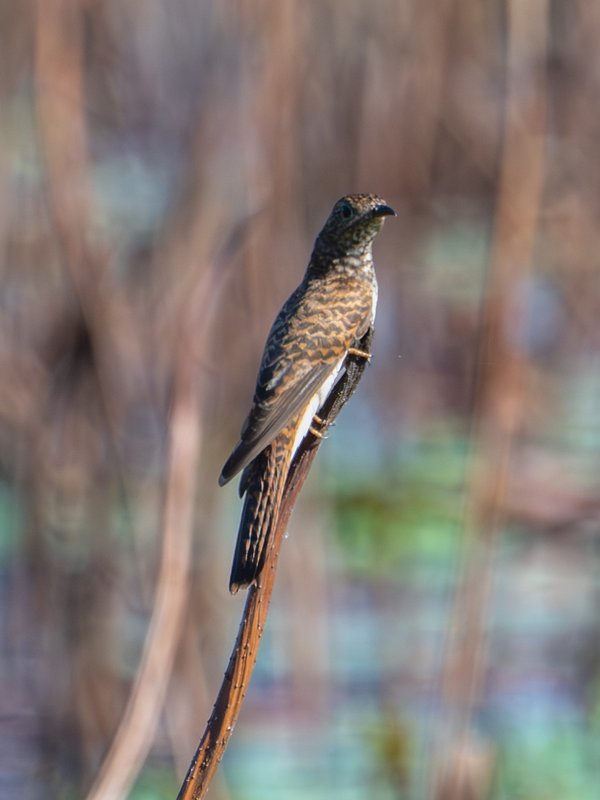
20-23 cm. Plain small cuckoo: grey-brown above; grey breast washed buff; undertail-coverts buff. Tail squarer than Fan-tailed, with white notching on inner webs, white tips; eye-ring grey; legs grey-pink. Female usually similar to male but in the little-known barred morph the adult female resembles an immature, though less warm brown tones. Juvenile: more variegated pattern than imm. Fan-tailed: brown above with plentiful buff streaks and angular feather-margins; wing and tail feathers deeply notched buff; breast brokenly mottled, white underparts more openly barred dark brown. Singles, pairs, displaying parties: unobtrusive, but revealed by distinctive, incessant call. Perches in leafy trees; flies to take insects in foliage or on ground. Sustained flight swift, undulating, showing pale wingbar.
- Similar Species
- Fan-tailed Cuckoo: eye-ring, legs yellow; breast more cinnamon-buff; tail longer, pointed; notched white on outer feathers.
- Voice
- 7-12 shrill, far-carrying, deliberate, descending notes, 'fear-fear-fear-fear ...', widely heard day/night in warmer months. Parties display with wild, shrill, repeated, rising phrases like 'where's-the-pippy?'.
- Habitat
- rainforests, forests, woodlands; alpine country in se. Aust. in summer; leafy trees on watercourses; swamp woodlands, mangroves, scrubby roadsides.
- Breeding
- Oct.-Feb. in se. Aust.; most months in n. Aust.
- Eggs
- 1; whitish, with faint purplish brown and lavender markings; deposited in cup nest of robin; flycatcher, fantail, honeyeater; occasionally domed nest of gerygone, fairy-wren, scrubwren.
- Range & Status
- coastal n. and e. Aust.; regular breeding migrant to se. Aust., mostly in forests of Dividing Ra. in se. Q, NSW and e. Vic., arriving Sept.-Oct., departing Feb.-April; casual nw. Vic. mallee, adjacent SA. In n. Aust., both resident and passage migrant. Some migrate in winter to Solomon Is., PNG, Indonesia. Common in n., uncommon in s. Aust.