Purple-backed Fairywren
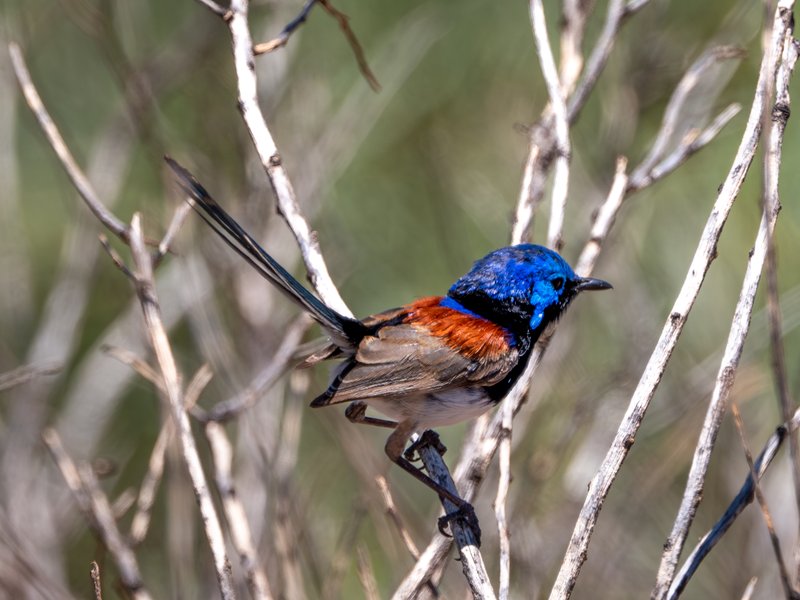
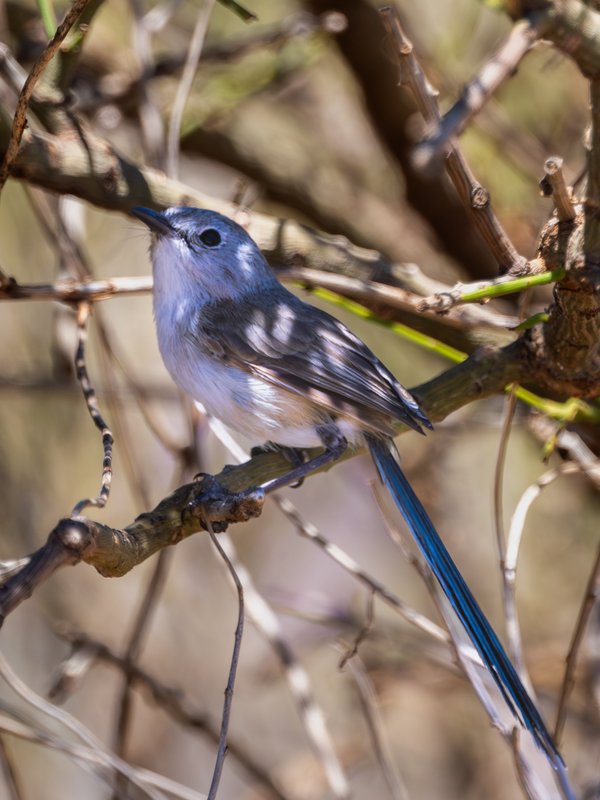
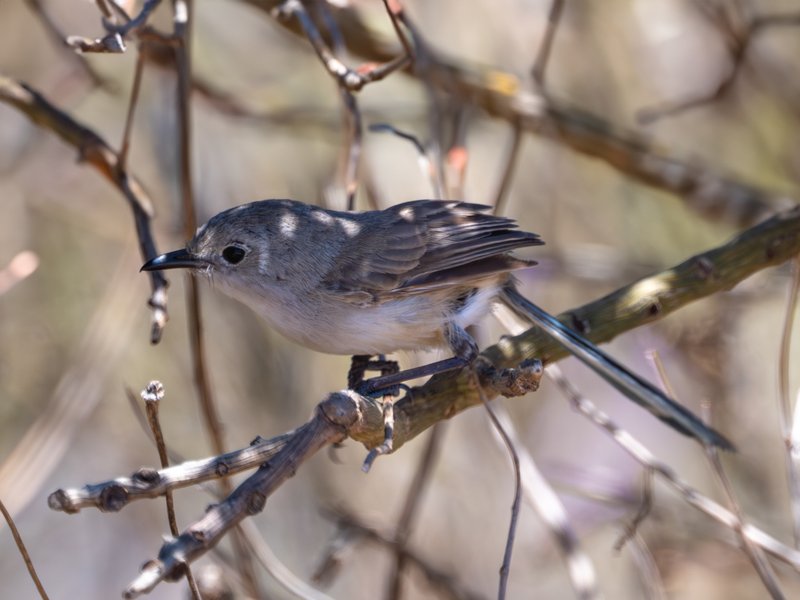
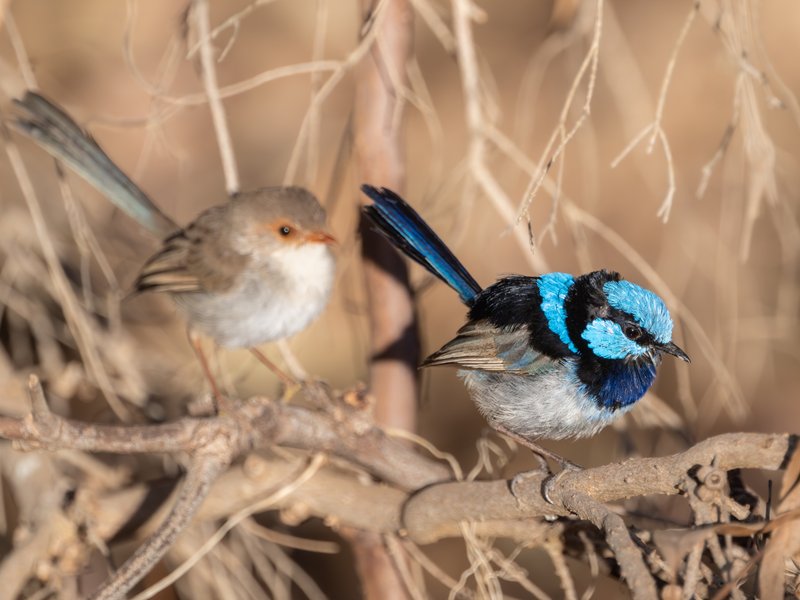
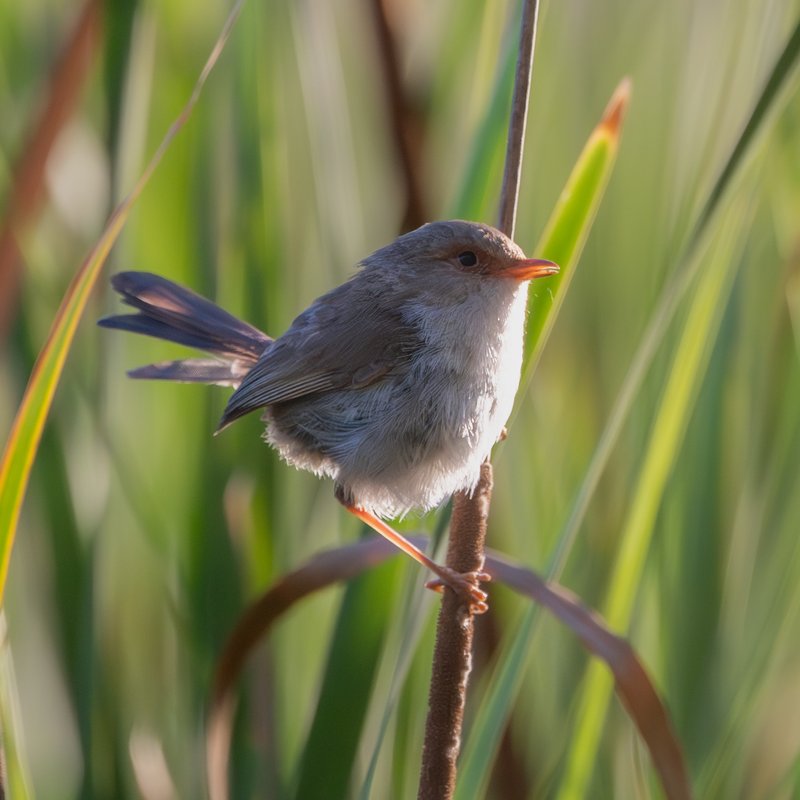
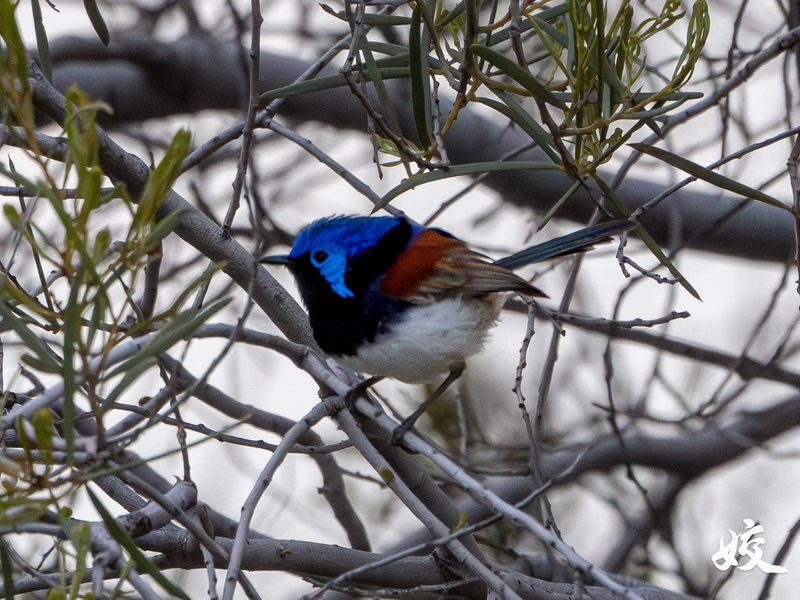
英文名:Purple-backed Fairywren(学名:Malurus assimilis),是雀形目细尾鹩莺科的鸟类。11–14.5 厘米。澳大利亚内陆大部地区唯一具栗色肩斑的细尾鹩莺。雄鸟,繁殖羽:头顶紫色,颊斑大而尖,亮蓝色;“肩斑”栗色;背紫色,延伸至上胸两侧;眼先、喉及胸部乌黑色,与下方淡黄白色下体截然分界;尾长,蓝黑色,端部白色。雄鸟,蚀羽:似雌鸟,但嘴和眼先黑色;尾更蓝;具明显的窄白色眼圈;下体较雌鸟更白。雌鸟:嘴黄褐色;深栗色的眼先和眼圈形成醒目的暗色“面罩”。上体淡褐色,包括很长的染蓝色尾羽;下体淡黄白色,胁部染皮黄色。在澳大利亚西北部,有两个特征鲜明的亚种:dulcis 亚种,分布于阿纳姆地 escarpment(北领地),雄鸟:胁部深薰衣草色;尾短,蓝色带白端;雌鸟:眼先和眼圈白色;上体蓝灰色;尾蓝色,端部白色。rogersi 亚种,分布自阿纳姆地 escarpment(北领地)向西延伸至金伯利地区(西澳大利亚):相似,但雌鸟眼先和眼圈为黄褐色。dulcis 与rogersi 在分布区重叠处均与assimilis 亚种杂交。成对、结群活动:通常以“棕色鸟”占多数;具彩色羽衣的雄鸟可能一同觅食,常在灌木、树木高处活动。
Purple-backed Fairywren
11-14.5 cm. The sole chestnut-shouldered fairy-wren across much of inland Australia. Male, Breeding: crown violet and large, pointed cheek patches bright blue; 'shoulder-patch' chestnut; back purple, extending to sides of upperbreast; lores, throat and chest jet black, cut off sharply by fawn-white underparts; tail long, blue-black, tipped white. Male, eclipse: like female but bill and lores black; tail bluer; obvious narrow off-white eye-ring; underparts whiter than female. Female: bill tan; prominent dark 'mask' formed by dark chestnut lores and eye-ring. Upperparts pale brown, incl. very long, blue-washed tail; underparts fawn-white, washed buff on flanks. In nw. Aust., two distinctive races: dulcis, of Arnhem Land escarpment (NT), male: flanks deep lavender; tail short, blue with white tips; female: lores and eye-ring white; upperparts blue-grey; tail blue, tipped white. Race rogersi, ranging w. from Arnhem Land escarpment (NT) into Kimberley region (WA): similar, but females have tan-coloured lores and eye-ring. Both dulcis and rogersi interbreed with assimilis where their ranges overlap. Pairs, parties: 'brown birds' usually predominate; coloured males may forage together, often high in shrubs, trees.
- Similar Species
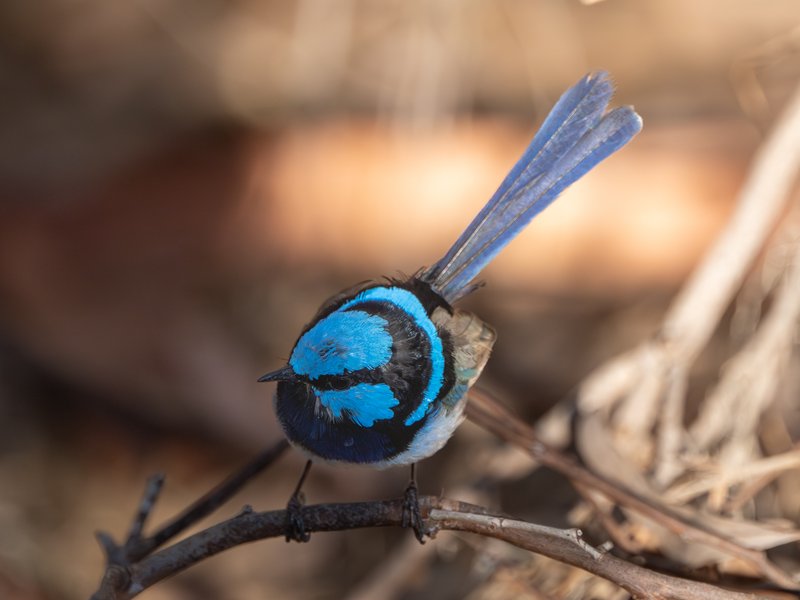
- Variegated Fairywren in the e., Blue-breasted Fairy-wren in s. WA-Eyre Pen. (SA); Red-winged Fairy-wren in s. WA; Lovely Fairy-wren in ne. Q. Female 'blue wrens' lack distinctive dark-chestnut lores and eye-ring; most have shorter tails.
- Voice
- somewhat like Superb, but harder, higher-pitched.
- Habitat
- mallee, mulga, saltbush, lignum and spinifex; shrubby or rank grassy vegetation on watercourses. Races dulcis and rogersi: shrubs and spinifex in rugged sandstone hills and gorges; shrubs, grass on watercourses; pandanus, paperbarks by freshwater springs, pools.
- Breeding
- July-March.
- Nest
- domed, loosely woven; of soft grass, bark strips, plant down, spiders' web and egg-sacs; low in undergrowth or low shrub, or tall tuft of grass.
- Eggs
- 3-4 (dulcis and rogersi 2-3); white, finely speckled with reddish purple, mostly at large end.
- Range & Status
- widespread in mainland Aust. w. of Variegated Fairywren; absent from ne. Q beyond c. Georgetown-upper Burdekin R.-Townsville, from s., e. and ne. Vic., from extreme se. SA, Adelaide-Mt Lofty Ras. and Kangaroo I., from s. WA s. and w. of Geraldton-Eucla (but with long coastal extension s. from Geraldton to near Perth). Race dulcis: w. Arnhem Land (NT) from King R. w. to near South Alligator R. Race rogersi: w. fringes of Arnhem Land escarpment (NT) w. to Kimberley region (WA). Fairly common. Mostly sedentary.
- Distribution key to races
- 1. Malurus assimilis rogersi 2. Malurus assimilis dulcis 4. Malurus assimilis assimilis 5. Malurus assimilis bernieri