Eastern Cattle Egret
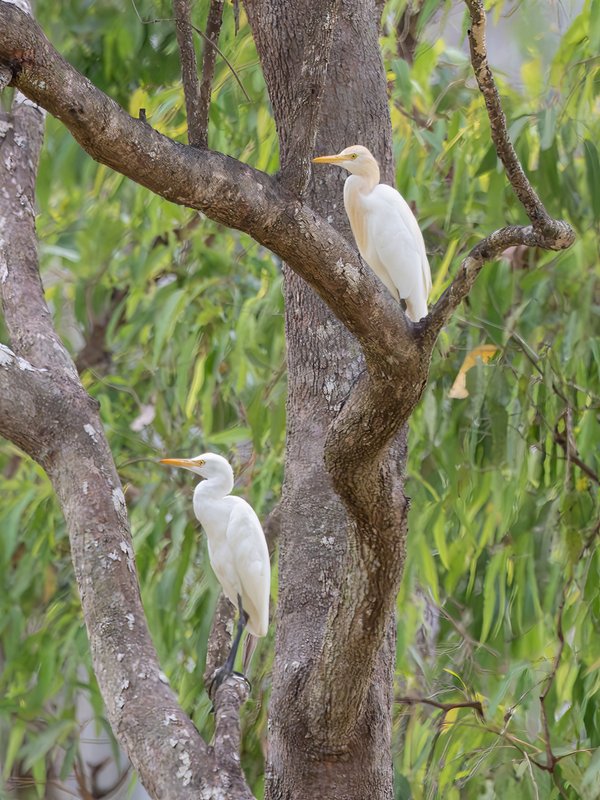
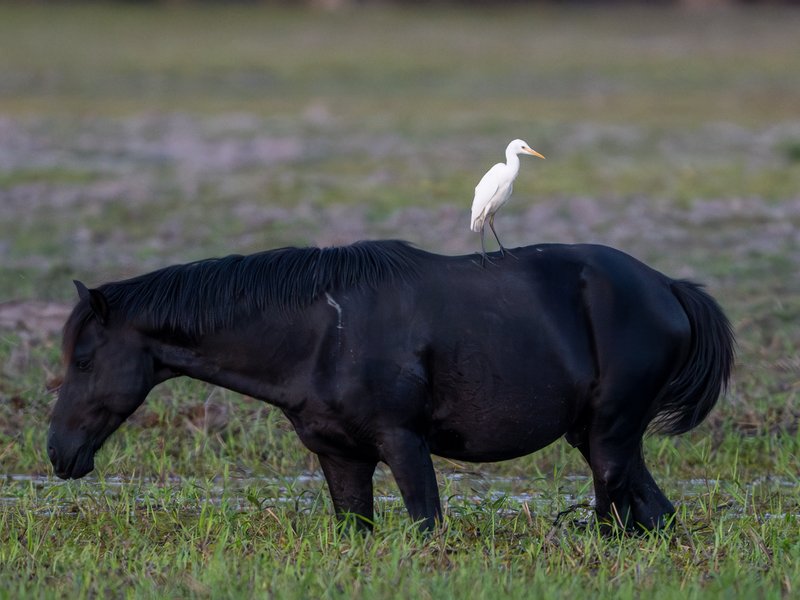
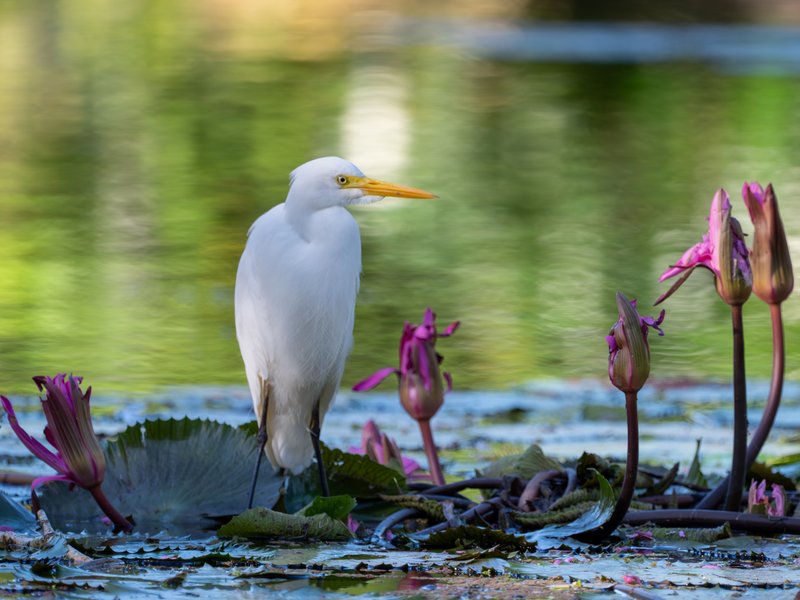
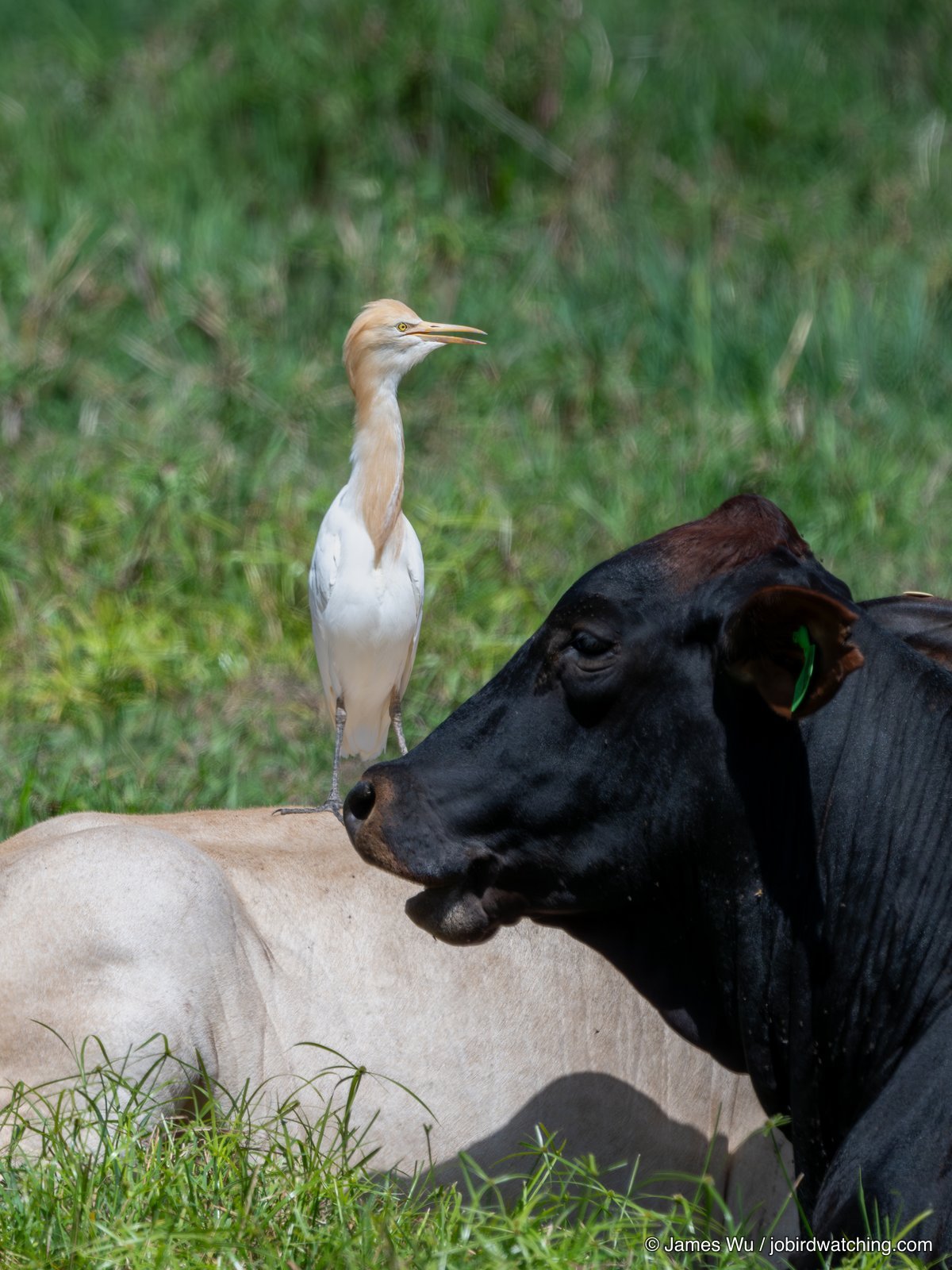
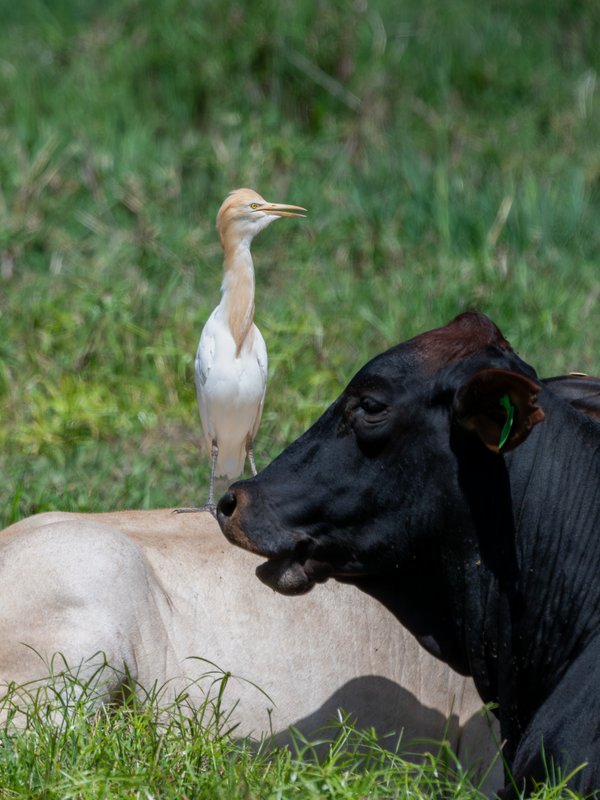
Eastern Cattle Egret (Bubulcus coromandus) 牛背鹭,是鹈形目鹭科牛背鹭属的鸟类。别名: 黄头鹭、畜鹭、放牛郎,繁殖期头部、颈部和背部会变成黄色,与其它白鹭相比,其颈短、头圆、嘴短厚。在全球热带、亚热带及暖温带地区广泛分布,尤其在亚洲南部、东部及澳大利亚。牛背鹭与大型食植动物如水牛形成共生关系,依赖昆虫为主要食物来源。
Eastern Cattle Egret
48-53 cm; span c. 90 cm. Sociable small egret: habitually feeds around cattle, horses, etc., snapping up insects, frogs, etc. they disturb. Head large, 'jowls' deep; leggy and quick; walks with back-and-forward head movement, but at rest can look hunched and chunky. Non-breeding: white, some with buff wash; bill and eye yellow; legs greyish yellow or black. Breeding Plumage: spiky orange-buff plumes on head, breast and back; bill orange-yellow; in display at nest, bill and facial skin flush red; eyes/legs red. Some singles, but mostly parties to loose flocks: flies in bunches, wingbeats quick, legs protrude length of tarsus; associates with other egrets.
- Other name
- Eastern Cattle Egret
- Similar Species
- Intermediate Egret, nonbreeding: taller, with longer legs; often in deep pastures, or swamp vegetation, but seldom so intimately with large mammals; wingbeats slower; legs protrude further. Little Egret.
- Voice
- querulous croaks.
- Habitat
- stock paddocks, pastures, croplands, garbage tips, wetlands, tidal mudflats, drains.
- Breeding
- Nov.-Jan. in s. Aust.; March-May in n. Aust.
- Nest
- small, untidy platform of sticks in foliage in swamp woodland; usually in company with others, sometimes thousands.
- Eggs
- 3-6; white, tinged blue.
- Range & Status
- colonised NT (probably from Indonesia) in 1940s as part of worldwide expansion. Now widespread from Kimberley (WA) to coastal se. Aust. Breeds in summer in warmer parts of range; mostly winter-spring migrant to Vic., Tas., SA, s. WA.; casual inland, e.g. w. Q, Alice Springs (NT). Also PNG and NZ. Cosmopolitan.