White-bellied Sea Eagle
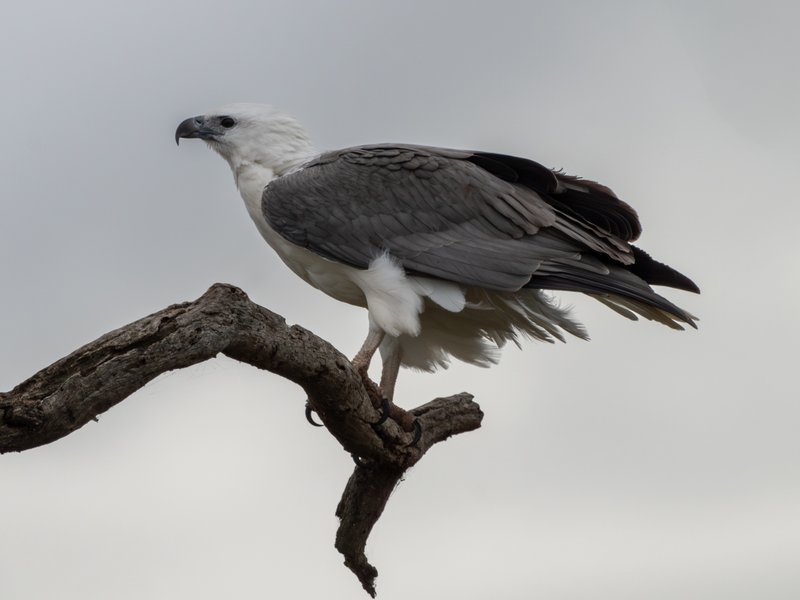
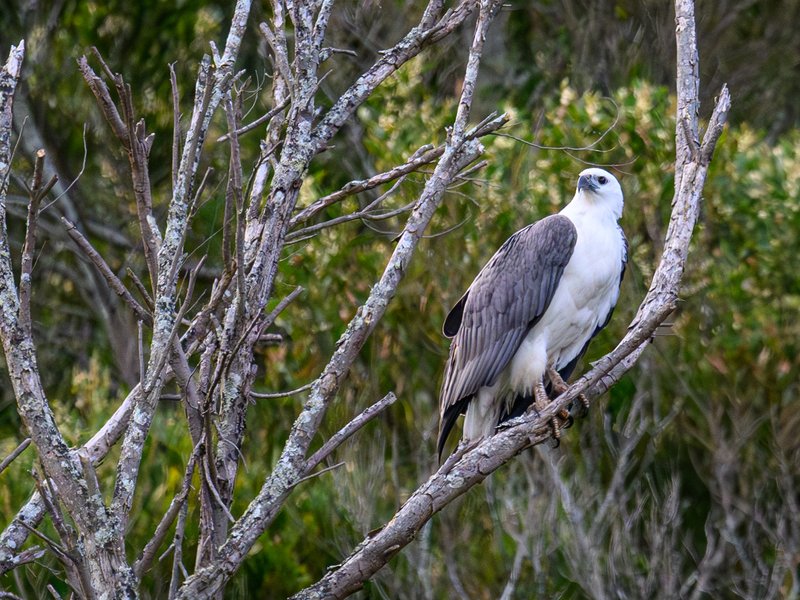
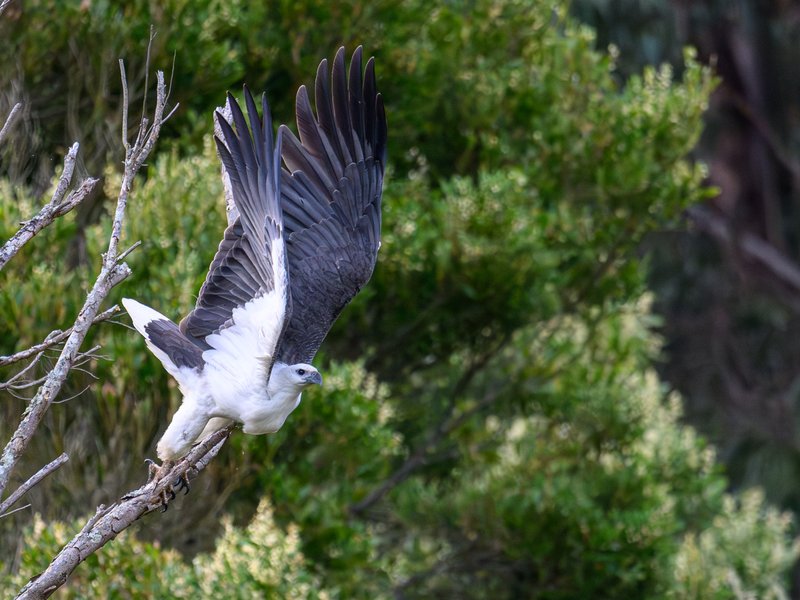
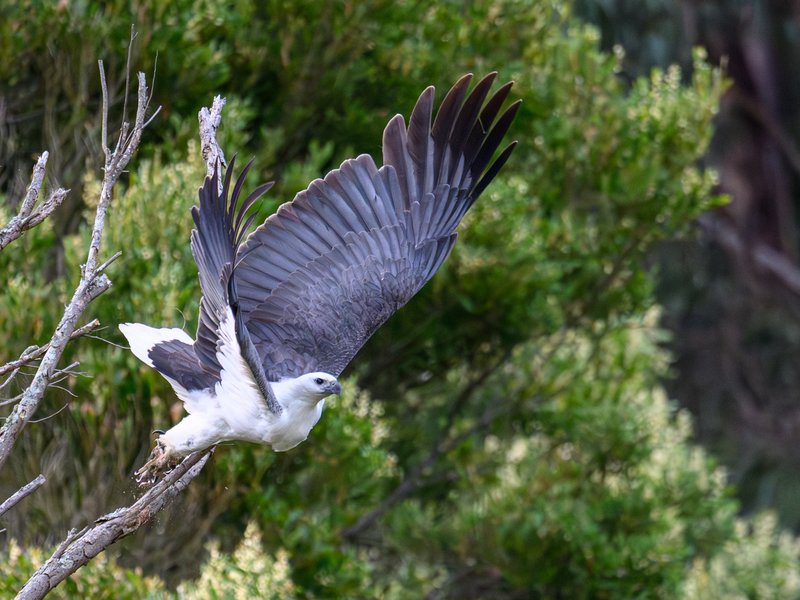
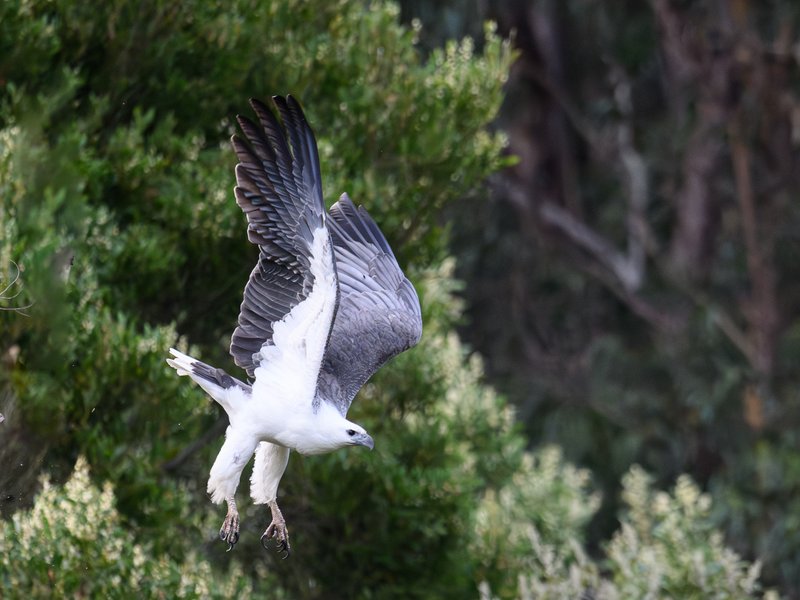
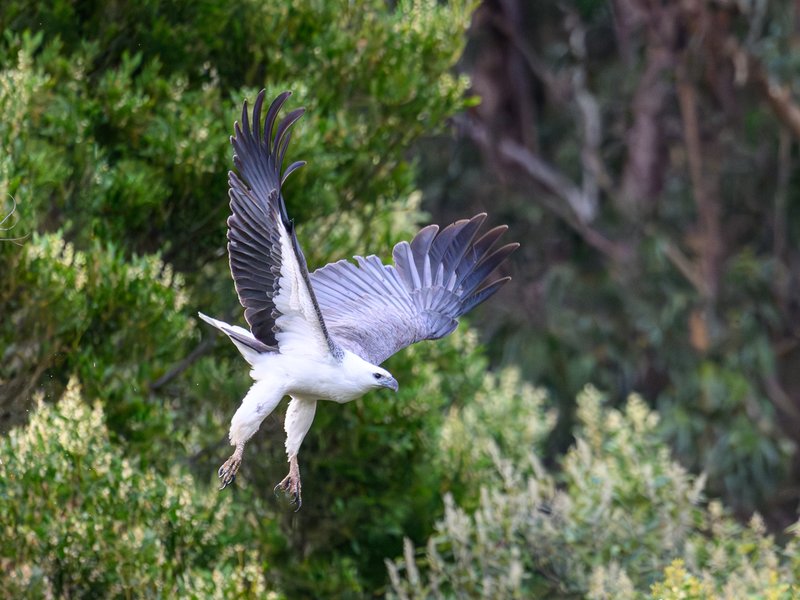
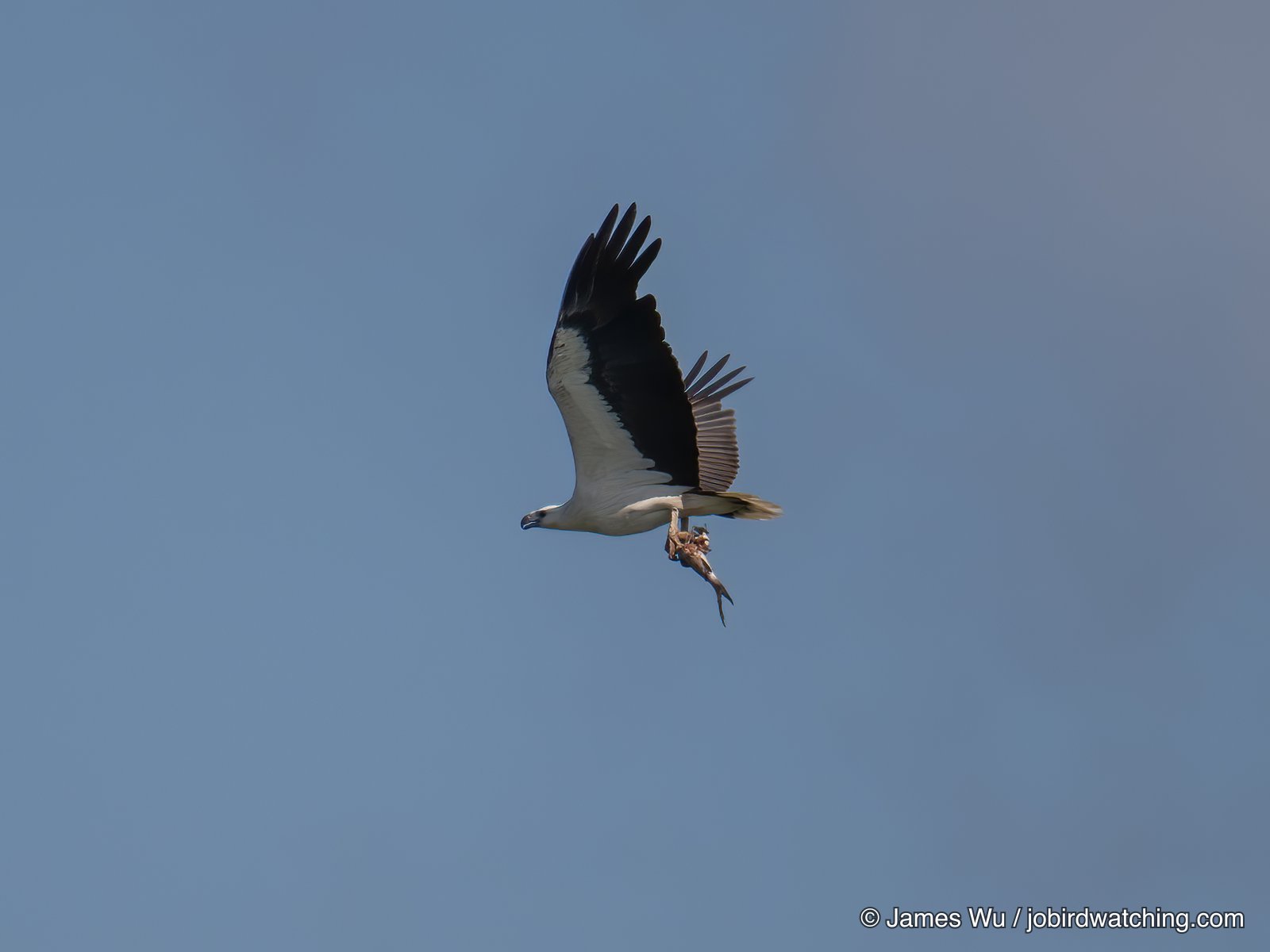
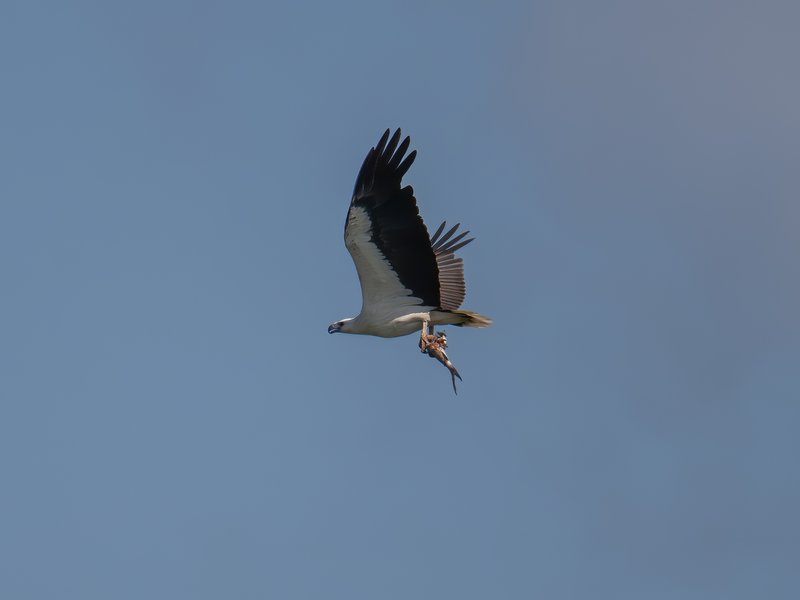
Adults are unmistakable — white head, breast and tail set against slate-grey wings and back — while immatures stay mostly brown for their first four to five years. Males run 66–80cm; females are larger still, with a wingspan up to 2.2m. Ranges from India and Sri Lanka through Southeast Asia to the Australian coast, favouring shorelines and large waterways where it hunts fish in low, skimming strikes, alongside reptiles, waterbirds and carrion. Pairs mate for life and build large stick nests in tall trees. Globally Least Concern, but under pressure from habitat loss in parts of Southeast Asia and southeastern Australia.
White-bellied Sea Eagle
70-90 cm; span c. 2 m. Female larger. Very large white and grey eagle with unfeathered cream legs and feet. Soars in majestic circles: broad, upswept wings and short white tail, dark at base, give itthe look of a huge butterfly; underwings divide into white and blackish triangles. Juvenile: (first year) head buffish and 'spiky', contrasting with patchy cream and dark brown body and wings; underwing pattern also patchy, but note large cream half-moon at base of primaries; buff-white tail with broad dark brown subterminal band and pale tips. Immature: (second and third years) patchy buff-white head and body and grey-brown wings; tail plain buff-grey; later like adult. Singles, territorial pairs, family parties: watches from large trees over coasts, rivers, lake-shores. Hovers low over prey, or makes sloping power-dive from a height (or high perch) to seize fish, waterbird or offal from surface; unlike Osprey, seldom enters water.
- Other name
- White-breasted Sea-Eagle.
- Similar Species
- Osprey: bold dark eye mark; slimmer, arched wings with black 'wrist'-mark. Wedge-tailed Eagle: blacker; larger, diamond-shaped black tail.
- Voice
- far-carrying metallic clanking; mated pairs duet.
- Habitat
- coasts, islands, estuaries, inlets, large rivers, inland lakes, reservoirs.
- Breeding
- May-Aug., n. Aust.; June-Dec., s. Aust.
- Nest
- huge, of sticks; in tall live tree near water; on ground on island, remote coastal cliff.
- Eggs
- 2; white, some smeared yellowish.
- Range & Status
- coastal Aust. and Tas.; larger rivers, lakes and storages, some far inland. Sedentary; dispersive. Also India, se. Asia to PNG, Solomon Is.