Black-fronted Dotterel
Black-fronted Dotterel
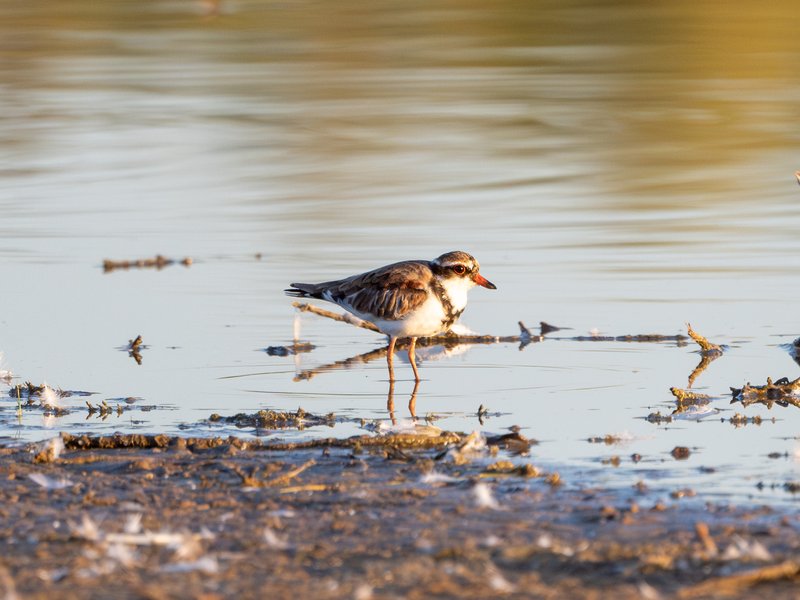
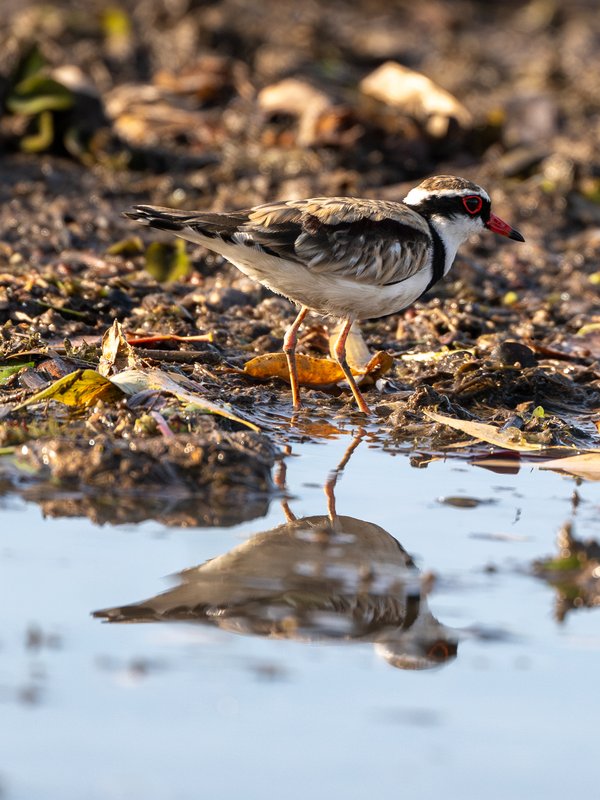
16-18 cm. Widespread native wader of disruptive patterns: black forehead extends back through centre of crown and through eyes under long white eyebrow, joining bold black Y on white breast. Upperparts brownish, with dark chestnut 'shoulder bar'. Bill red to orange, tipped black; eye-ring red; legs flesh-pink to yellowish. Juvenile: lacks breastband and black forehead but has black mask under bold white eyebrow; shoulder bar paler chestnut; more white on wings. Singles, pairs, parties: usually on gravel, sand or mud near shallow freshwater; gravel or stony roads. Stands horizontal; bobs head, tips, runs; occasionally swims. Active; vocal at night: when courting, brisk aerial chases with excited churring. Flight easy, undulating, jerky and dipping, on 'oversize wings': note white wingbar, chestnut wingpatch and rump, black tail edged and tipped white.
- Other name
- Black-fronted Plover.
- Similar Species
- Red-kneed Dotterel: black hood, white bib; white trailing edge in flight. Hooded Plover: head black with white rear collar. See also Ringed and Little Ringed Plovers; Inland Dotterel.
- Voice
- liquid 'dip!'; tinkling rattles and churrings, often in flight.
- Habitat
- shallow bare freshwater wetlands; sandbars and margins of rivers; open ground, on pebbles, gravel, mud, branch and leaf debris, inland claypans, receding shallow floodwaters; sewage ponds, farm dams in bush, stone and gravel roads. Less commonly on saltmarsh, brackish lakes, sandy seashores or mudflats.
- Breeding
- Aug.-Feb., but almost any month when conditions suitable.
- Eggs
- 2-3; yellow-white to stone colour, closely scribbled dark brown and lavender, laid in scrape in sand, shingle, bare ground among leaf litter; gravel road. May be lined with small sticks, etc. Some away from water.
- Range & Status
- Aust. and Tas: widespread in suitable habitat; absent from waterless regions. Sedentary; locally dispersive. Also NZ.