Willie Wagtail
Willie Wagtail
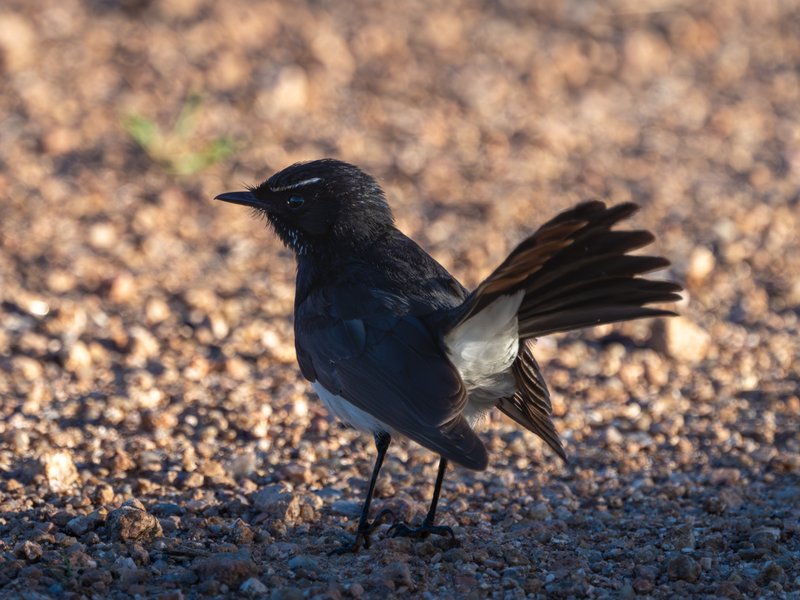
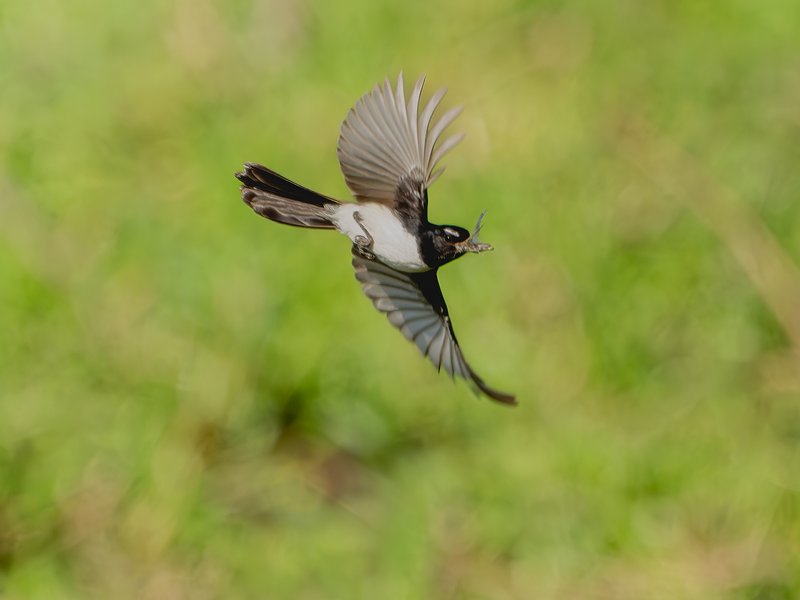
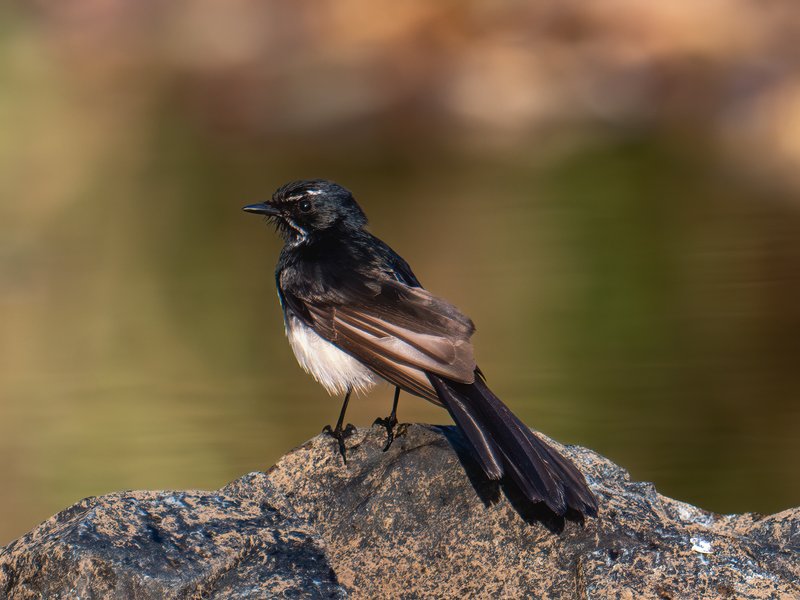
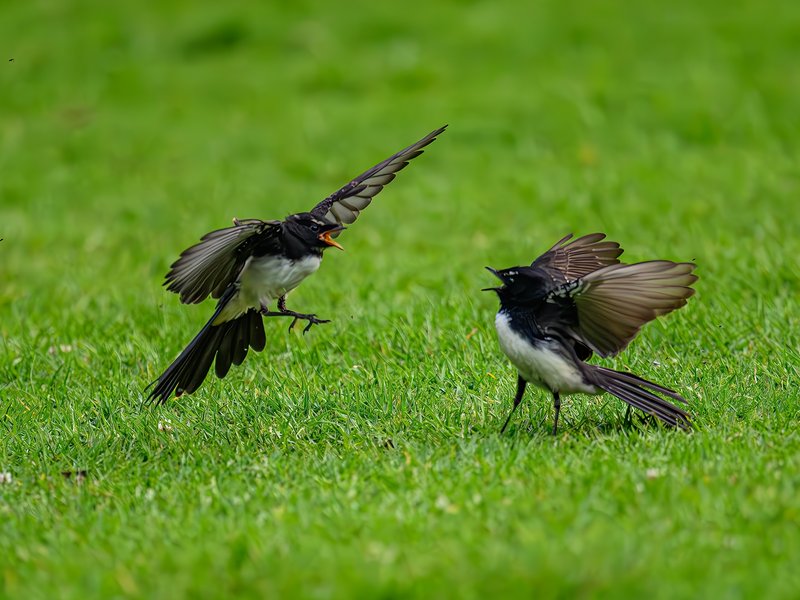
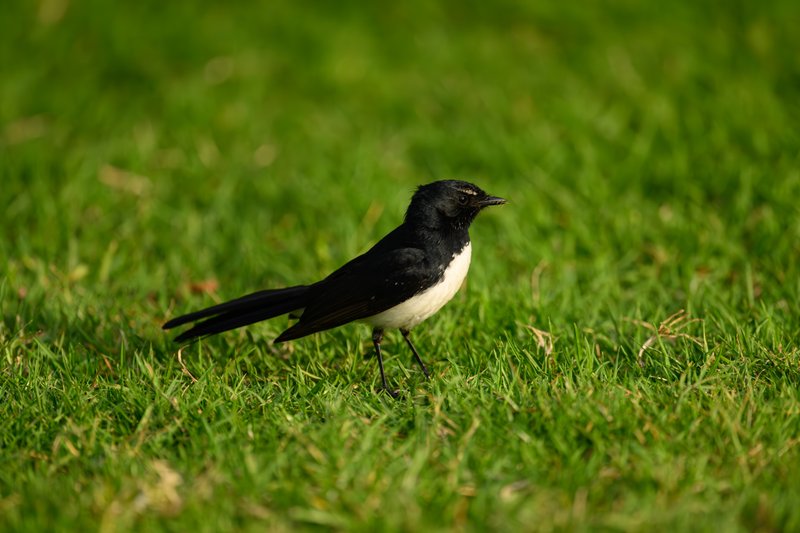
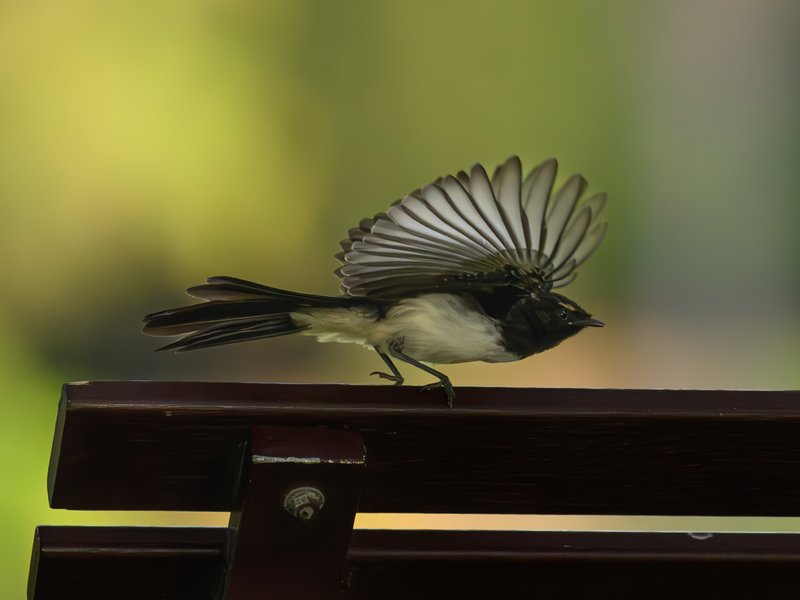
19-22 cm. Widespread, well-loved. Black, fantailed; white underparts sharply cut off by black upperbreast. Erectile white eyebrow changes with bird's sex/status/emotional condition from near-invisible to flaring/conspicuous; also slim white whisker-mark. Immature: duller; buffish eyebrow; margins to wing feathers. Singles, pairs, family parties: bold, perky; watches from low branches, fence posts, stumps, rocks, backs of farm animals. Takes insects in twisting flight, in foliage, on ground or floating vegetation, seemingly disturbing them by jerky sweeps of tail, sudden wing flaring. Large butterflies transferred to feet for carriage to 'de-winging' stations. Skirmishes with larger birds, especially other black-and-white species, e.g. Australian Magpie, Magpie-lark.
- Other name
- Black-and-white Fantail.
- Similar Species
- Satin, Restless Flycatchers.
- Voice
- spirited, sweet: characterised as 'sweet-pretty-creature', but varies much; calls day/night in breeding season; rattling 'rikka-tikka-tikka-tik'.
- Habitat
- most habitats, except dense forests.
- Breeding
- Aug.-Jan.
- Nest
- shallow grey cup of fine grass, bark shreds, rootlets, felted with spiders' web; lined with hair, wool, feathers, plant down; on horizontal branch, 1-15 m high, often over water, or near nest of Magpie-lark, White-winged Triller; also on fallen branches, orchard/garden trees, clothes hoists, rafters, street lamps, buildings, boats.
- Eggs
- 2-4; creamy buff/yellowish white; spotted, marked light red-brown, wood-brown, olive, grey, in zone.
- Range & Status
- mainland Aust. and islands, including Flinders I., King I. and Kangaroo I. (SA). Accidental n. Tas. Common; widespread. Sedentary; dispersive. Also Solomon Is., Bismarck Arch., PNG, e. Indonesia.
- Distribution key to races
- 1. Rhipidura leucophrys melaleuca 2. Rhipidura leucophrys picata 3. Rhipidura leucophrys leucophrys