Black-tailed Godwit
Black-tailed Godwit
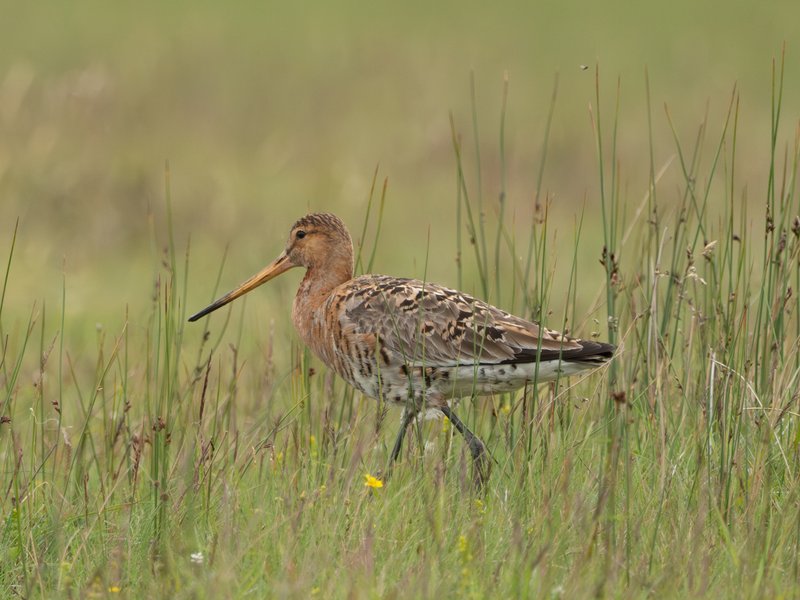
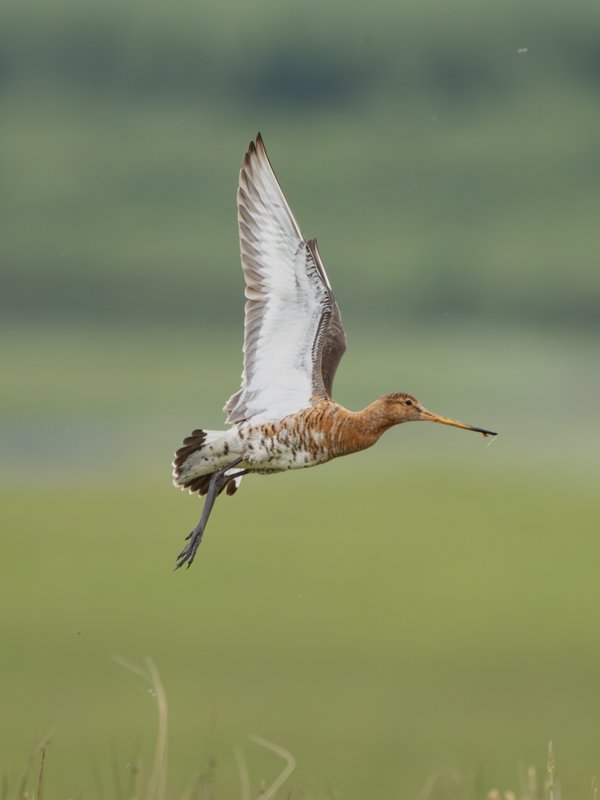
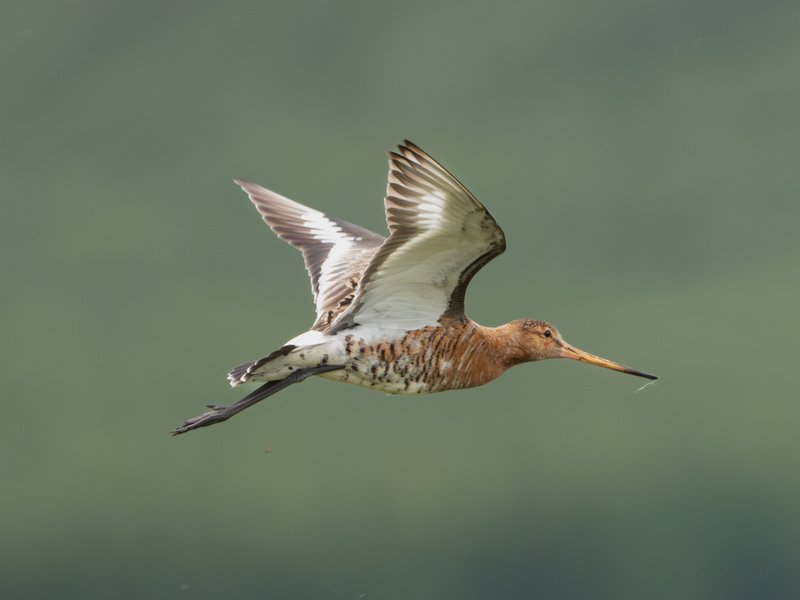
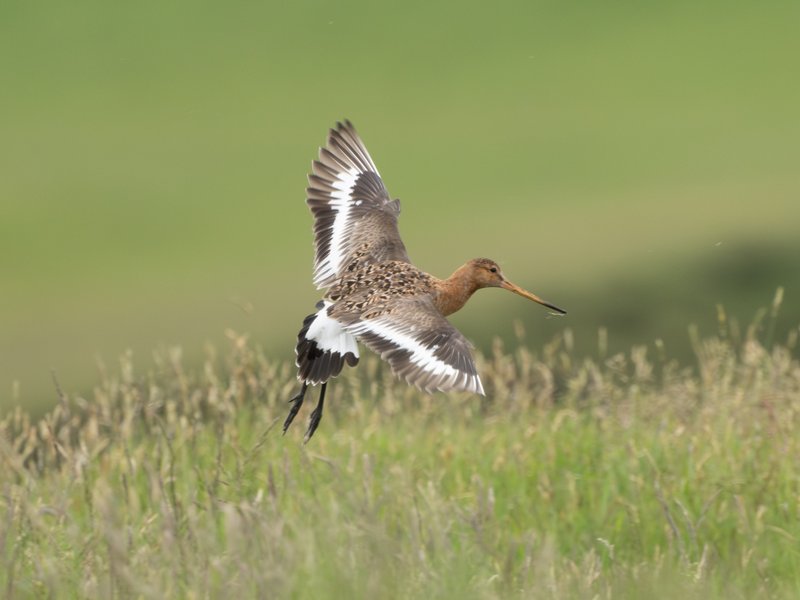
36-43 cm. Slightly smaller than Bar-tailed but legs longer; bill longer and straighter, pink with black tip. Non-breeding: more evenly grey and buffish; less streaked. Breeding Plumage: male: head, neck and breast buffish to rusty; eyebrow cream; upperparts richly patterned black and rusty; flanks barred black and white. Female: head/neck buffish. Immature: richer buffish neck and breast; buff edges to dark feathers of upperparts. Small parties to companies of hundreds; often with Bar-tails: compare bills and look for Black-tail's white underwing when stretching. Feeding movements unhurried; probes mud deeply. Flight swift, often low over water, occasionally erratic: note bold white wingbar across black flight feathers; white underwing, white rump and black tail; legs extend further beyond tail than Bar-tailed.
- Similar Species
- Hudsonian Godwit: shaped more like a Bar-tailed Godwit, incl. slightly upturned bill; note black 'armpits' (axillaries) and dusky underwings; white wingbar much less conspicuous.
- Voice
- staccato, slightly harsh 'witta-wit' or 'reeta reeta reeta'; when feeding, single 'kuk'.
- Habitat
- tidal mudflats, estuaries, sandspits, shallow river margins, sewage ponds; inland on large shallow fresh or brackish waters.
- Range & Status
- the race melanuroides of this widespread wader breeds from Mongolia to ne. Siberia, migrating to s. and se. Asia, Indonesian region; occasional PNG and NZ. Regular summer migrant to Aust. (Sept.-May); common from nw. WA to Gt Barrier Reef (Q) and c. NSW coast; widespread but scarce in s. Aust.; vagrant Tas. Records from s. NT, w. Q, w. NSW and nw. Vic. indicate regular inland passage. Some overwinter.
- Distribution key to races
- 1. Limosa limosa melanuroides