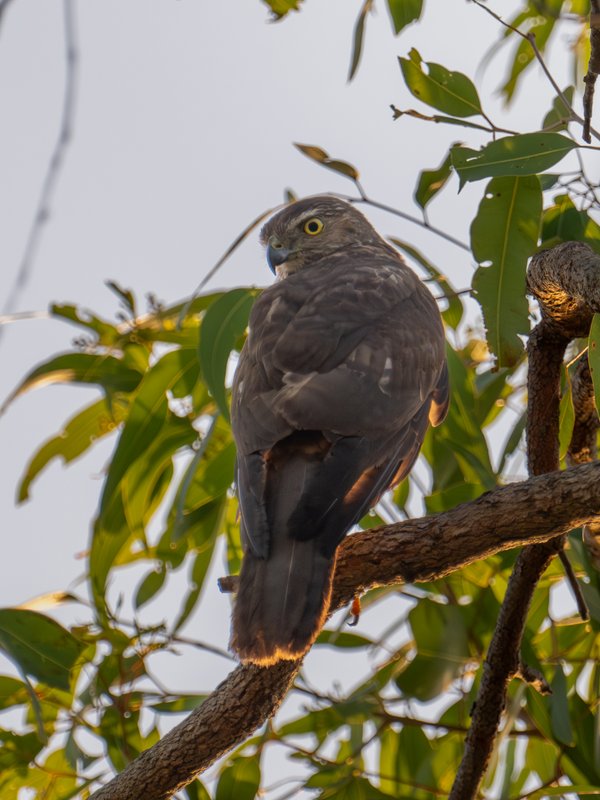
领雀鹰
Collared Sparrowhawk
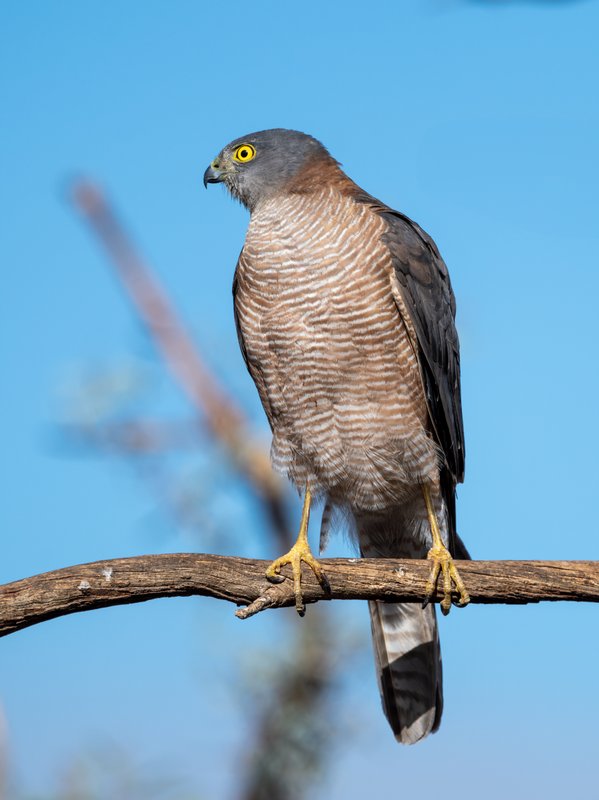
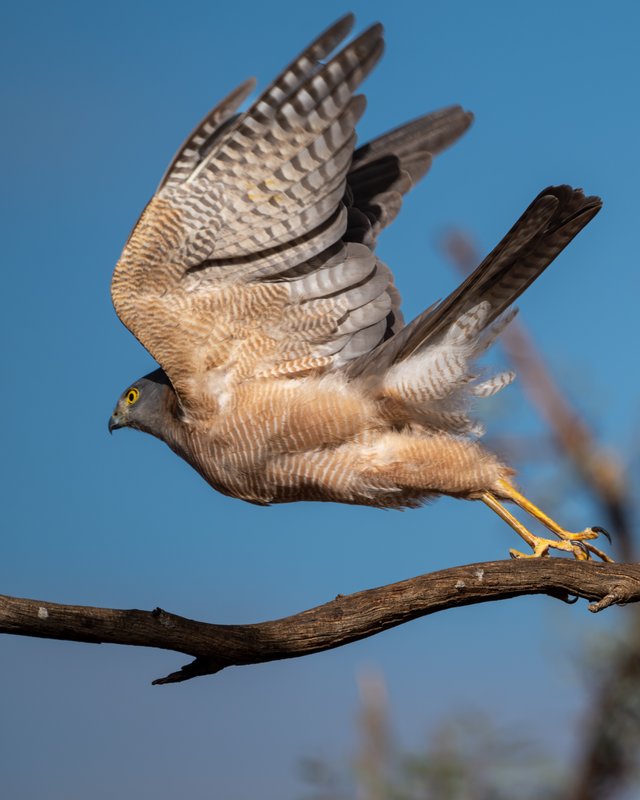
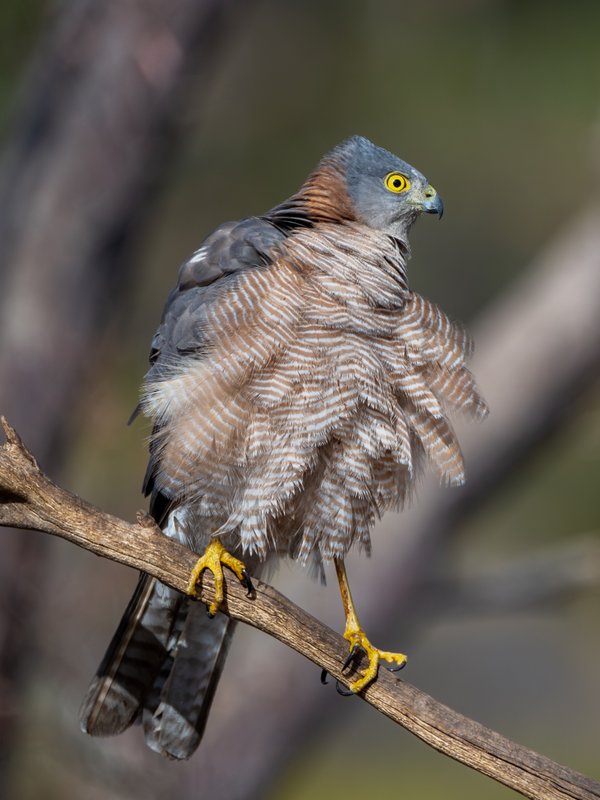
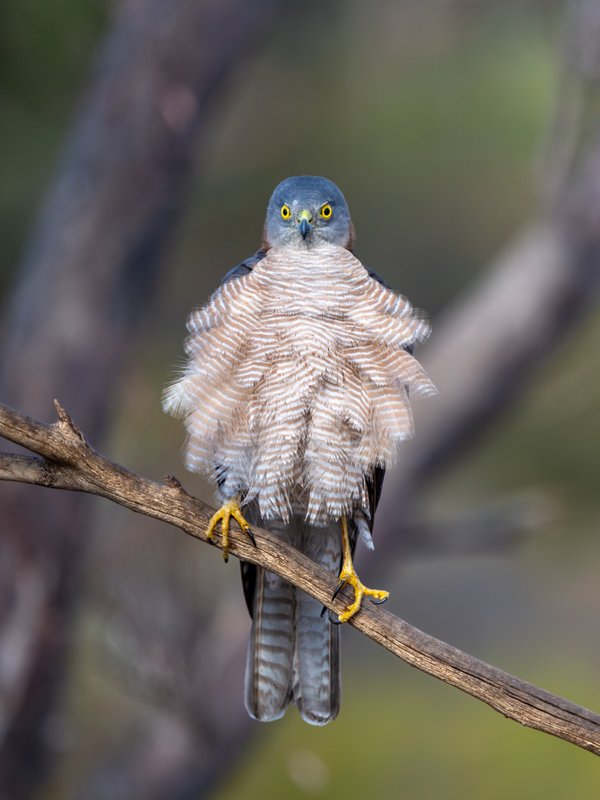
30-40 cm; span to 76 cm. Female larger. Best identified by size, shape and style of flight. Much smaller and finer than goshawk, except in n. Aust., where males of small goshawk race didimus are overlapped in size by female sparrowhawks. Head of sparrowhawk smaller; expression wide-eyed, without goshawk's beetle-brow; tail is shorter, squarer, slightly forked when folded; legs/feet more slender, with very long middle toe. Colours and markings of adult and juvenile are similar to same stages of Brown Goshawk, but it lacks goshawk's heavily barred second-year imm. plumage, moulting straight from juv. to adult plumage. Some males tiny, seemingly thrush-sized. Singles, pairs: differs from goshawk in faster, flicking, more flexible flight on more shapely wings, with longer, backswept primaries. In direct, travelling flight, often undulates like a cuckoo-shrike. Courting, dashes about sky in loops, dives and twists. Relentless in tail chases, preys on birds up to the size of rosellas, bronzewing.
- Similar Species
- Australian Hobby: darker, with more slender, pointed, rakish wings. Note: Nankeen Kestrel is erroneously called a 'sparrowhawk'.
- Voice
- shrill, rapid 'kikikikikiki', like alarm call of White-plumed Honeyeater; near nest, thin squeals, mews.
- Habitat
- forests, woodlands, river margins, inland scrubs, timbered gorges, farmlands, shelter-belts, leafy suburban gardens.
- Breeding
- Aug.-Dec.
- Nest
- shallow platform of small sticks, lined with eucalypt leaves; 10-30 m up in living tree; or in old nest of crow.
- Eggs
- 2-4; white or green-white; faintly blotched brown and buff.
- Range & Status
- Aust. and Tas: widespread; uncommon or seldom recognised. Also PNG, Aru I. (Indonesia).