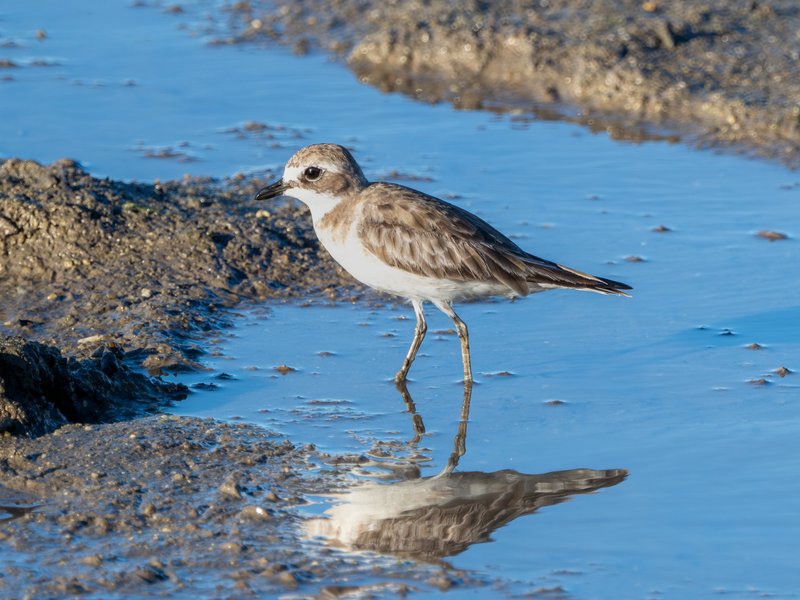
Greater Sand Plover
Greater Sand Plover
20-25 cm; span 53-60 cm. Larger than, but similar to, Lesser Sand Plover. Note: (1) proportionately larger head; (2) larger bill, longer than distance from bill to eye; (3) longer pale, greenish or yellowish grey legs; (4) in Non-breeding plumage , paler, sandier upperparts; partial grey-brown breastband. Breeding plumage: male: black mask encloses white forehead; paler chestnut on rear and side neck and breast; chestnut breastband paler and narrower. Female: head markings less distinct; breastband smuttier, less complete. Solitary or with other waders, especially Lesser; larger flocks in nw. Aust. Often less nervous than other waders: lowers head, slinks away or flies a short distance. Flight strong: prominent white wingbar splits onto inner primaries; white underwing; dark rump with whitish sides; tail sandy grey-brown, darker towards end, tipped white; unlike Lesser, toes clearly extend beyond tail tip.
- Other name
- Large Sand Dotterel or Plover.
- Similar Species
- Oriental, Double-banded Plovers.
- Voice
- quiet, clear, mellow 'tweep tweep'; melodious trill.
- Habitat
- wide, sandy or shelly beaches; sandspits, tidal mudflats, reefs, sand cays, mangroves, saltmarsh, dune wilderness, bare paddocks; seldom far inland.
- Range & Status
- breeds (in three races) from Turkey to s. Siberia; regular summer (Aug.-May) migrant to Aust., Tas., commonest in nw. WA, where flocks of thousands occur; smaller numbers coastally in all states; some overwinter. Also PNG, NZ, oceanic islands.
- Distribution key to races
- 1. Charadrius leschenaultii leschenaultii