Powerful Owl
Powerful Owl
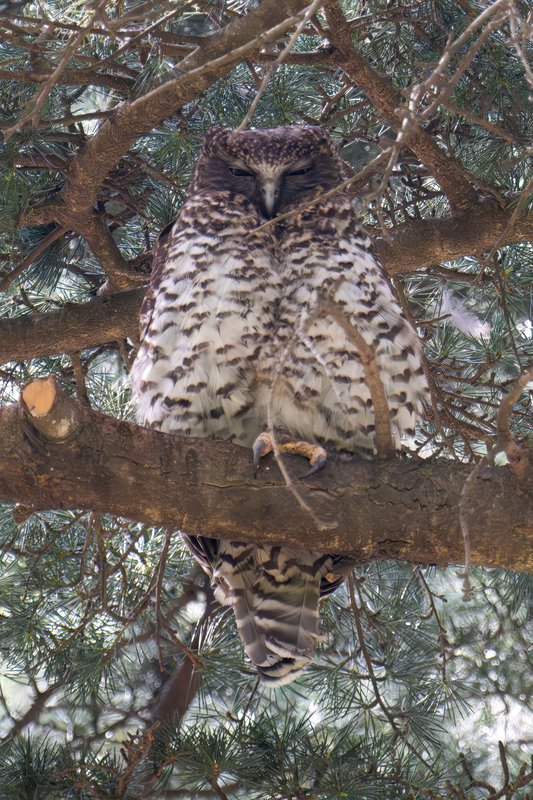
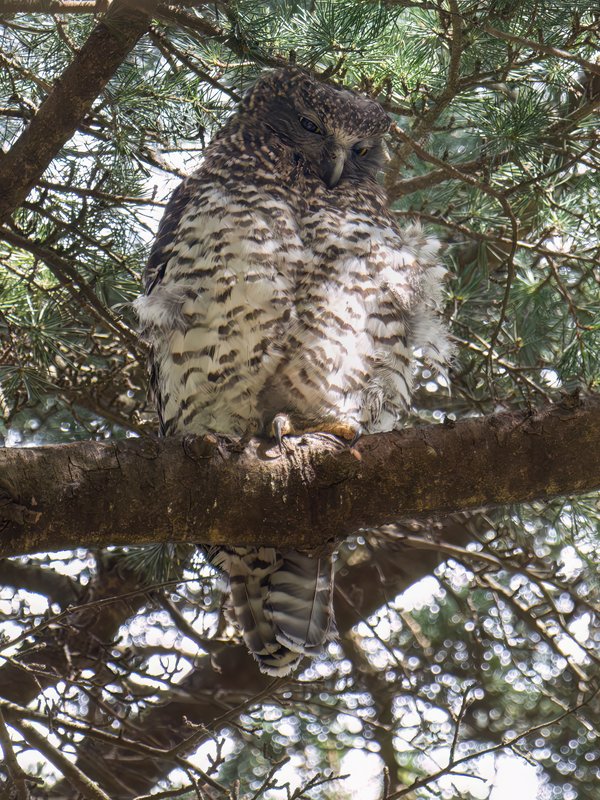
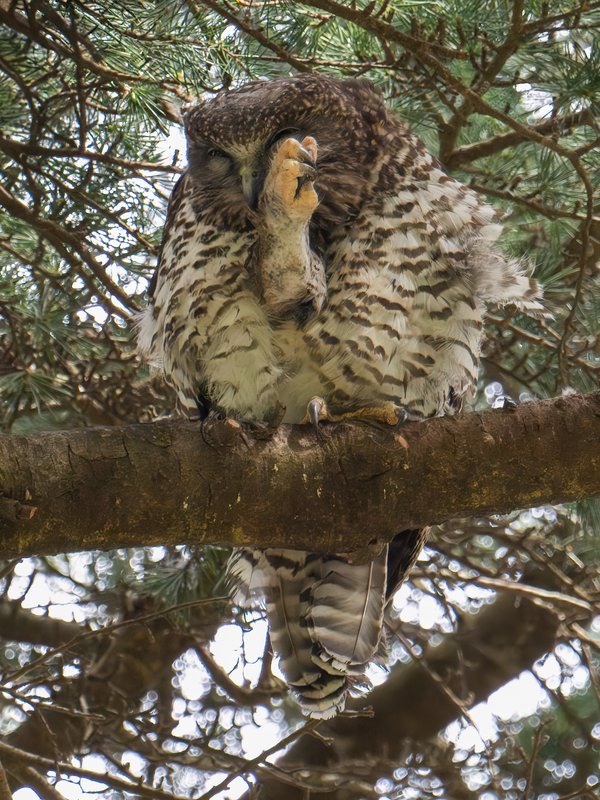
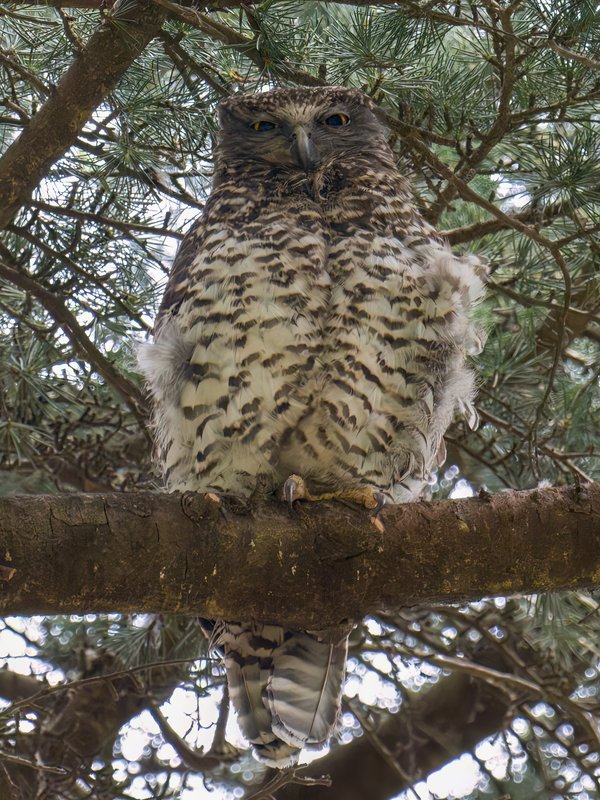
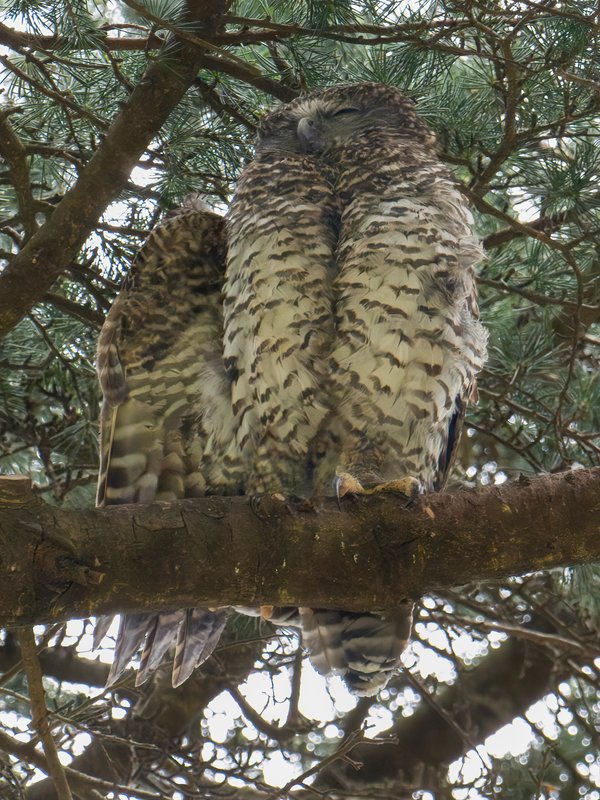
60-66 cm; span 120-140 cm. Male larger. Very large owl with large golden eyes: dark grey-brown above, mottled and barred whitish; white or buff-white below, with bold grey-brown V-barring; tail large, dark grey-brown, widely barred white above and below. Legs feathered; feet dull yellow, very powerful, with heavy claws. Juvenile: back, wings paler, more heavily barred white; face white, with dark eye-patches; underparts white, with sparse fine dark streaks, faint barring on flanks. By day roosts singly, in pairs or family groups, on branch of densely foliaged to fairly open tree in forest or woodland. Often clutches part-eaten remains of prey, e.g. ringtail possum, glider, flying fox, currawong, magpie, lorikeet. Roosts (and breeding hollows) may be occupied intermittently for years. Some individuals are easily approached by day; shy and difficult to observe by night. Occasionally aggressive to humans at nest.
- Other name
- Powerful Boobook.
- Similar Species
- Barking Owl: white spots on wings; grey or brown streaks below.
- Voice
- male: an impressive low, slow, far-carrying 'whoo-hooo', second note usually lower. Female's call higher pitched; second note higher. Also a sheep-like bleating near nest (D. Hollands, pers. comm.).
- Habitat
- pairs occupy a large, probably permanent, home range in mountain forests, gullies and forest margins; sparser hilly woodlands; coastal forests, woodlands, scrubs; exotic pine plantations; large trees in private/public gardens, some in cities.
- Breeding
- June-Sept.
- Nest
- on decayed debris; in hollow trunk or limb 8-20 m or more high in forest tree.
- Eggs
- 1-2 (3); dull white, oval.
- Range & Status
- suitable habitat in e. and se. Aust., mostly within c. 200 km of coast, from n. of Eungella NP (Q) inland to c. Carnarvon Ras.; exceptionally to e. of Longreach (Q) (Pavey, 1994); e. NSW, inland to c. Tenterfield-Coonabarabran; e. Vic. and Central Highlands w. to c. Mt Alexander-Stawell-Grampians NP, to far sw. Vic. and adjacent far se. SA (Mt Burr); casual to Vic. mallee, near Wyperfeld NP. Sedentary; dispersive when young. Uncommon.