Mistletoebird
Mistletoebird
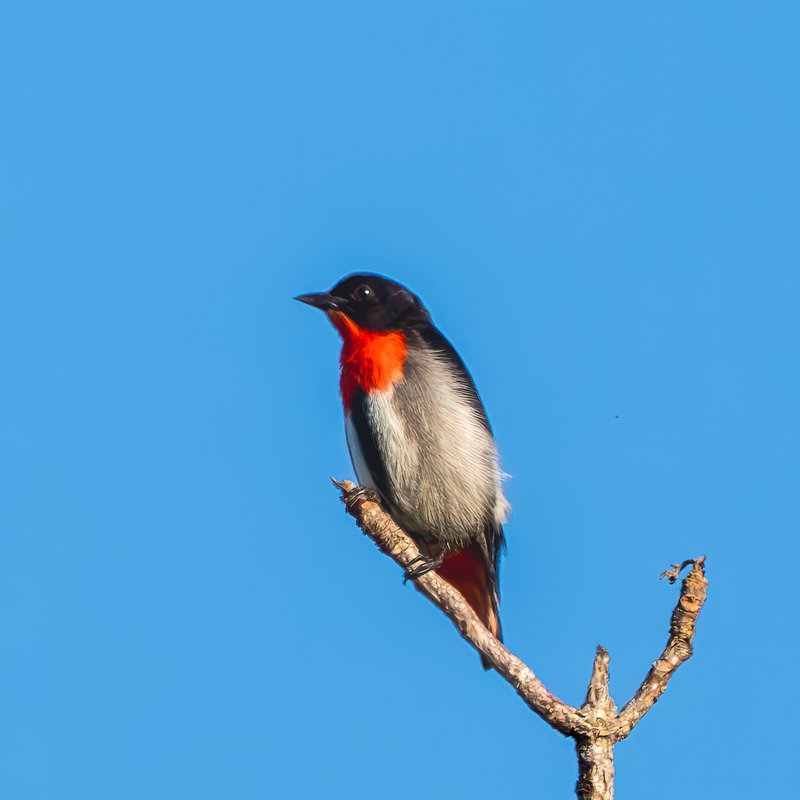
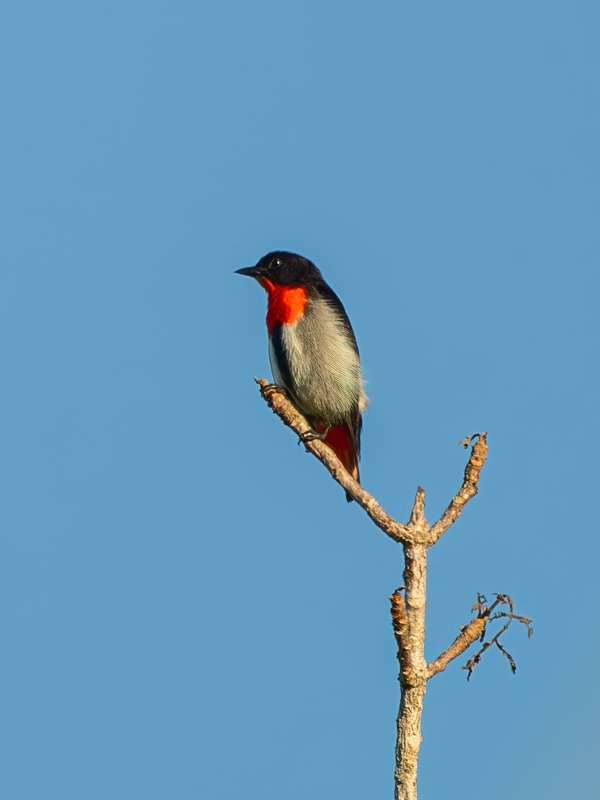
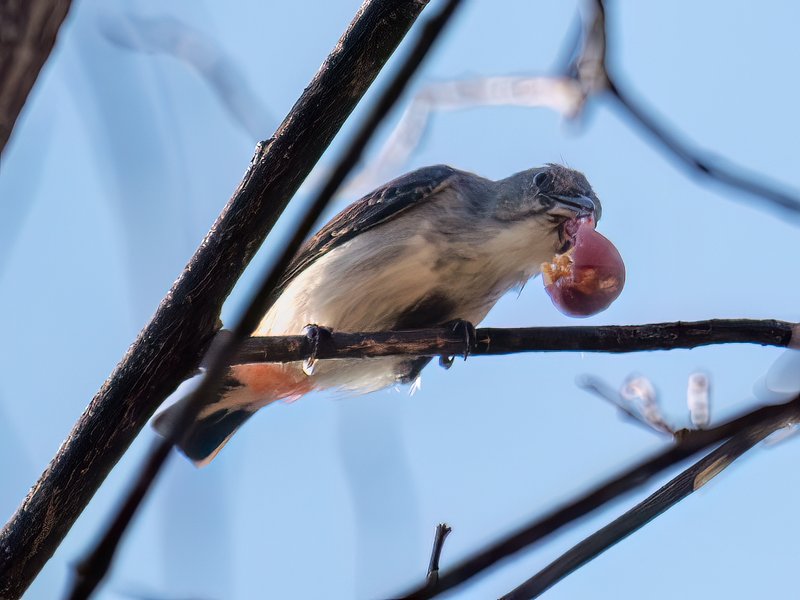
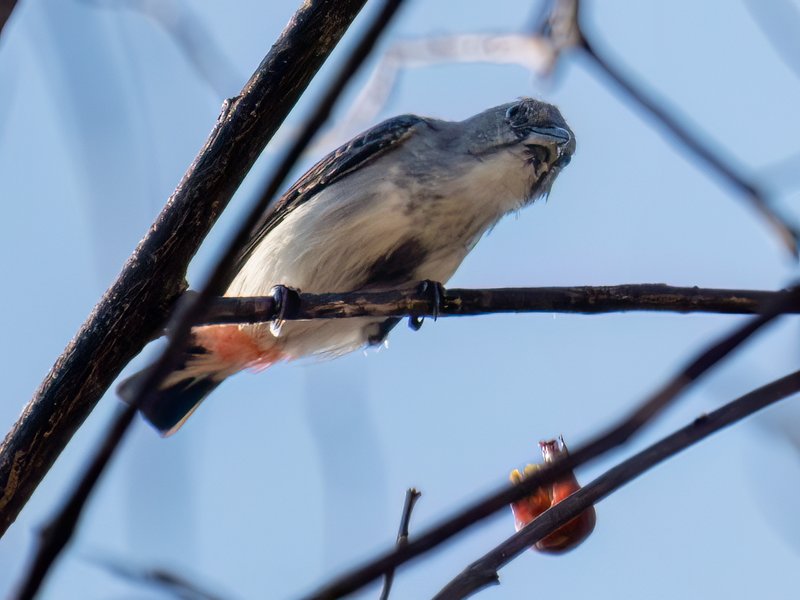
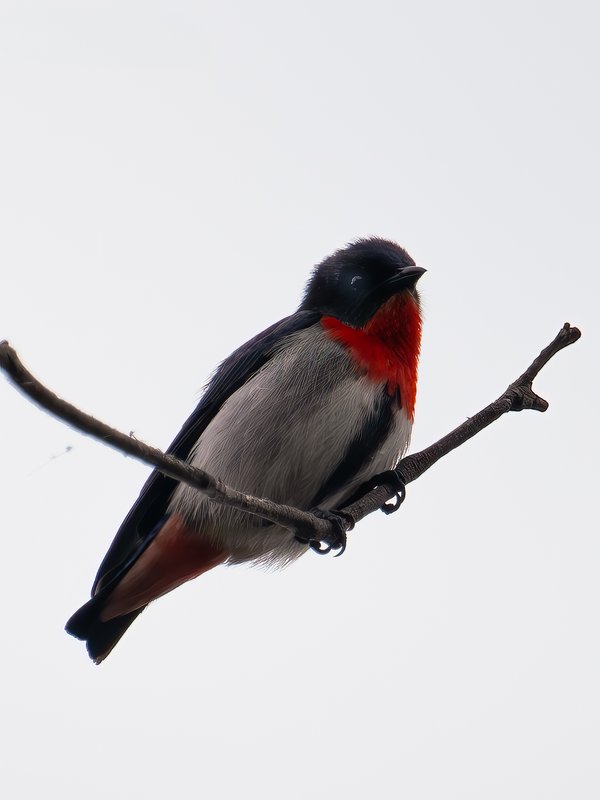
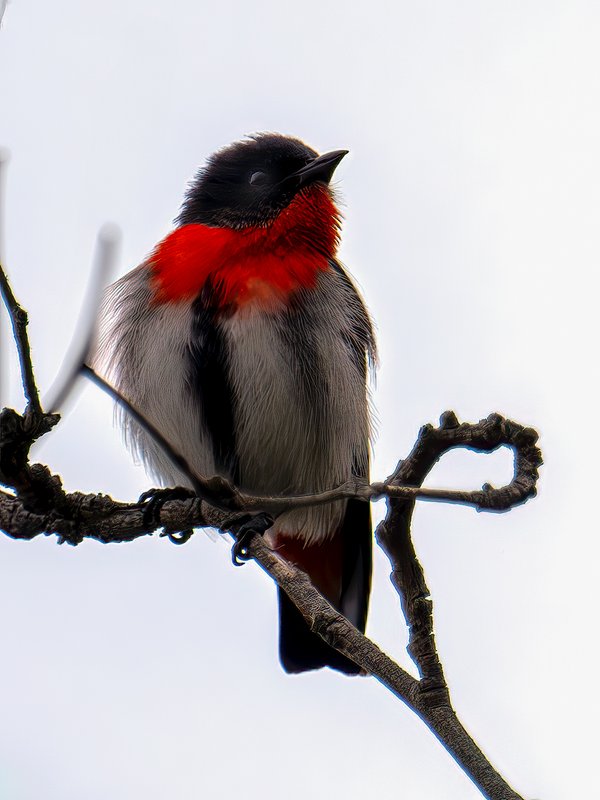
9.5-11 cm. Male: tiny; bill black, sharp; upperparts glossy blue-black; throat/upperbreast, undertail-coverts scarlet; underparts grey-white with black mark down centre. Female: bill dark grey; upperparts grey; tail black; underparts whitish; undertail-coverts pale red. Immature: like female; bill/gape pale orange. Pairs when breeding, otherwise solitary; difficult to observe because small, quick, often high in foliage. Flight swift, darting on longish, pointed wings. Seems to follow regular local circuits linking clumps of fruiting mistletoes. Posture upright when perched; restlessly switches this way and that, depositing excreted, sticky mistletoe seeds on branch. Also eats nectar, pollen, insects, berries/fruit of native/introduced plants.
- Other name
- Mistletoe Flowerpecker.
- Similar Species
- behaviour separates male from other red-breasted Aust. birds.
- Voice
- has glancing, splintered quality. Flight-call: sharp 'dzee!'; clear brisk 'pretty-sweet'!; or 'tsew!'; clear penetrating 'kinsey-kinsey-kinsey'; 'wait-a-bit', 'wait-a-bit, zhipp!'; or 'swizit, swizit, weet-weet-swizit'. Quiet, warbling sub-song includes mimicry.
- Habitat
- any vegetation that supports mistletoes.
- Breeding
- Oct.-March.
- Nest
- beautiful pear-shaped purse with slit-like upper side entrance; of plant down, spiders' web, egg-sacs, web-debris, lichen or faded wattle-blossom; hung from leafy twig, 1-15 m high.
- Eggs
- 3 (4); white.
- Range & Status
- mainland Aust., many coastal islands. Absent from driest, treeless deserts, agricultural areas without native trees; rare above 1000 m in Snowy Mts (Blakers et al, 1984). Also islands in Torres Strait, e. Indonesia. Common. Nomadic.
- Distribution key to races
- 1. Dicaeum hirundinaceum hirundinaceum