Nankeen Night Heron
Nankeen Night Heron
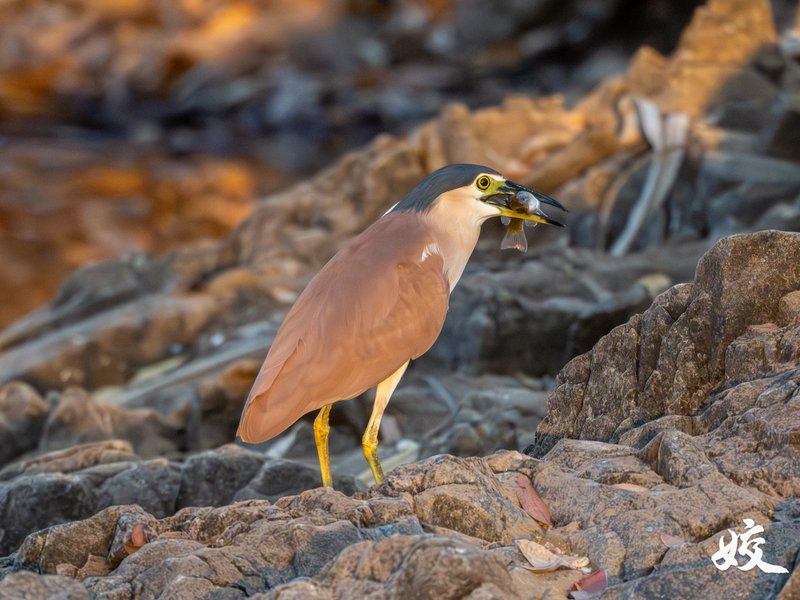
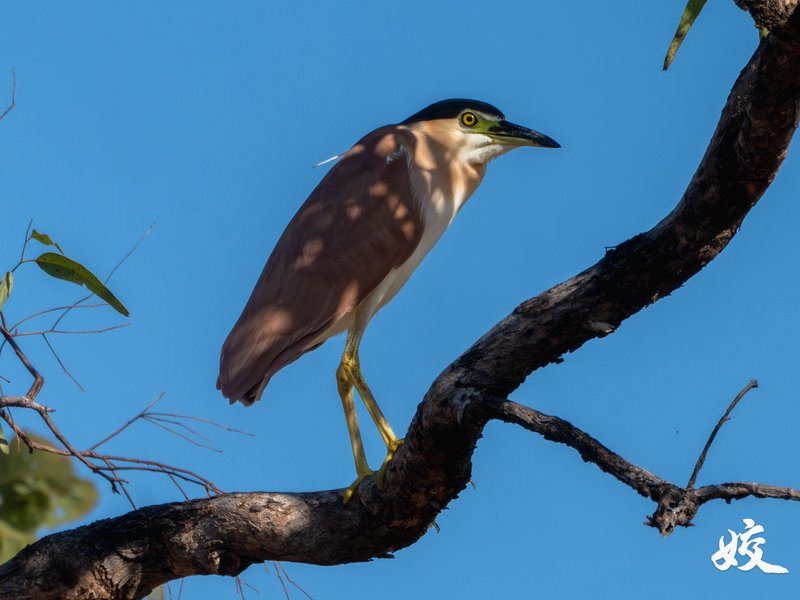
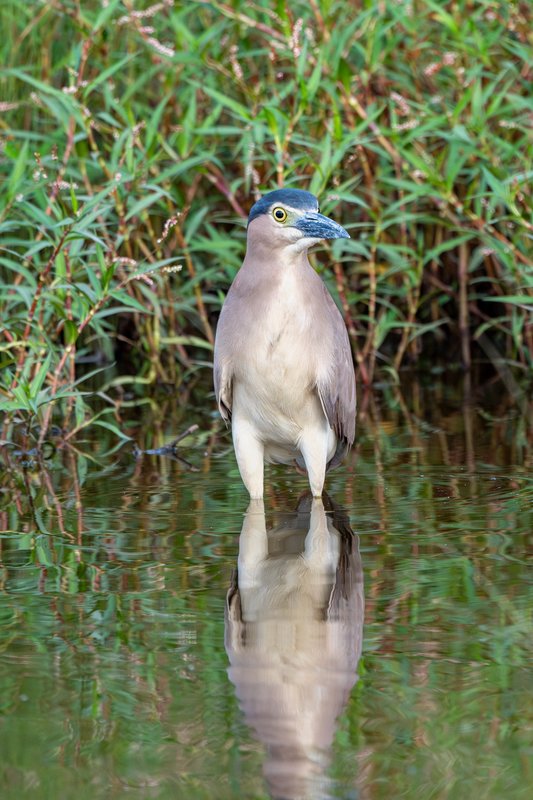
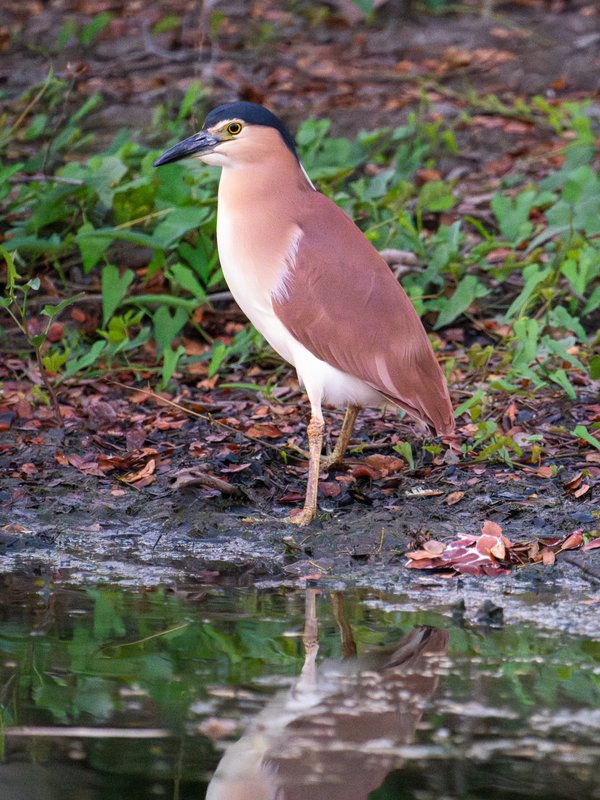
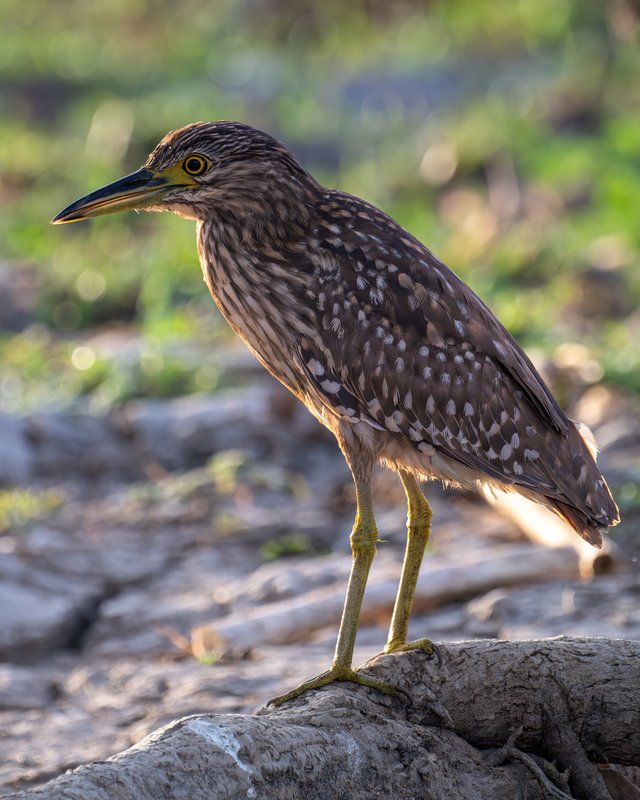
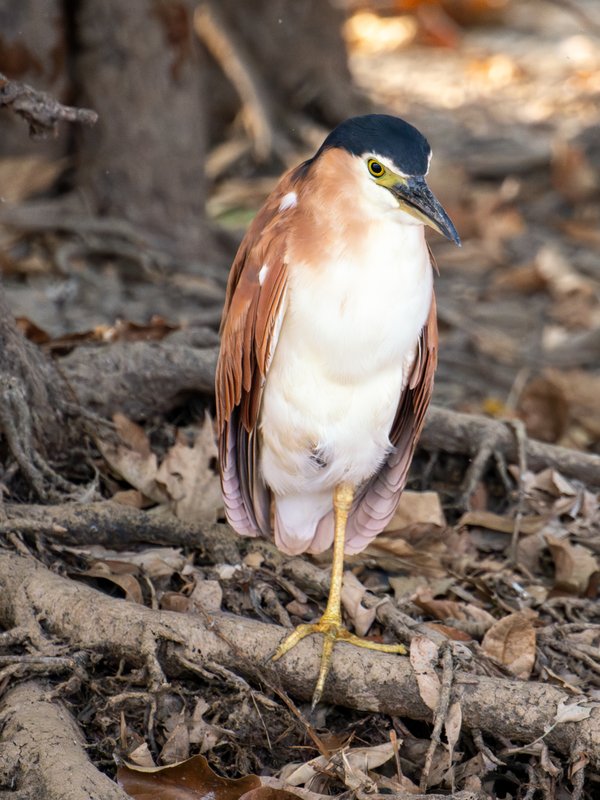
56-64 cm; span to 1.1 m. Stocky, stooped heron, with large head, short neck and short yellow legs; crown black; upperparts rich cinnamon; underparts whitish, washed buff. Breeding Plumage: two or three slender white head plumes. Juvenile: heavily streaked pale brown and buff-white, with rows of large, white and buff spots on wings; often mistaken for a bittern. Immature: gains adult plumage by stages: crown black; plumage washed cinnamon with pale spots above, streaks below. Companies roost in leafy trees, on rivers, lakes, city parks and gardens, even leafless exotic poplars and willows, usually near water. At dusk, moves out in slow-flapping, loose flocks, like flying-foxes. May forage by day, seizing prey while wading or occasionally while hovering.
- Other name
- Rufous Night Heron.
- Similar Species
- Australasian Bittern: bigger, browner, with dark neck-streak; fine black patterns on wings without white spots; rarely in trees. Striated Heron: smaller; reddish morphs are deeper grey-buff below, with dark spots and white streaks down centre of breast.
- Voice
- loud, peevish 'kyok!', often at night.
- Habitat
- shallow margins of rivers, wetlands, mangrove-lined estuaries, offshore islands, floodwaters, garden trees.
- Breeding
- Sept.-Feb. in s.; March-April in n.
- Nest
- loose structure of sticks; in colony over water, in mangroves, swamp woodlands, river red gum forests; often with egrets, cormorants.
- Eggs
- 2-5; light blue-green.
- Range & Status
- mainland Aust. in suitable habitat; nomadic in response to rainfall. Regular, huge breeding colonies in Murray Valley (NSW-Vic.), coastal NT; smaller numbers elsewhere. Uncommon Tas. Also Indonesia to PNG, Solomons, New Cal., sw. Pacific. Vagrant NZ.
- Distribution key to races
- 1.Nycticorax caledonicus australasiae