Chestnut-rumped Thornbill
Acanthiza uropygialis· 细嘴莺科(3 photos)
Chestnut-rumped Thornbill
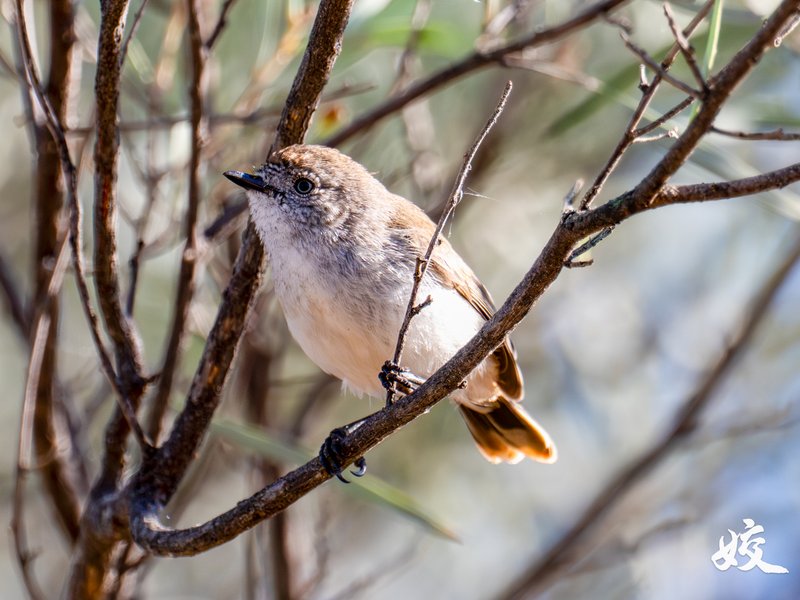
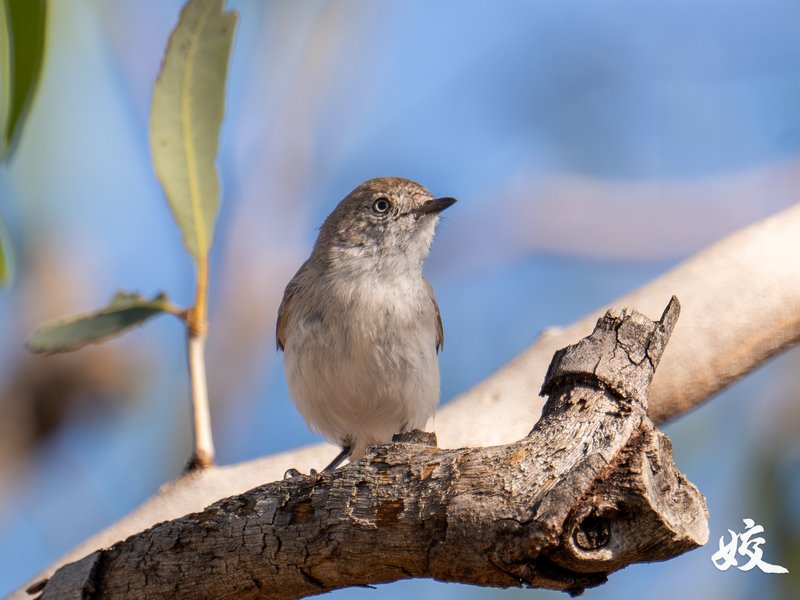
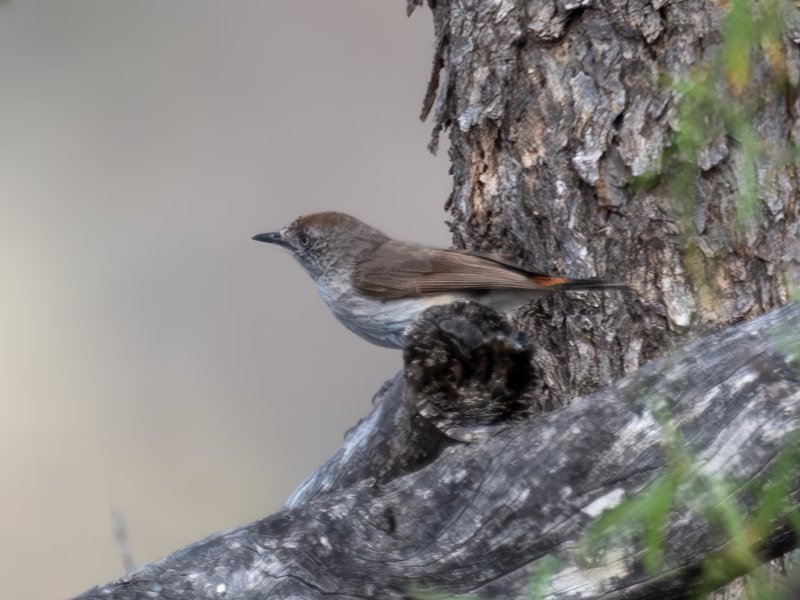
10-11.5 cm. Plain, pale thornbill: upperparts mouse-grey; forehead finely scalloped black and white; eye whitish; underparts whitish; rump pale chestnut; tail black with pale tips. Pairs, small flocks: forages on ground, shrubs, low trees; flies bouncingly, showing contrasting rump/tail. Often with other thornbills, whitefaces.
- Similar Species
- Slate-backed Thornbill: bluer grey with fine dark streaks on crown; eye red. Brown/Inland Thornbills: dark eyes, streaked breasts.
- Voice
- penetrating 'see-see'; far-carrying song of similar phrases, from tops of mulgas; double buzzing scold; 'tchik, tchik' flight-call. Mimics.
- Habitat
- drier woodlands, scrubs, thickets; saltbush, bluebush, lignum; open pastoral country; among dead trees, stumps.
- Breeding
- July-Dec.
- Nest
- domed; of grass, fur, feathers; in hollow stump, fence post, tree hollow; 1-15 m high.
- Eggs
- 2-4; white, spotted red-brown.
- Range & Status
- widespread s. inland and w. Aust., to s. coast w. from Yorke and Eyre Pens. (SA); absent from humid sw. WA. Common. Sedentary.