Great Cormorant
Phalacrocorax carbo· 鸬鹚科(3 photos)
Great Cormorant
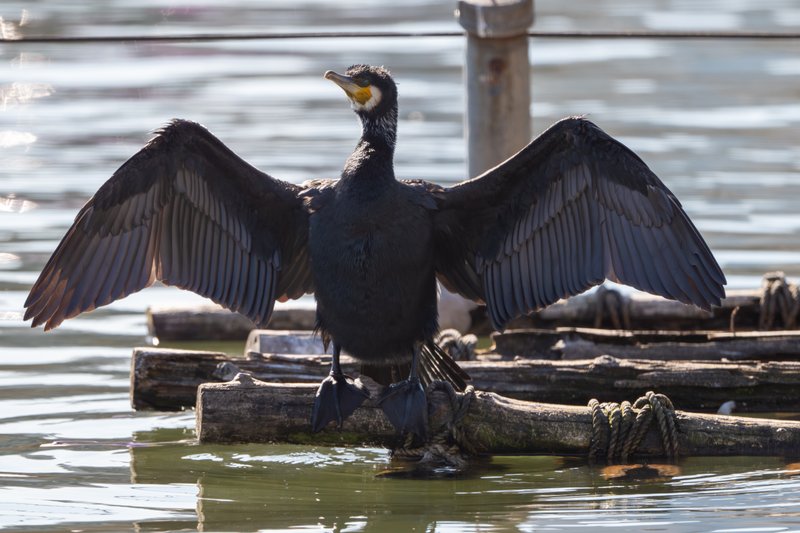
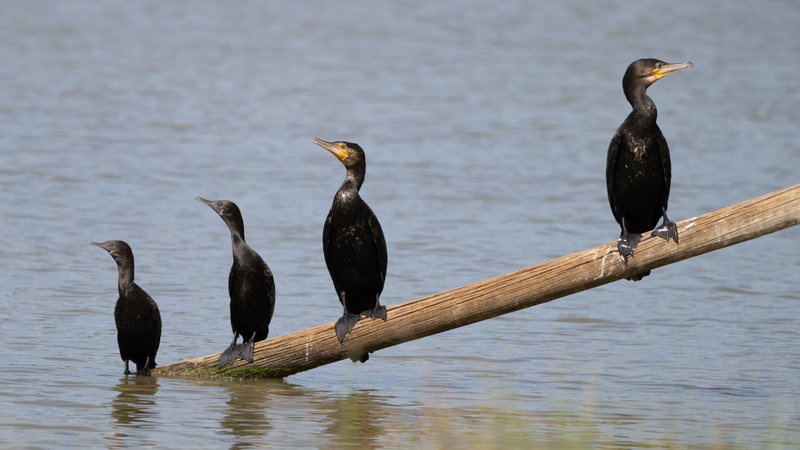
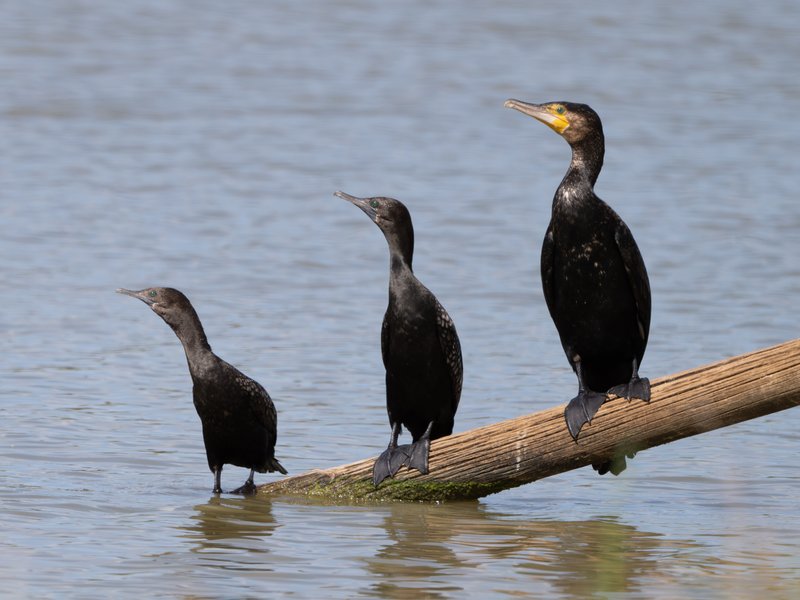
72-92 cm; span 1.3-1.5 m. Largest cormorant, with slender, dark horn, hooked bill; ochre-yellow throat pouch and facial skin. Breeding Plumage: glossy black, with fine white streaks on neck, white chin and flank mark; wing feathers coppery brown, patterned by dark margins. Non-breeding: duller, without white markings. Immature: dull brown, with dull yellow throat pouch; foreneck and breast dirty white. Singles to large flocks: wary; dries wings on trees over water, piers, sandspits, buoys; roosts in public gardens with lakes. Fishes in clear water, submerging smoothly from surface. Flight strong and direct, in lines or Vs, with measured wingbeats; glides in unison.
- Other name
- Black or Big Black Cormorant; Black Shag.
- Similar Species
- Pied Cormorant, imm.: paler below; bill paler; yellowish mark in front of eye. Little Black Cormorant: bill black and slim; facial skin black; wingbeats quicker.
- Voice
- querulous rising croaking, and rapidly repeated guttural coughing.
- Habitat
- large waters: coasts, bays, estuaries; rivers and lakes, reservoirs; farm dams, irrigation impoundments, spillways and regulators.
- Breeding
- most months.
- Nest
- bulky platform of sticks, weed; usually in treetop colony over water, with other cormorants, herons or spoonbills; occasionally on ground or cliff.
- Eggs
- 3-4; greenish white, chalky.
- Range & Status
- Aust. and Tas., widespread; irregular through w. inland; rare n. Aust. Sedentary and nomadic. Also Indonesia, PNG, NZ.
- Distribution key to races
- 1. Phalacrocorax carbo novaehollandiae