Little Black Cormorant
Phalacrocorax sulcirostris(2 photos)
Photographed In:
Locations:
Little Black Cormorant
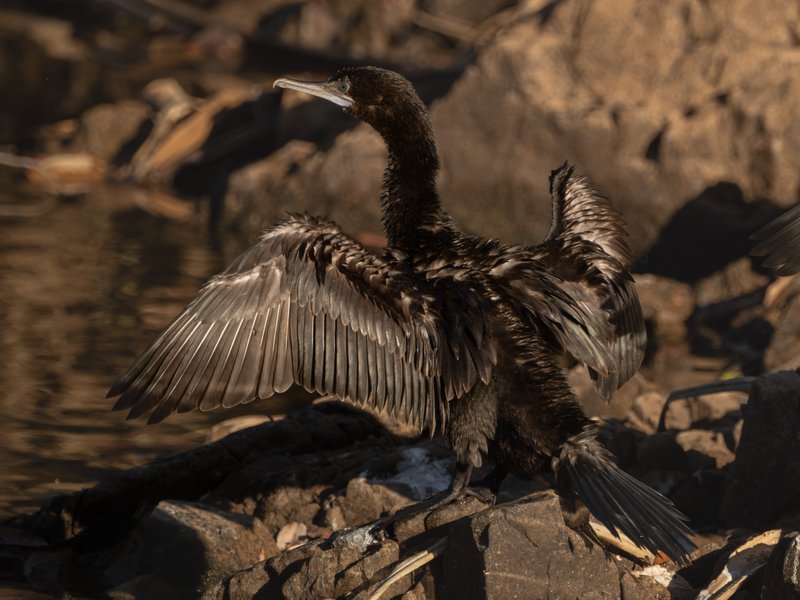
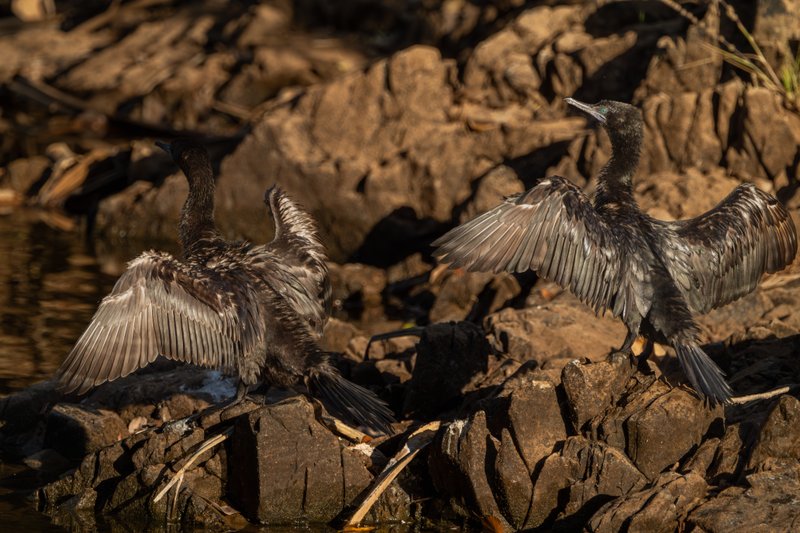
58-64 cm; span c. 1 m. Small, slim, wholly black cormorant with dark grey slender bill and dark facial skin. Breeding plumage more bronzed, head and neck sparsely flecked white, but no solid white in plumage. Forms flocks, especially autumn-winter. Active when feeding; locates fish from the air, wheeling and settling progressively, driving together, diving in rising frenzy, leapfrogging those in front. Dries wings in companies, typically on fallen trees over water, sandspits. In flight, wingbeats quicker than Great Cormorant; moves in fast-flying undulating strings or Vs.
- Other name
- Little Black Shag.
- Similar Species
- Great Cormorant: horn-coloured bill; ochre-yellow throat pouch. Glossy Ibis: flying flocks can be confused, but note drooping necks, legs.
- Voice
- usually silent, away from nest.
- Habitat
- coastal waters, bays, inlets, mangroves, rivers, swamps, lakes, reservoirs.
- Breeding
- spring-summer, s. Aust.; summer-autumn, n. Aust., but any month when conditions suitable.
- Nest
- rough platform of sticks, leaves, bark, water plants; in colony, some large, in trees over water, with other cormorants, herons, spoonbills.
- Eggs
- 4; greenish white, chalky.
- Range & Status
- Aust. and Tas.: mostly coastal but through inland when water conditions suitable. Common; sedentary and nomadic. Also Borneo, Indonesia, PNG, New Cal., NZ.