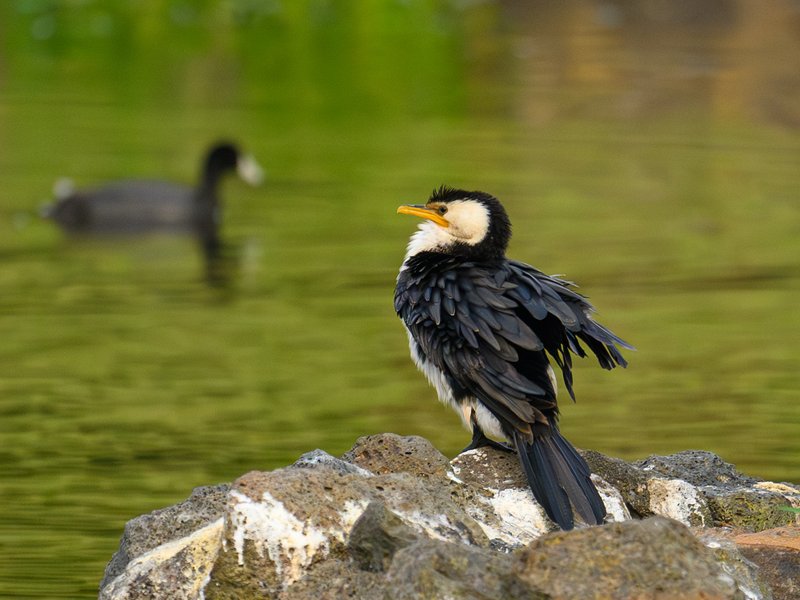
Little Pied Cormorant
Little Pied Cormorant
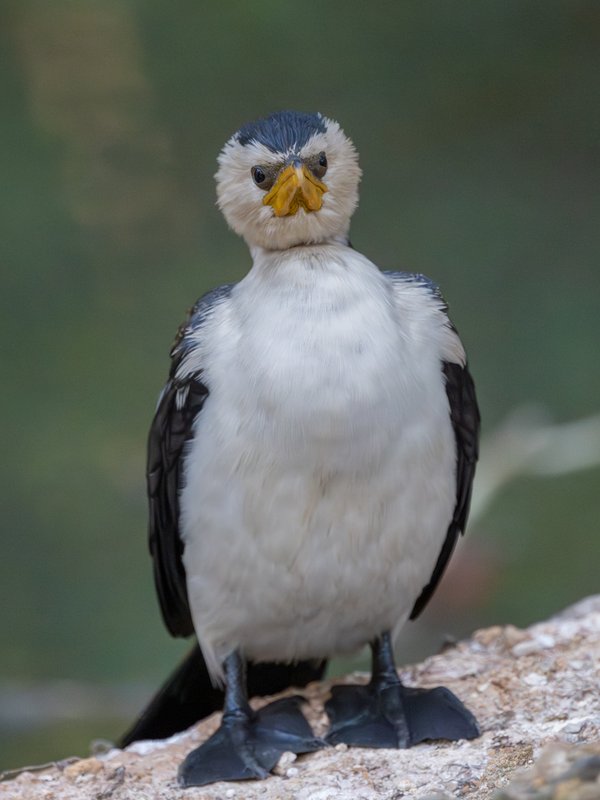
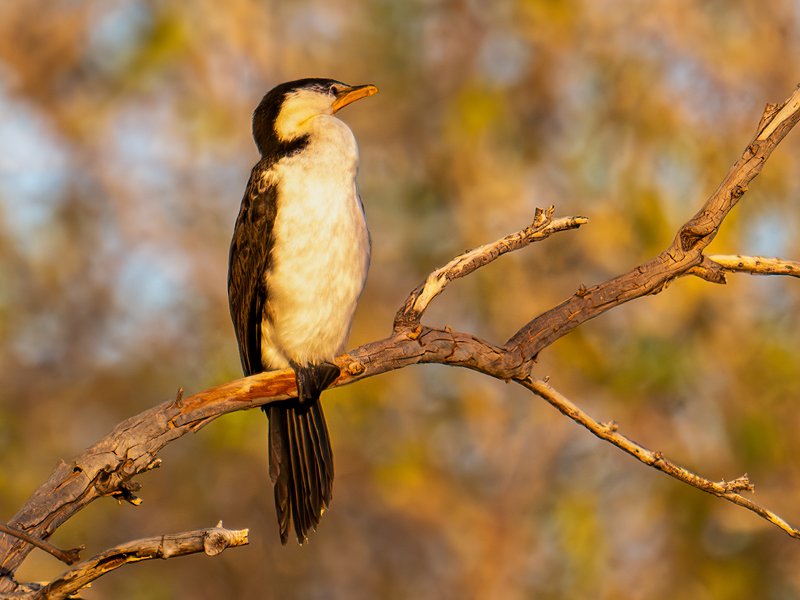
58-64 cm; span 84-92 cm. Smallest Aust. cormorant: bill stubby, yellow-sided; white eyebrow extends back from bill over eye to side of face; adult lacks black flank mark. Breeding Plumage: head-plumes fuller, black crown feathers often raised in low, spiky crest. Immature: bill grey-brown, yellowish on sides; plumage dull black and white, smutty black extends from crown to below eye, and onto neck; looks slimmer-headed than adult; has a black flank mark. Singles to companies: roosts and nests communally; usually fishes alone. Flies randomly in companies: white underparts often stained rusty from impurities in water.
ASHMORE REEF West, Middle and East Islands Ashmore Reef is a group of three sand islands at the west end of the Timor Sea. It is approximately 600 km north of Broome, 200 km south of West Timor and 800 km west of Darwin. Administratively it is part of Western Australia. The Australian government maintains a permanent naval and quarantine presence at the island by means of ships anchored offshore. The islands were designated as a RAMSAR wetland site in 2002 and access is not possible without a permit. For this reason, as well as the remote location, the only means of reaching the islands is by organised charter. There is currently one trip a year from Broome and an occasional trip from Darwin. The only substantial vegetation is on West Island which has a perimeter of Octopus Bush (Heliotropium foertherianum). The centre of the island is covered by coarse dry grass and creepers. There is one Coconut Palm on the island under which are a few old graves of Indonesian fishermen. There is no permanent fresh water. It is a small lozenge-shaped island being approximately 850 metres west to east and 350 metres north to south. Middle Island has some coarse grass and is a major breeding ground for frigatebirds. East Island has very little vegetation. Lesser Noddy are found along the shore in small numbers amongst the other seabirds and migratory waders. The lagoon at West Island is deep and is used as the anchorage for the charter boats. Within the lagoon are a number of pristine coral reefs with an astounding array of fish, turtles, sea-snakes and coral species. Due to the shallow surrounding water and barely submerged sand banks, access to Middle Island and East Island is only possible at high tide by small run-about so time on these islands is strictly limited and at times impossible. Many thousand Great Frigatebirds breed on these islands as well as Red-footed Booby and Brown Booby. Roseate Tern, Brown Noddy and Lesser Noddy can be seen along the shore. There are no endemic species on the islands but due to their proximity to the islands of Indonesia the main attraction of a trip to Ashmore Reef is for vagrant species that have arrived from the north, and for pelagic seabirds seen during the 1200 km return trip from Broome. Approximately 40 species of seabirds have been recorded on trips to Ashmore Reef including Abbott’s Booby, Bulwer's Petrel, Jouanin's Petrel, Matsudaira's Storm Petrel and Swinhoe's Storm Petrel. Waterbirds seen on Ashmore are mainly waders and some 45 species have been recorded including Black-crowned Night Heron, Common Redshank, Little Curlew and Lesser Noddy. The land birds are the main interest on the island for birdwatchers as these small, mainly passerine, birds are rarely found within the Australian birding region except on Ashmore Reef. Species seen include Lesser Coucal, Island Monarch, Asian Brown Flycatcher, Oriental Reed Warbler, Middendorff's Grasshopper Warbler and Arctic Warbler. Some 60 species of vagrant land birds have been recorded on the island and every visit to Ashmore results in a different mix of species. Ashmore Reef: 12.241389S 122.967778E Website: http://www.environment.gov.au/coasts/mpa/ashmore/index.html http://www.kimberleybirdwatching.com.au/
- Similar Species
- Pied Cormorant: larger, paler bill; yellow and red facial skin; black flanks.
- Voice
- querulous cooing, seldom heard away from roosts or colonies.
- Habitat
- coasts, islands, inlets, estuaries; inland waters of all kinds; rivers, floodwaters, house dams, roadside ditches.
- Breeding
- almost any month, mostly spring-summer in se. and sw. Aust.
- Nest
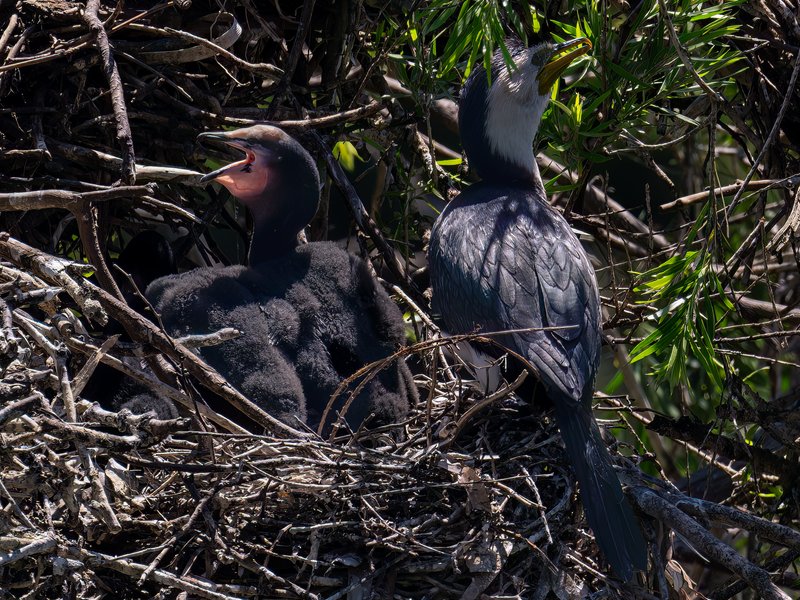
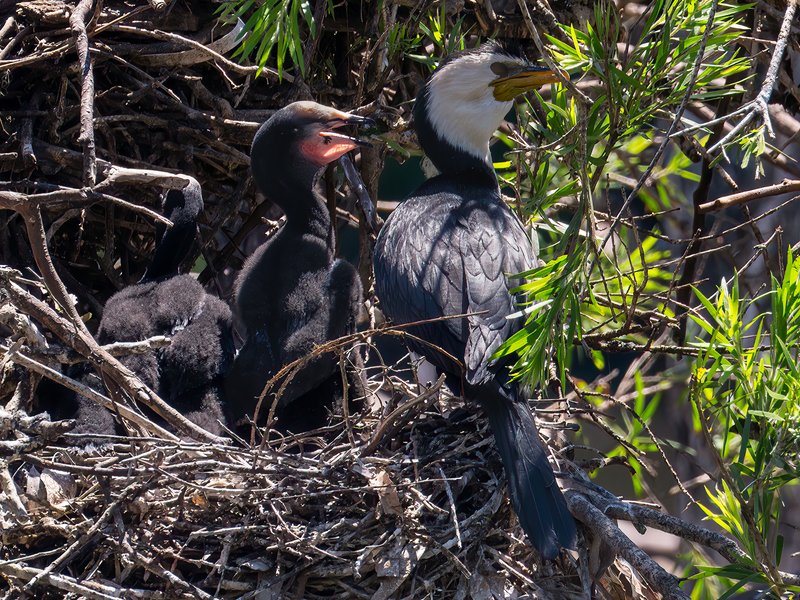
- small shallow structure of sticks (and green eucalypt leaves); alone or in colonies of few to thousands; in trees, bushes, from 1 m above water; occasionally on ground or ledges on islands.
- Eggs
- 2-5; chalky, blue-white.
- Range & Status
- Aust. and Tas. in suitable habitat; casual Lord Howe I. Sedentary and nomadic. Also Malaysia, Indonesia to PNG, Solomons, New Cal.; NZ and some sub-Antarctic islands. The Aust. race is melanoleucos.
- Distribution key to races
- 1. Microcarbo melanoleucos melanoleucos