Great Knot
Calidris tenuirostris· 丘鹬科(2 photos)
Photographed In:
Locations:
Great Knot
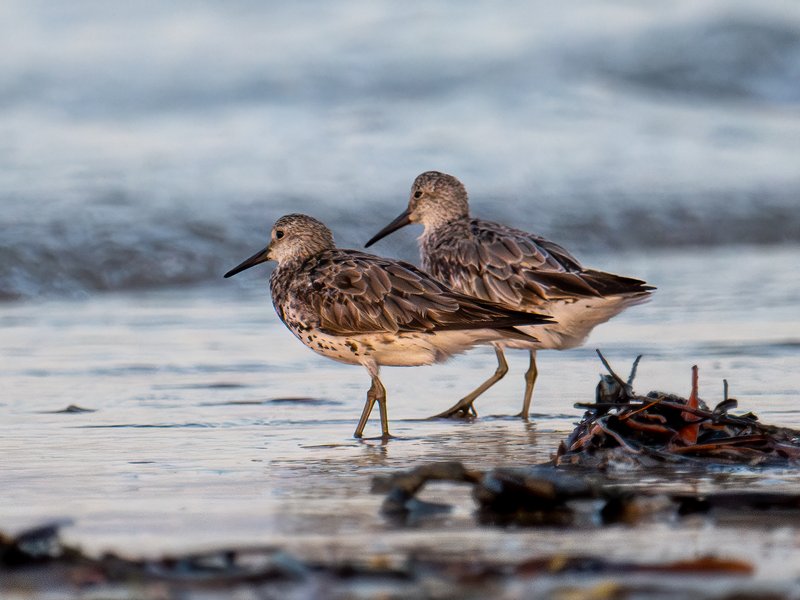
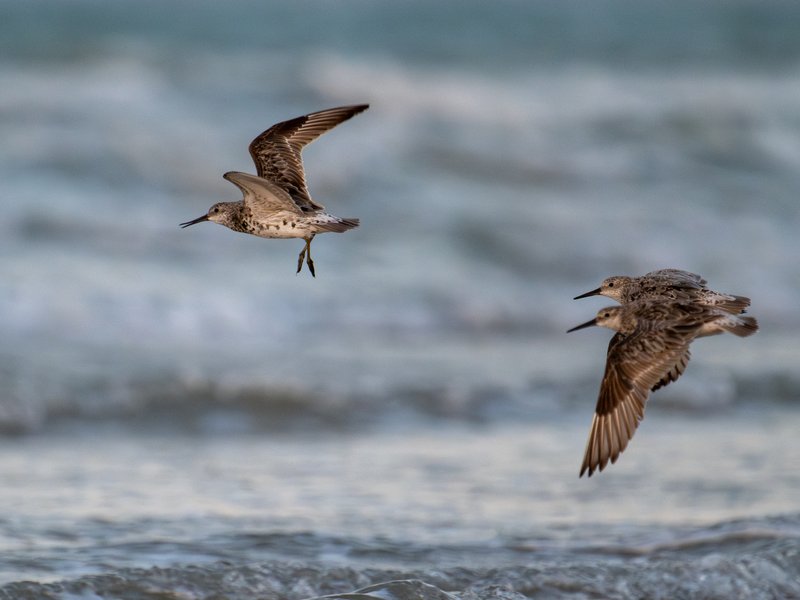
26-28 cm. Larger and smaller-headed than Red Knot, with longish, heavy-based, slightly decurved black bill, longer than head. Non-breeding: grey-brown above, more heavily and patchily streaked and mottled than Red Knot; white below, with scattered spots and streaks. Breeding Plumage: distinctive; upperparts chestnut, buff, brown and grey; large black spots on chest sometimes form black band. Immature: upperparts dark brown with buff feather margins; breast and flanks buffish, with dark brown spots. Parties, compact flocks; often with other waders. Feeds slowly, deeply probing mud or sand. Flight strong and direct: note faint white wingbar, blackish carpel area of upperwing; whitish rump with darker mottlings; tail grey-brown.
- Other name
- Slender-billed Knot, Stripe-crowned Knot.
- Similar Species
- Red Knot: bill shorter, more distinct dark eyeline, white eyebrow. Asian Dowitcher: much longer, heavier bill.
- Voice
- usually silent, but said to utter a double whistle; other calls resemble Red Knot's.
- Habitat
- tidal mudflats; sandy ocean and bay shores; estuaries; shallow saline and freshwater wetlands.
- Range & Status
- breeds ne. Siberia: migrates to India, s. and se. Asia, Indonesia, PNG, and NZ (where rare). Regular summer migrant (Sept.-March) to coastal Aust. and Tas. (straggler); inland in nw. Q, nw. Vic. Common Top End (NT) to coastal nw. WA; where flocks of 20 000 gather at some high-tide roosts. Some overwinter, especially in n. Aust.