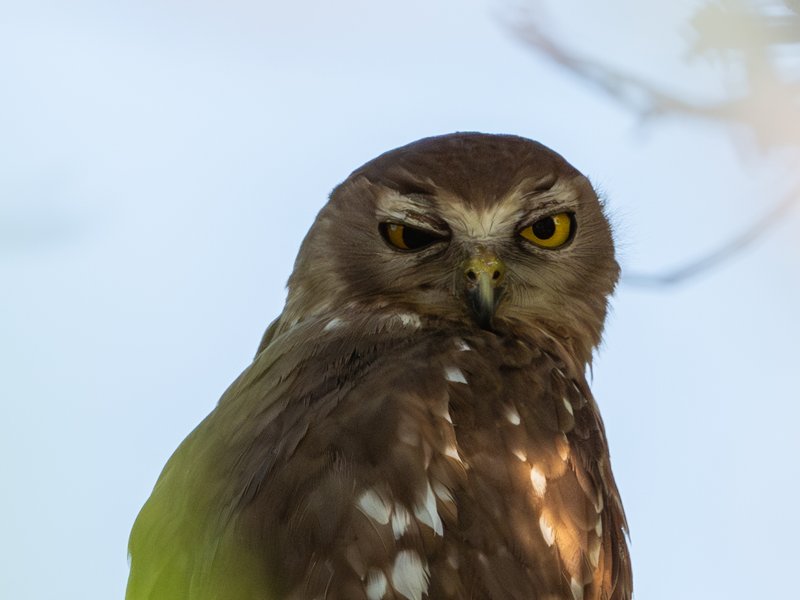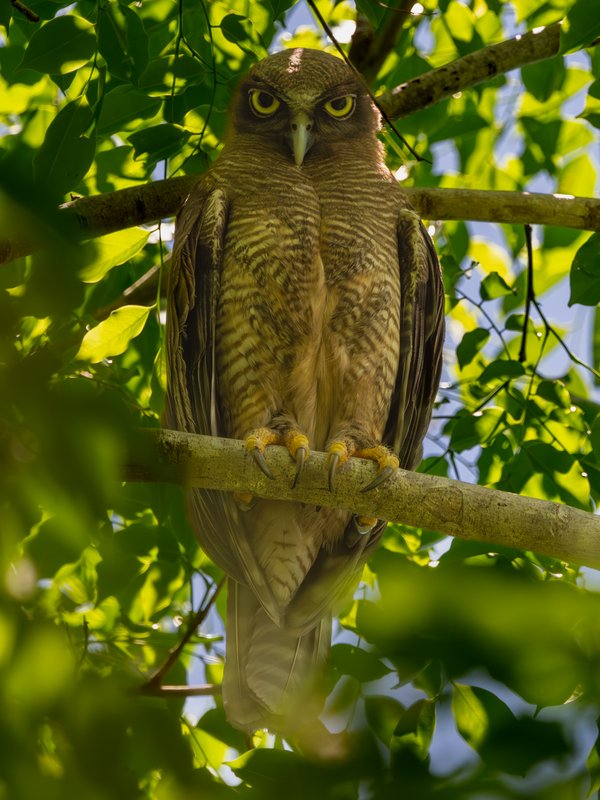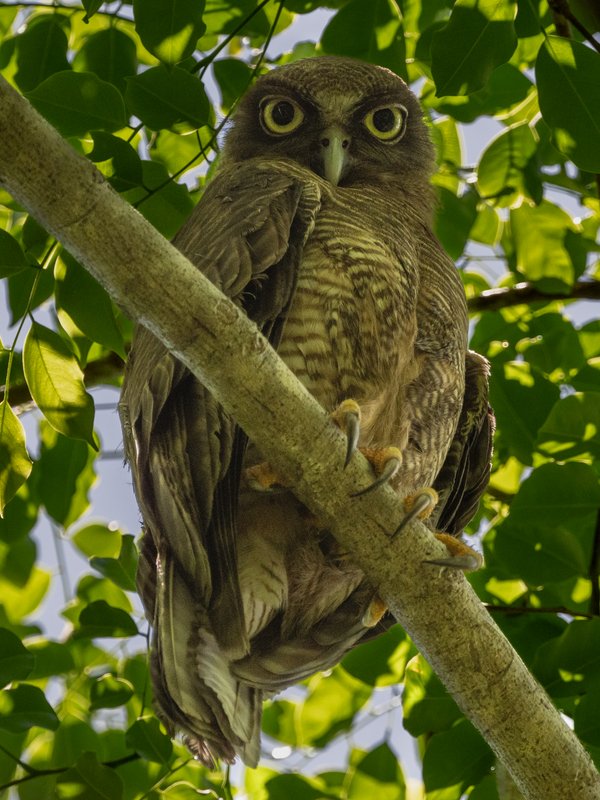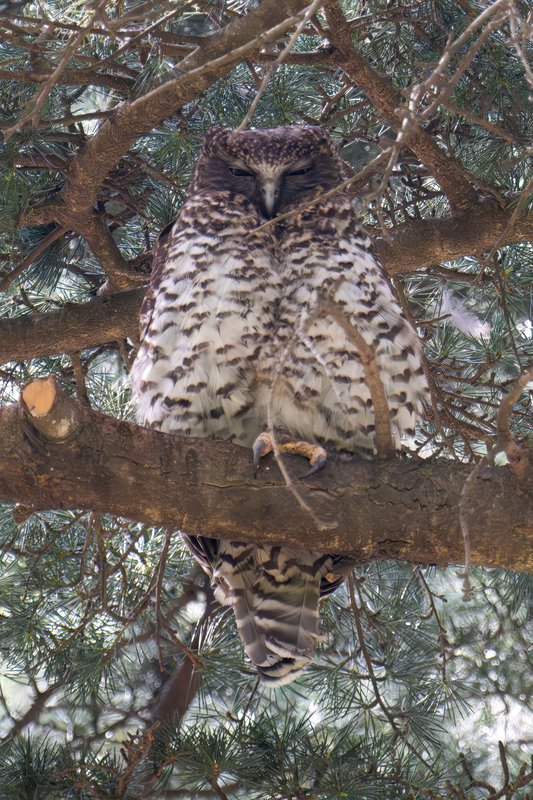
Barking Owl
UncommonGBIF 40.6·Dongniao Rarity Index9.24
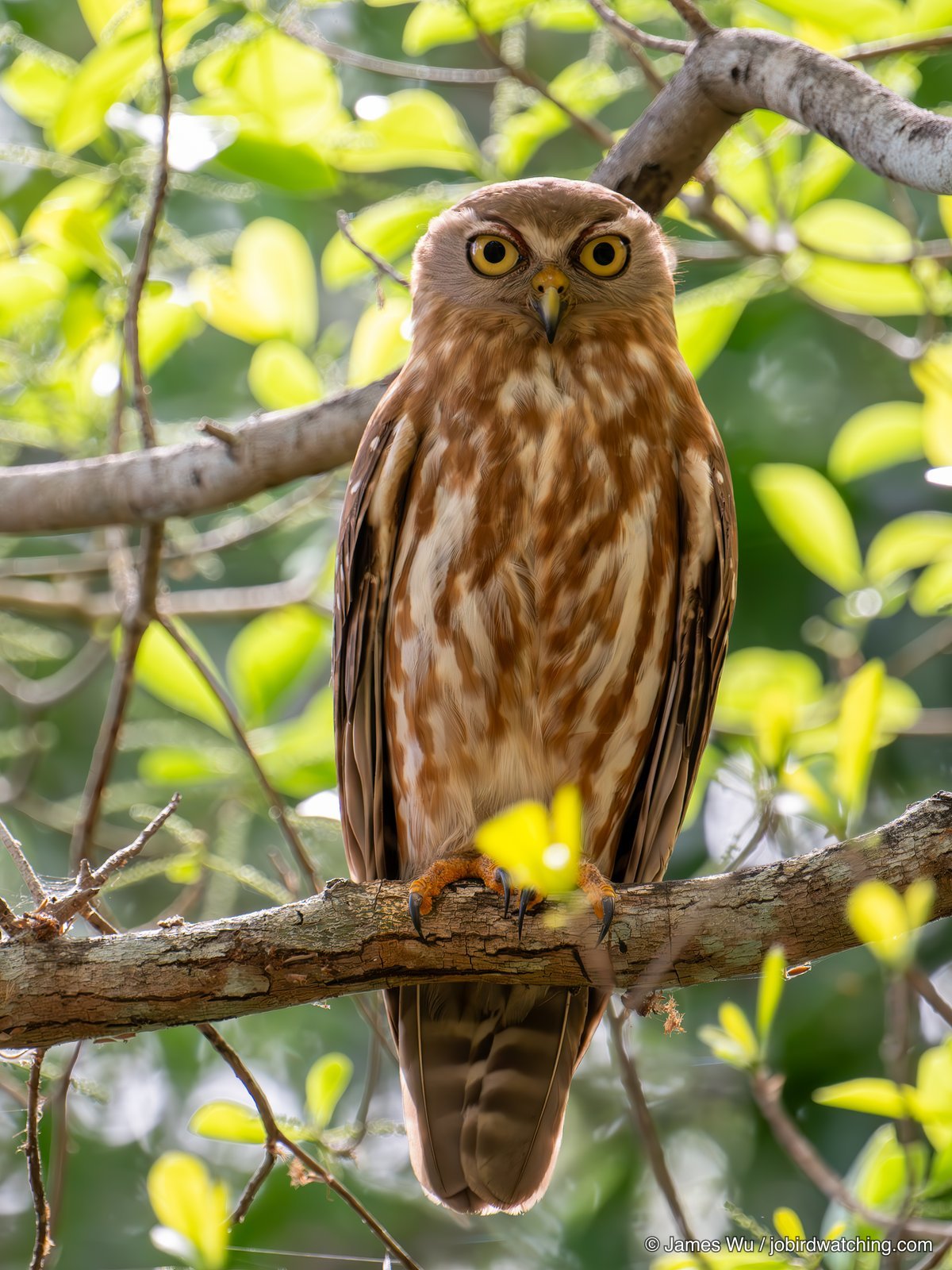
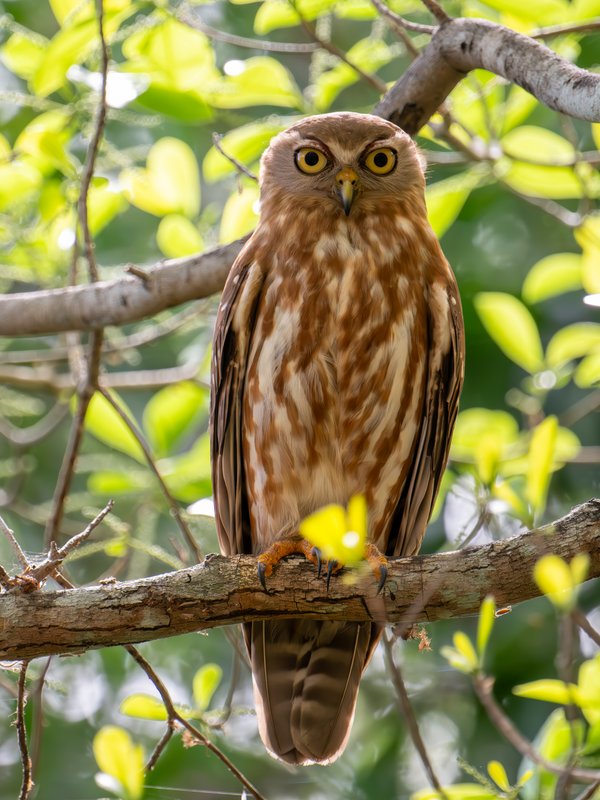
英文名:Barking Owl(学名:Ninox connivens),是鸮形目鸱鸮科鹰鸮属的鸟类。夜行性鸟类,原生于澳大利亚大陆、新几内亚部分地区和摩鹿加群岛。中等体型,以独特的‘woof-woof’犬吠声著称,毛色灰褐,腹部白底带深棕色条纹。
Barking Owl
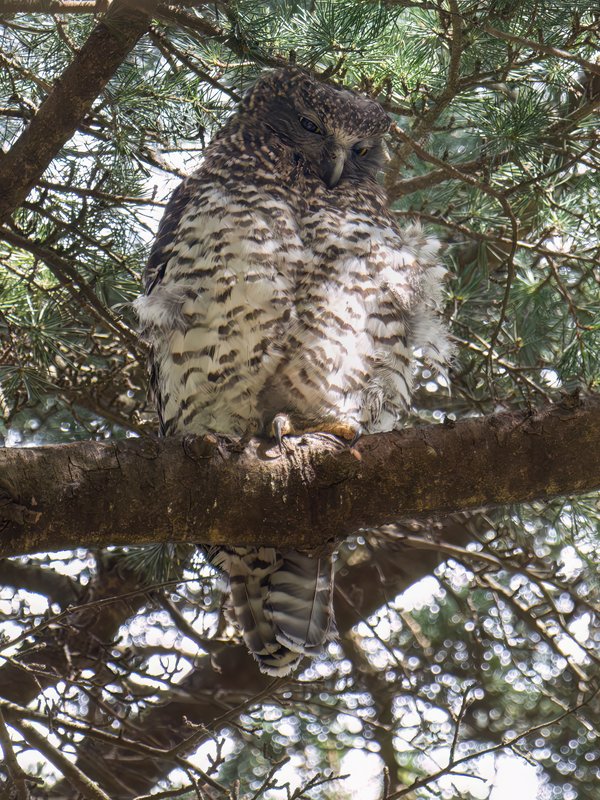
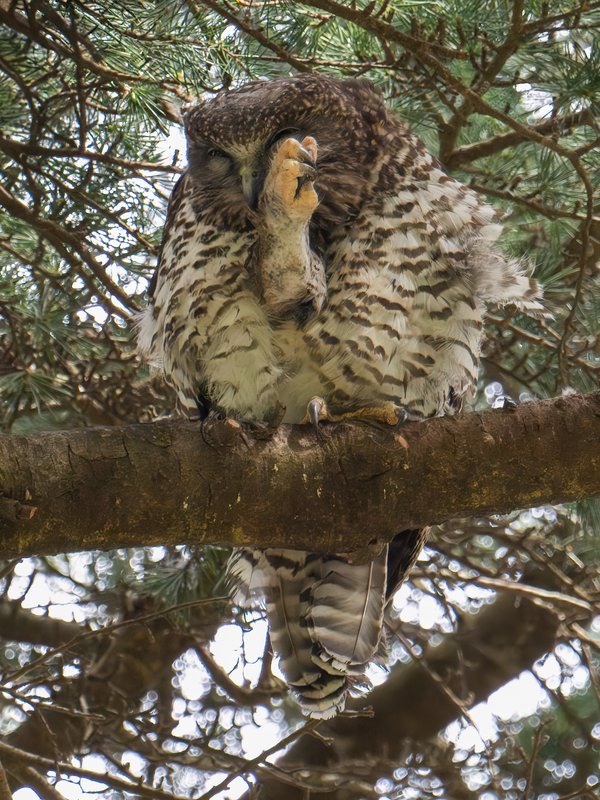
35-45 cm; span 85-100 cm. Male larger. Robust owl with piercing yellow eyes without surrounding dark eye-patches and 'goggles'. Plumage smoky brown to grey above, with large white spots on wings; whitish below, with dark grey to rusty streaks; legs feathered; powerful feet dull yellow. Smaller, darker forms in tropical n. Aust. Roosts by day, often in pairs in leafy trees, often near watercourses. When approached, instantly alert, head snapping in direction of intruder; often clutches remains of prey. At times active, vocal before dark.
- Other name
- Barking Boobook.
- Similar Species
- Powerful Owl, Southern Boobook.
- Voice
- unmistakable, quick, dog-like 'wok-wok' or 'wook wook', preceded by growl; soft at first, becoming emphatic, loud and far-carrying; sometimes in duet; male call deeper, female call quicker, sharper (Hollands, 1991). Also, at beginning of breeding, occasional blood-curdling, human-like wavering, sobbing scream, sometimes heard by day.
- Habitat
- open forests, woodlands, dense scrubs, foothills; river red gums, other large trees near watercourses, penetrating otherwise open country; paperbark woodlands.
- Breeding
- July-Nov.
- Nest
- on decayed debris; in tree hollow, from low to 10 m+ high; occasionally on ground, at times in rabbit burrow (D. Hollands, pers. comm.).
- Eggs
- 2-3; dull white, roundish.
- Range & Status
- mainland Aust. and some n. coastal islands. Rare, or absent from, arid, treeless or heavily forested regions. Nowhere common except perhaps in parts of Q, and Kimberley (WA). Sedentary. Also PNG; e. Indonesia.
- Distribution key to races
- 1. Ninox connivens peninsularis 2. Ninox connivens connivens