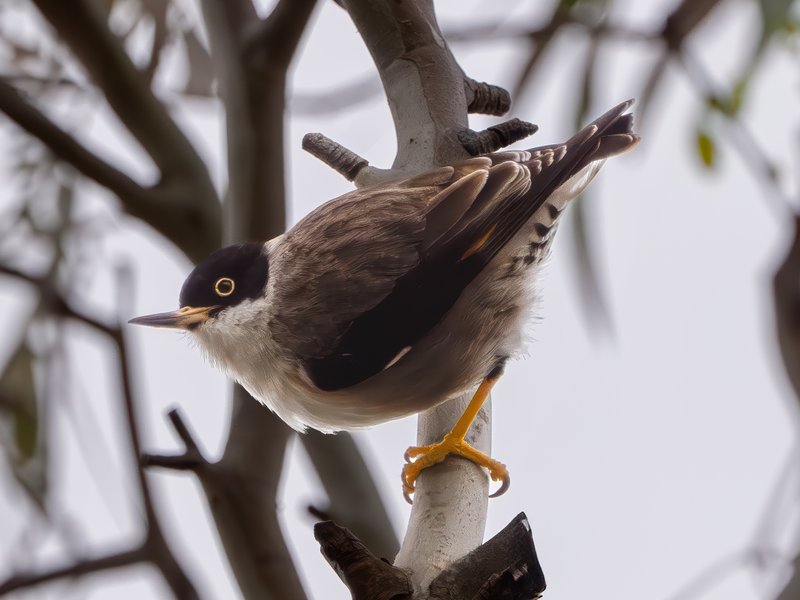
Varied Sittella
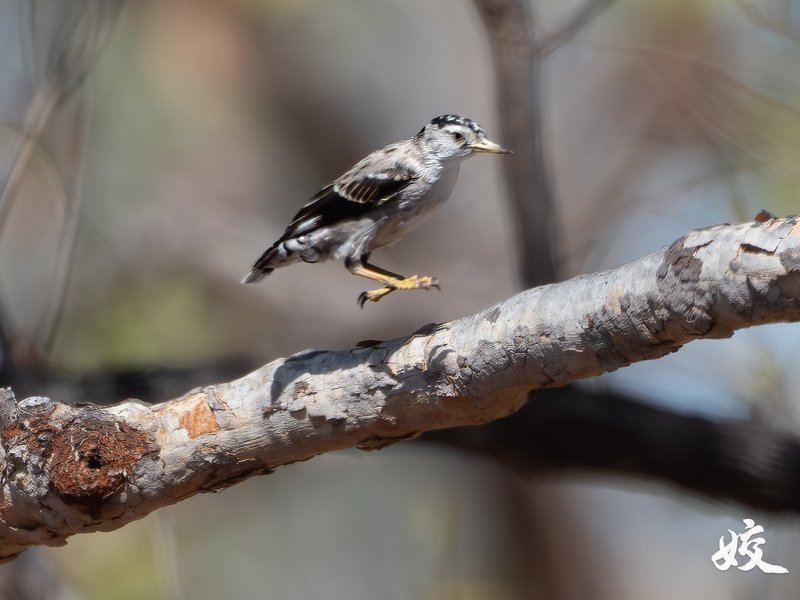
英文名:Varied Sittella(学名:Daphoenositta chrysoptera),是雀形目弯嘴䴓科的鸟类。11–12.5厘米。在全大陆包含5个(或6个)独特的地理亚种,在分布重叠区自由杂交(见分布图)。 1. 指名亚种 chrysoptera,“奥兰治-winged Sittella”(澳大利亚东南部) 雄鸟喙比雌鸟长;基部带黄色,具长而深色的喙尖;腿/脚橙黄色,粗壮;头部灰色或黑褐色;喉部白色(雄鸟);黑灰色(雌鸟)。背部较浅的灰褐色具深色宽纵纹;腰部微白;尾短、黑色具白端;飞羽黑色具宽阔浅橙色翼带,飞行中显眼;下体白色,在维多利亚具微弱较深纵纹,穿过新南威尔士北部至昆士兰南部内陆纵纹逐渐增多。幼鸟:较淡;翼覆羽具皮黄色羽端;下体近白。飞行中双翼显得过大;宽阔浅橙色翼带、白色腰部和白色尾端显眼。高度社会化:春夏季(或北部秋季)由5–7只组成繁殖群,冬季群体更大。各群共同觅食,飞入树冠顶端,通常以恒定的摇马动作沿树枝和树干向下移动,用较长且微上翘的喙探查并掀动树皮碎片,以持续的唧唧声保持联络,随后飞往下一棵树。繁殖时似乎由一只雌鸟产卵,但群内所有成员共同喂养幼鸟。集体栖宿。 2. 亚种 leucocephala,“White-headed Sittella” 两性头/颈部皆为白色;翼带橙色;上体/胁部具深灰色纵纹。幼鸟:头部大部呈灰色。 3. 亚种 striata,“Striated Sittella” 头部颜色最深、纵纹最多的短嘴旋木雀。雄鸟:头顶黑色。雌鸟:头/喉部及有时上胸部黑色。两性上体灰白色,具褐黑色纵纹;近白色的下体具精细黑褐色纵纹;翼带白色。幼鸟:胸部无纵纹。 4. 亚种 leucoptera,“White-winged Sittella” 类似 pileata,但体型更小;翼带白色,飞行中显眼。幼鸟:头部偏灰色。 5. 亚种 pileata,“Black-capped Sittella” 斑纹比指名亚种更鲜明/清晰。雄鸟:头顶黑色;前额/脸侧白色。雌鸟:头顶/前额/面颊具光泽黑色。背部纯灰褐色或具微弱深色纵纹;下体纯白无纵纹。幼鸟:头顶灰黑色,幼体具微白色纵纹。飞行中,橙色翼带、白色腰部、黑尾的白色羽端显眼。
Varied Sittella
11-12.5 cm. A species of five (or six) distinctive geographic races around the continent, hybridising freely where ranges overlap (see map).
1. Nominate race chrysoptera, 'Orange-winged Sittella' (se. Aust.)
Bill longer in male than female; yellowish at base, with long, dark tip; legs/feet orange-yellow, robust; head grey or blackish; throat white (male); blackish grey (female). Back paler grey-brown with broad dark streaks; rump whitish; tail short, black with white tips; flight feathers black with broad, pale orange band, conspicuous in flight; underparts white, lightly streaked darker in Vic., streaking increasing through n. NSW-inland s. Q. Immature: paler; wing coverts tipped buff; underparts whitish. In flight, wings seem too large for bird; broad, pale orange wing band, white rump and white tail tips, conspicuous. Highly social: breeding groups of 5-7 in spring-summer (or autumn in n.), larger winter companies. Groups forage together, flying into heads of trees, typically working down branches and trunk with constant rocking-horse motion, probing and levering bark flakes with longish, slightly upturned bills, maintaining contact with constant chitterings, before flying on to next tree. When breeding, one female appears to lay, but all members of group feed the young. Roost comunally.
2. Race leucocephala, 'White-headed Sittella'
Head/neck white in both sexes; wing band orange; upperparts/flanks streaked dark grey. Immature: head mostly grey.
3. Race striata, 'Striated Sittella'
Darkest-headed, most streaked sittella. Male: crown black. Female: head/throat and sometimes upperbreast black. Both sexes grey-white above, streaked brownish black; whitish underparts finely streaked blackish; wing band white. Immature: no streaks on breast.
4. Race leucoptera, 'White-winged Sittella'
Like pileata, but smaller; wing band white, conspicuous in flight. Immature: head greyish.
5. Race pileata, 'Black-capped Sittella'
More boldly marked/clean-cut than nominate race. Male: crown black; forehead/sides of face white. Female: crown/forehead/cheeks glossy black. Back plain grey-brown or with slight dark streaks; underparts pure white, unstreaked. Immature: crown greyish black, streaked whitish in juvs. In flight, orange wing band, white rump, white tips to black tail conspicuous.
- Other name
- Barkpecker; Treerunner; 'Woodpecker'.
- Voice
- high-pitched, thin 'seewit-seewee'; 'chip chip'; constant chittering. Alarm-call: rapid, high-pitched 'didididit'.
- Habitat
- open eucalypt woodlands/forests (except heavier rainforests); mallee, inland acacia, coastal tea-tree scrubs; golf courses, shelter belts, orchards, parks, scrubby gardens.
- Breeding
- July-Dec.; March-April.
- Nest
- beautiful, well-camouflaged deep cup of bark flakes, lichens, spiders' web, moulded to resemble bulge in upright fork of eucalypt, she-oak, paperbark, tea-tree; 5-20 m high.
- Eggs
- 2-3; blue-white/grey-white, speckled, blotched glossy black, olive-brown; faint grey markings in zone.
- Range & Status
- c. and e. Vic.; e. NSW-inland s. Q, merging there with race leucocephala. Merges with race pileata in w. Vic.-cw. NSW. Common. Sedentary or nomadic.
- Habitat
- forests/woodlands of Divide/coastal plain; in n. parts, open grassy woodlands.
- Range & Status
- from Clarence R. (ne. NSW), to Darling Downs-Mitchell-Blackall-Suttor Ck (Q), to coast near Mackay. Merges with nominate race in ne. NSW-se. Q, and with striata in zone n. to Townsville-Charters Towers. (Race albata, 'Pied Sittella', 'lost' since collected near Bowen (Q), late in 19th century. Probably an intergrade between leucocephala and striata; had unique combination of creamy white head/white wingpatches.)
- Habitat
- eucalypt forests, grassy woodlands/scrublands.
- Range & Status
- ne. Q; Townsville-C. York, w. to Normanton. Merges with leucocephala in region of Charters Towers-Townsville and with leucoptera in region of lower Flinders R.-Cloncurry.
- Habitat
- grassy woodlands, timber on watercourses, scrubby timber on ranges.
- Range & Status
- from Opalton-Winton-Cloncurry (Q) n. to Gulf lowlands, w. through Top End (NT) to Kimberley (WA), s. to about Tropic in Q and NT, and to about Broome (WA). Merges with striata in region of lower Flinders R.-Cloncurry (nw. Q) and with pileata in s. NT and mid nw. WA.
- Habitat
- coastal eucalypt forests; woodlands to inland woodlands/scrubs-mallee, mulga, cypress pine; timber on watercourses; gullies, gorges of ranges; also golf courses, orchards, parks, gardens.
- Range & Status
- WA s. of Tropic; s. NT; most of SA; w. Vic. (occasional to inland e. Vic.); w. NSW and sw. Q. Merges with nominate race in c. Vic. and c. NSW and with leucoptera in w. Q-s. NT-mid nw. WA.
- Distribution key to races
- 1. Daphoenositta chrysoptera chrysoptera 2. Daphoenositta chrysoptera leucocephala 3. Daphoenositta chrysoptera striata 4. Daphoenositta chrysoptera leucoptera 5. Daphoenositta chrysoptera pileata