Bush Stone-curlew
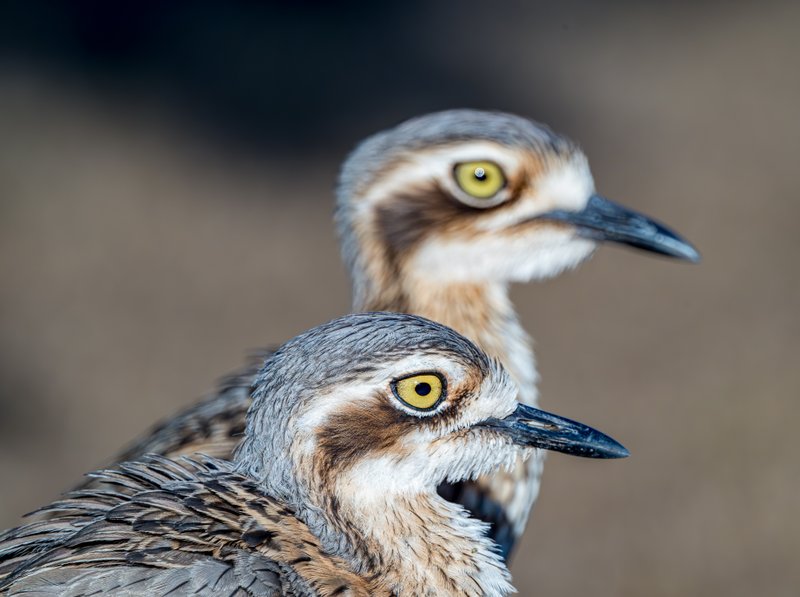
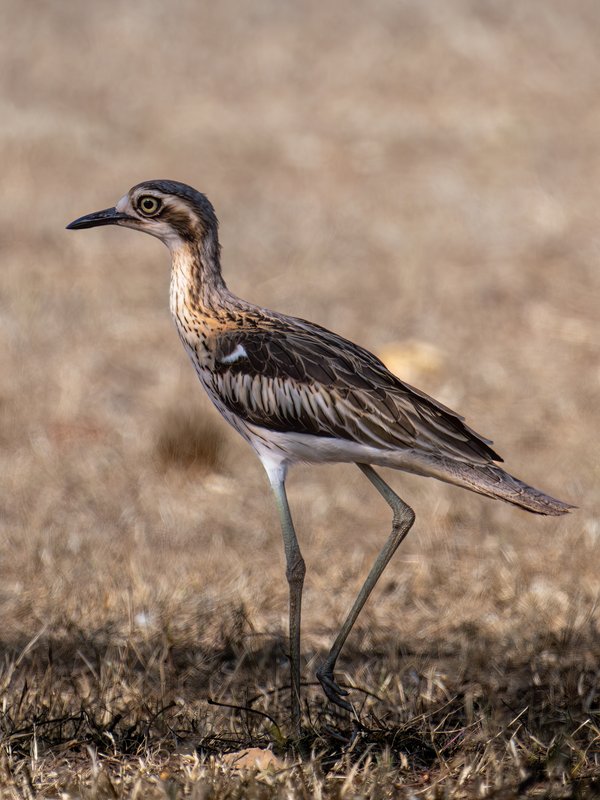
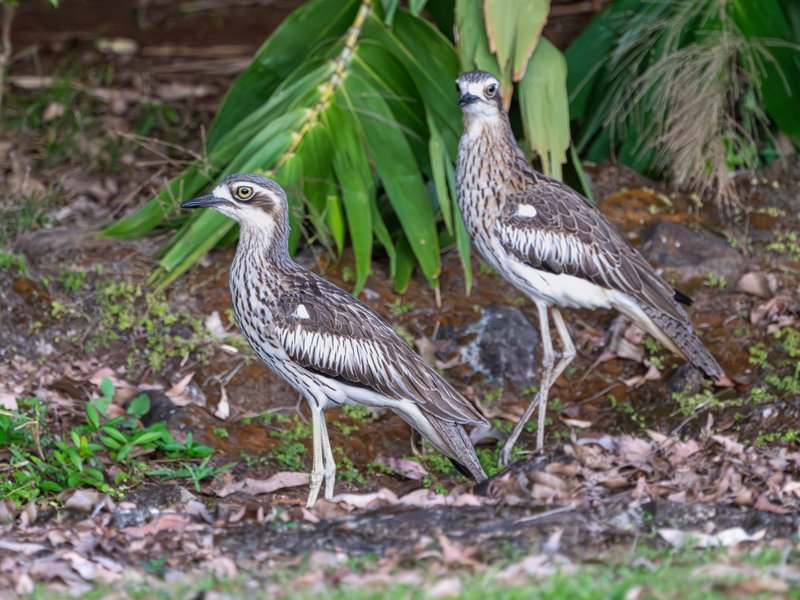
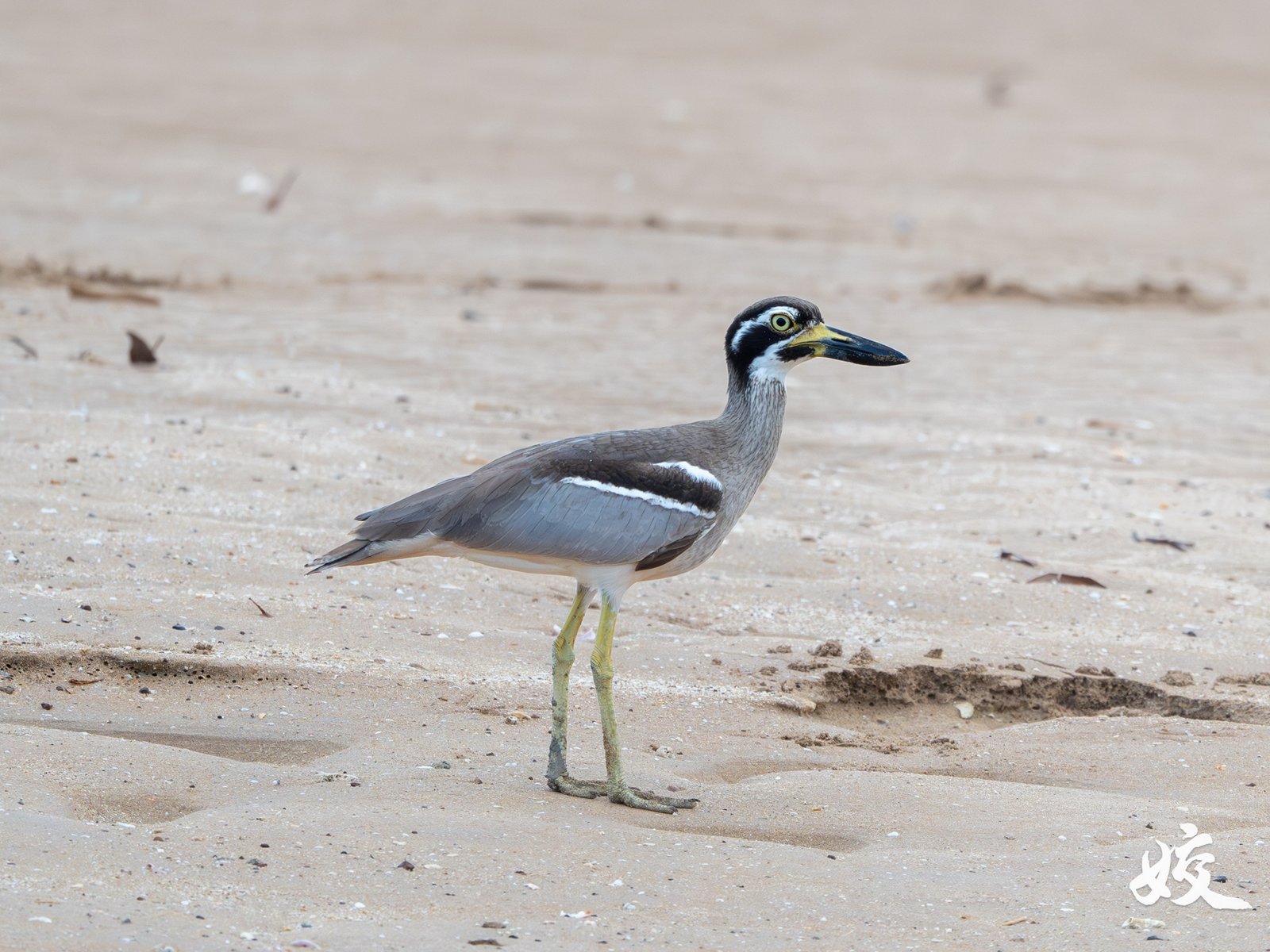
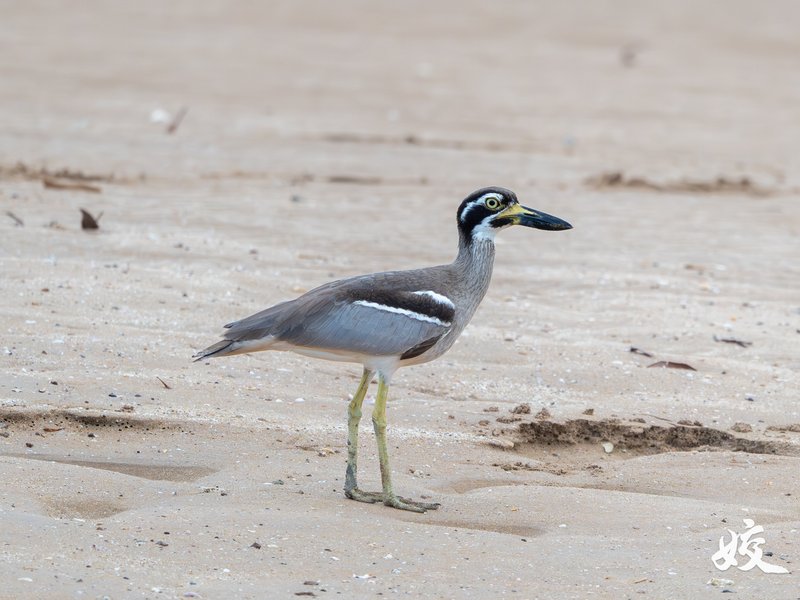
英文名:Bush Stone-curlew(学名:Burhinus grallarius),是鸻形目石鸻科的鸟类。55–59 厘米;翼展80 厘米–1.05 米。不寻常的林栖涉禽,常闻其声而难见其形。上体灰褐色(澳大利亚北部个体染浅棕色),下体皮黄白色,具浓密的深色纵纹;翅上有一道深色斑纹,位于较宽的浅色区域之上。嘴黑色,额白色;宽阔的白色眉纹之下有一道粗黑线,自眼下延伸至颈部;眼大,黄色。成对或结松散小群。怯生、警惕:动作古怪、缓慢,常低垂着头。像木棍般“僵立不动”,伸颈平卧,或缓步走开,或悄然奔逃。飞行时长而弯的翅快速僵硬地扇动,露出黑色初级飞羽上醒目的白色斑块。夜间活跃,常见于乡间道路;翅斑在车灯照射下会发亮。在居住区附近颇不怕人:高尔夫球场、度假岛屿。
Bush Stone-curlew
55-59 cm; span 80 cm-1.05 m. Unusual, bush-dwelling wader, more often heard than seen. Grey-brown above (washed pale rufous in n. Aust.), buff-white below, strongly streaked darker; dark mark along wing over a broader pale zone. Bill blackish, forehead whitish; broad white eyebrow over thick black line from below eye down neck; eye large, yellow. Pairs, groups to loose flocks. Shy, watchful: moves weirdly, slowly, often with head lowered. 'Freezes' stick-like, lies flat with neck extended, walks deliberately away or runs furtively. Flies with quick, stiff beats of long, bowed wings, revealing prominent white patch across black primaries. Active at night, often on country roads; wingpatches luminous in headlights. Tame near habitation: golf courses, resort islands.
- Other name
- Bush Thick-knee; Southern Stone-curlew; Weeloo; Willaroo.
- Similar Species
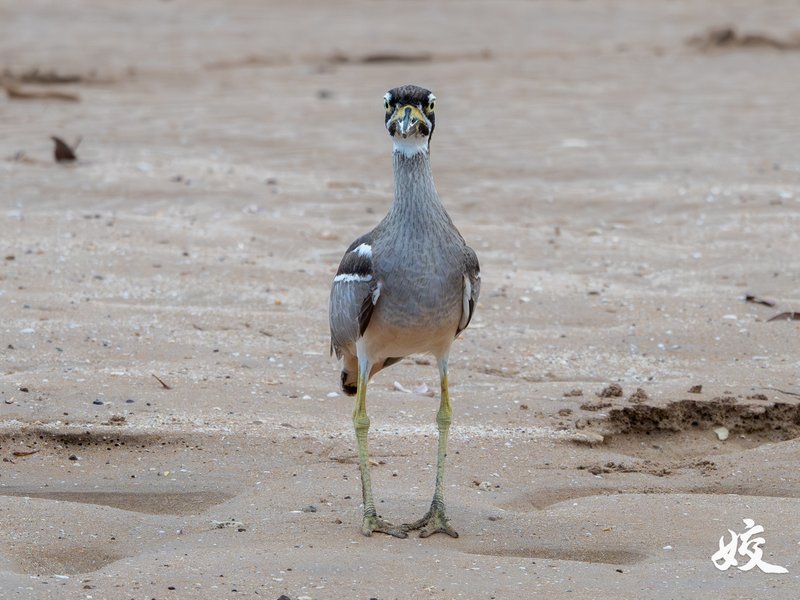
- Beach Stone-curlew.
- Voice
- usually at night: a far-carrying, eerie whistling call (or chorus) that starts low and quietly - a drawn-out 'wee-eeer', repeated up to 5 times; rises, becomes a high-pitched, drawn-out 'keeleeoo', quickens, breaks, descends, often ends in a chorus of 'wee-wiff; wee-wiff; wee-wiff', by several birds. Other groups respond. Screeches in flight.
- Habitat
- open woodland, dry watercourses with fallen branches, leaf litter, sparse grass; sandplains with spinifex and mallee; coastal scrub, mangrove fringes, golf courses, rail-reserves; timber remnants on roadsides; orchards, plantations; suburbs, towns, cities in Q; resort islands.
- Breeding
- Aug.-Jan.; earlier in n. Aust.
- Eggs
- 2; on bare ground; stone-coloured, blotched dark brown, grey.
- Range & Status
- e., se., n., coastal WA, many coastal islands; vagrant Tas. Absent from s. inland and Nullarbor region. Rare to wholly extinct in settled parts of coastal se. Aust. More abundant in subtropics (incl. Brisbane suburbs) and across n. Aust. Sedentary, locally dispersive; Near-Threatened in s. Aust. Also s. PNG.