Channel-billed Cuckoo
OccasionalGBIF 15.0·Dongniao Rarity Index8.54
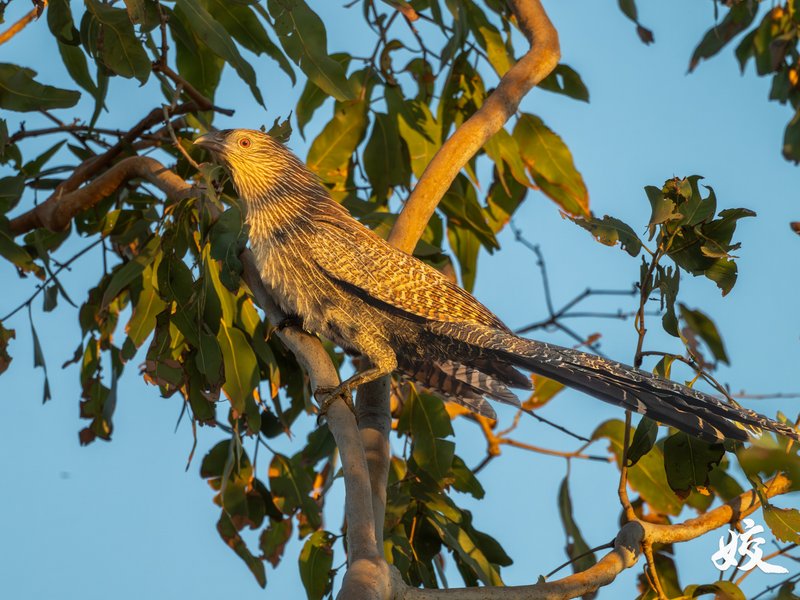
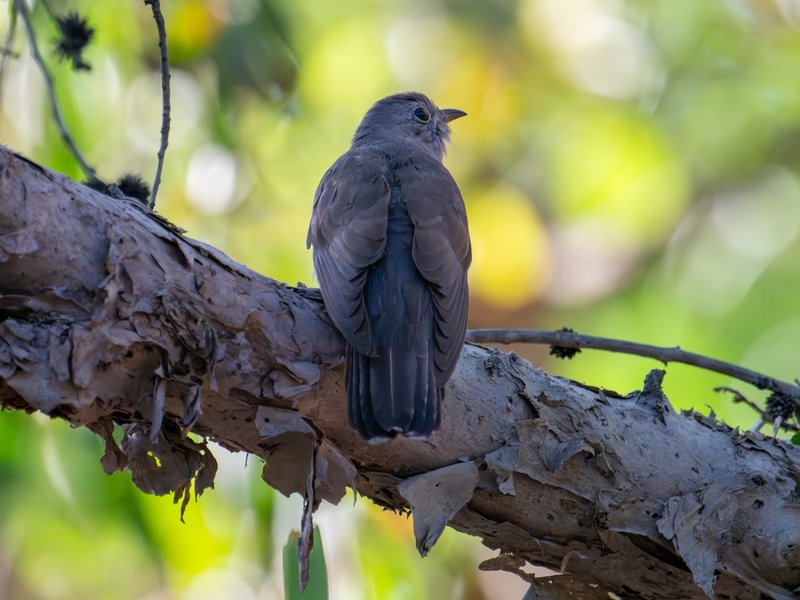
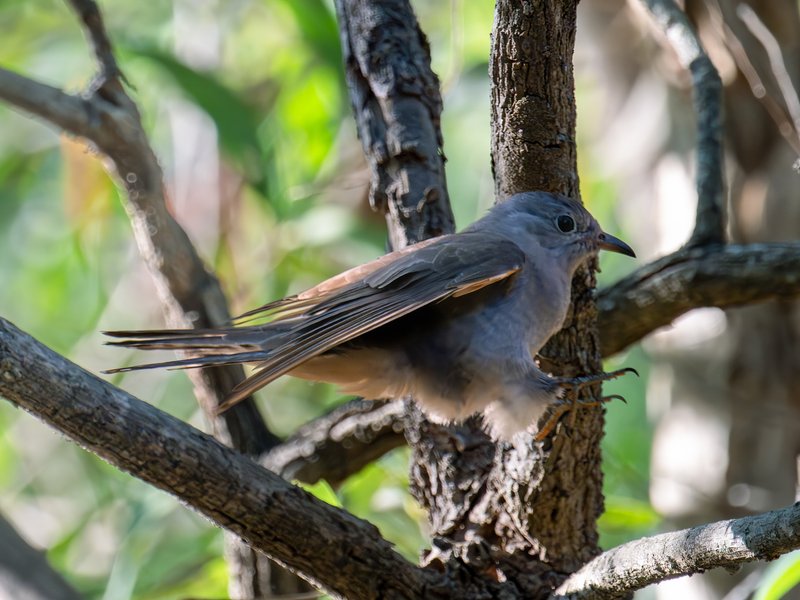
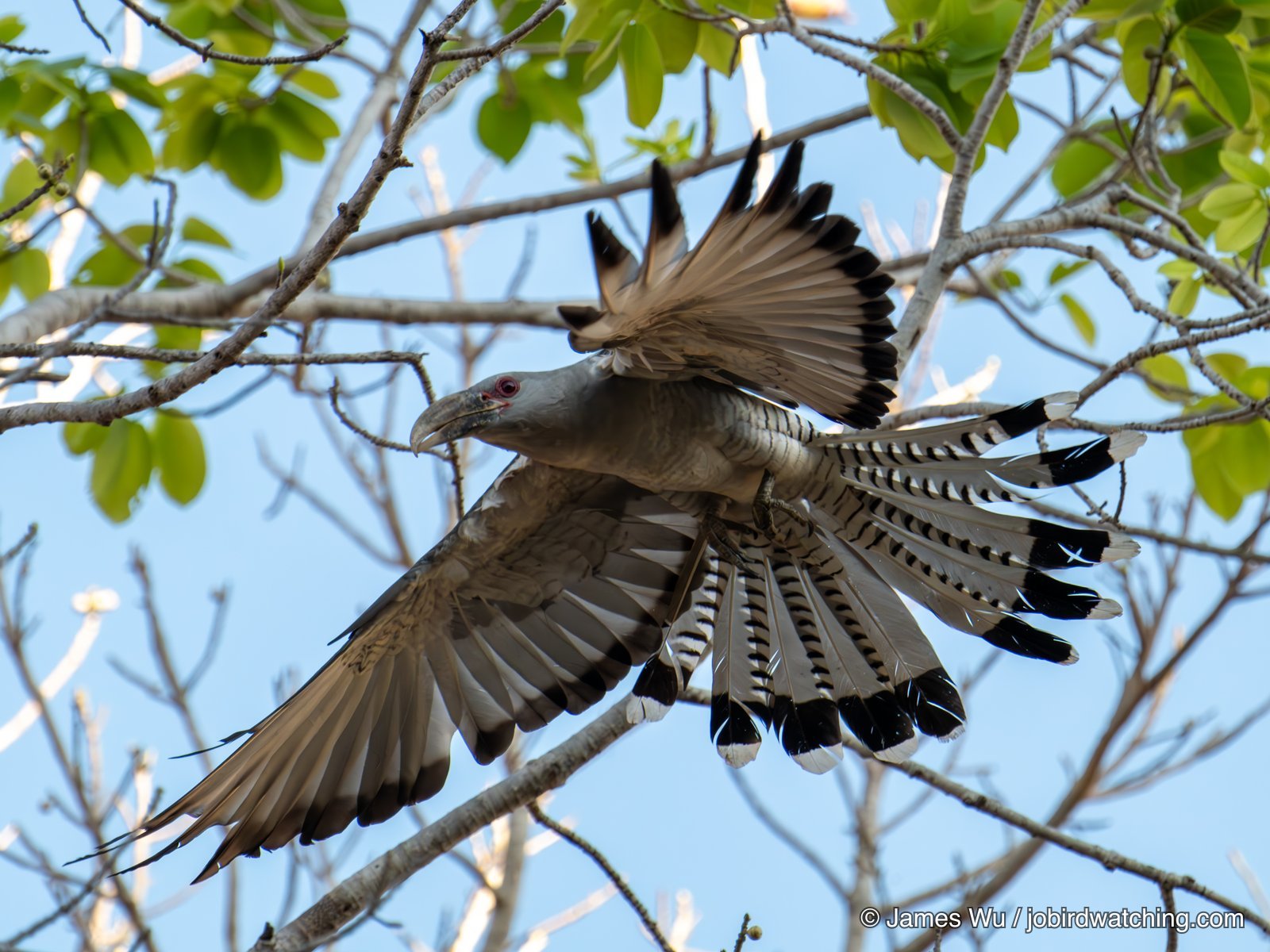
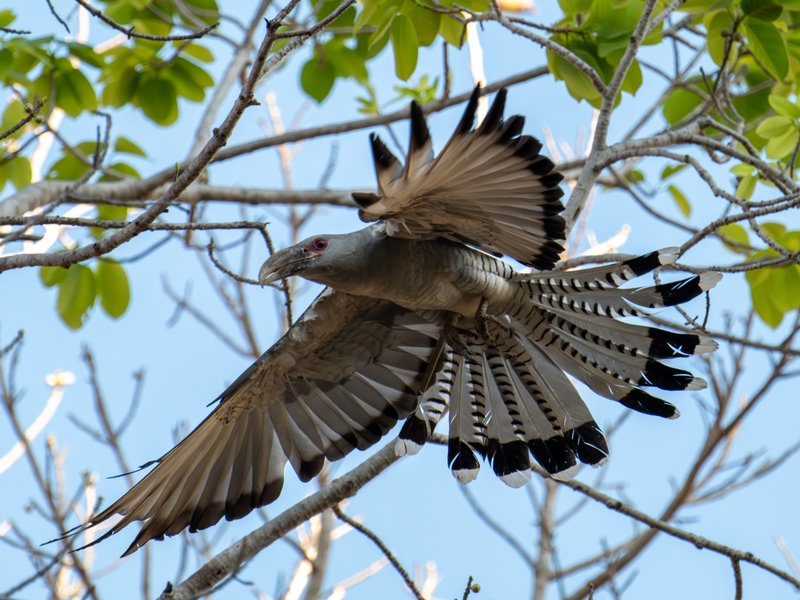
英文名:Channel-billed Cuckoo(学名:Scythrops novaehollandiae),是鹃形目杜鹃科沟嘴鹃属的鸟类。是世界上最大的寄生性鸟类,也是最大的杜鹃种类。其最显著的特征是拥有巨大的淡色喙和红色眼圈,身体主要呈现淡灰色,翅膀和尾巴颜色较深。沟嘴鹃在澳大利亚北部和东部、华莱西亚、俾斯麦群岛东部广泛分布。
Channel-billed Cuckoo
58-66 cm. Huge pale grey cuckoo with large, curved, straw-coloured bill, red skin around eye; tail with dark terminal band, tipped white. Juvenile: paler; no red; scalloped buff above. Singles, pairs, small flocks: shy, keeps to heads of leafy figs; harassed by other birds; often first noted by call. Flight strong, hawk-like, with regular beats; often high; like flying cross. Note: 'Reclaimed' juveniles are sometimes seen with pairs of adults (Lane, 1998).
- Other name
- Flood, Rain or Stormbird; Fig Hawk; Hornbill.
- Voice
- raucous, repeated, rising shout, 'oik' or 'awk'; flying or perched; often at night.
- Habitat
- rainforest, open forest, woodland, swamp woodland, fruiting trees in farmland, roadsides.
- Breeding
- Aug.-Dec.
- Eggs
- dull white to buff, blotched reddish, purplish brown, below surface. May lay up to 5 eggs in one nest. Hosts include Pied Currawong, Australian Magpie, Torresian Crow.
- Range & Status
- summer breeding migrant from Indonesia-PNG to n. and e. Aust.: from Kimberley (WA), where rare (casual s. to Pilbara), to Top End (NT); widespread in Q; NSW, s. to c. Sydney, inland to Moree-Warrumbungle NP-Dubbo. Arrives Aug.-Sept., departs March-April, earlier (Dec.-Feb.) from NSW. In good seasons extends (and breeds) to Channel Country of sw. Q-ne. SA; also s. NT (Alice Springs). Casual s. NSW, ACT, c. Vic., Tas.