White-plumed Honeyeater
CommonGBIF 6.8·Dongniao Rarity Index8.07
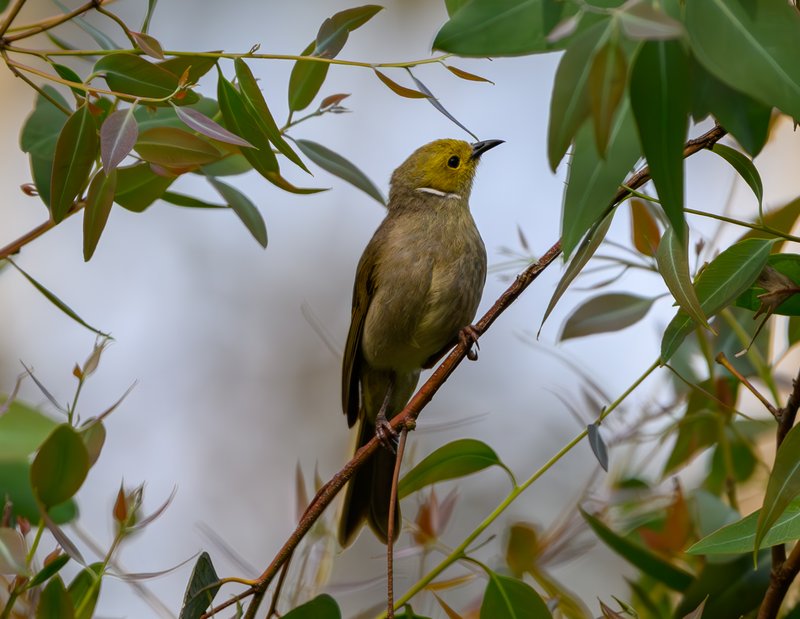
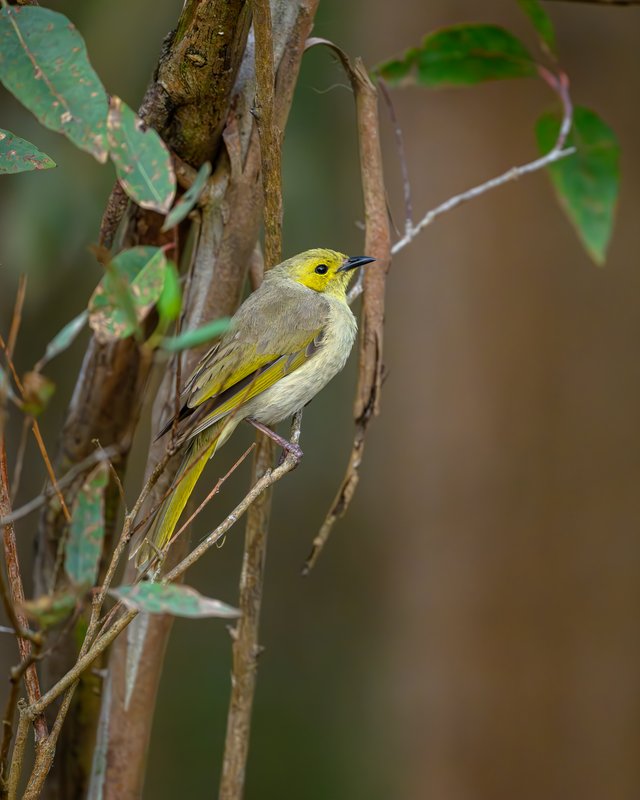
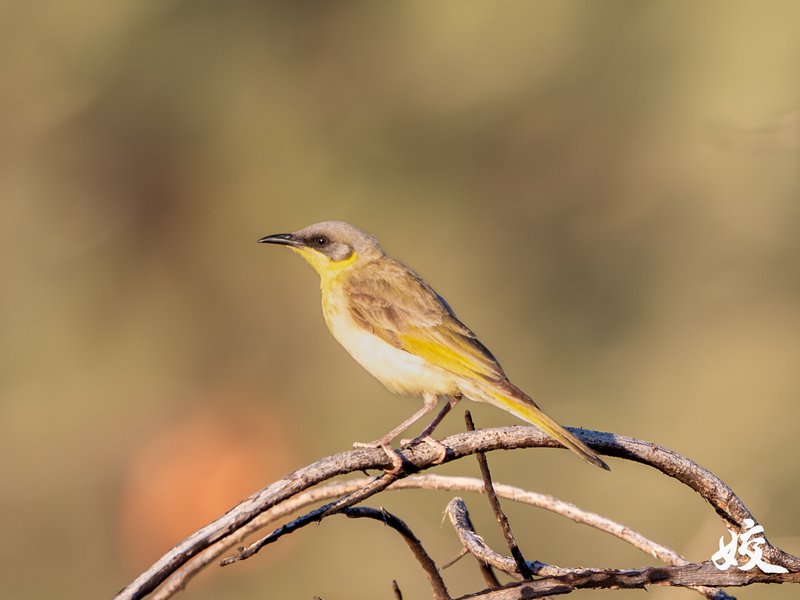
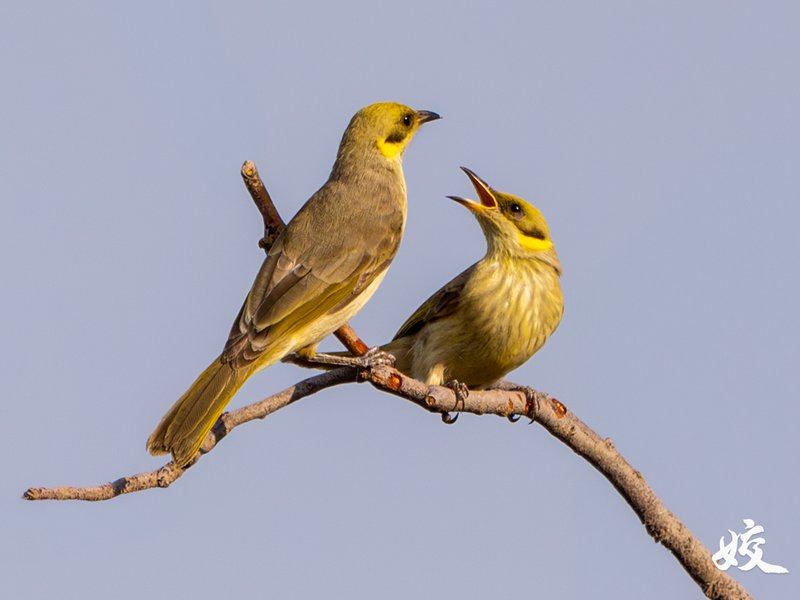
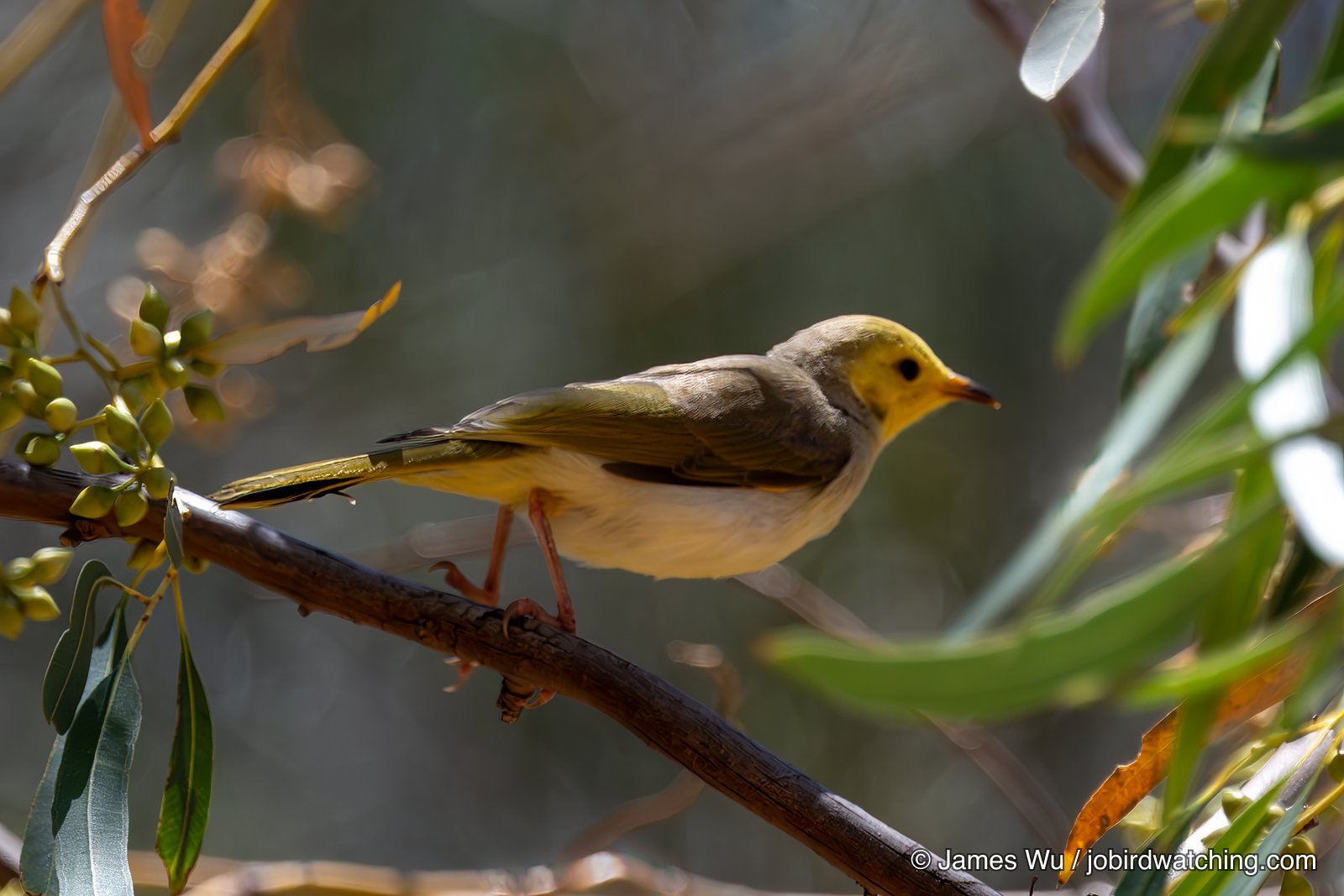
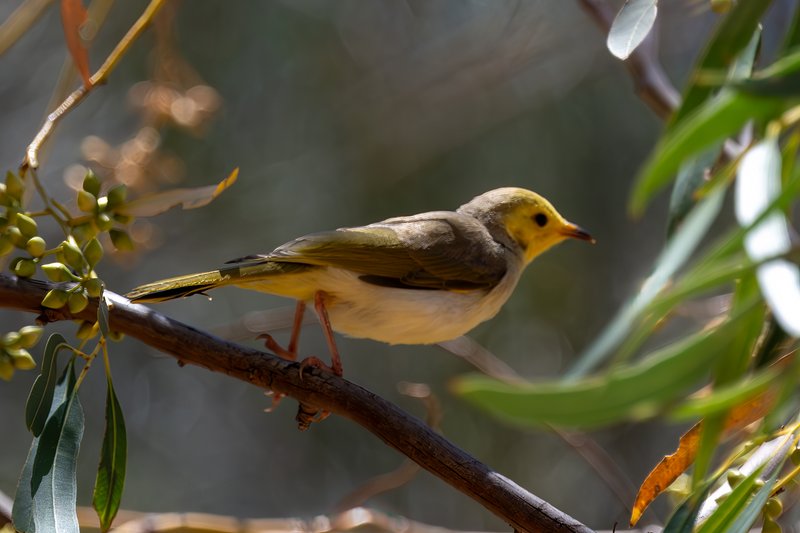
White-plumed Honeyeater (Ptilotula penicillata) 白痣吸蜜鸟,是雀形目吸蜜鸟科黄痣吸蜜鸟属的鸟类。广泛分布于澳大利亚的吸蜜鸟,主要栖息于开放的硬叶林和木本地带,尤其靠近水源地带。其最显著的特征是颈部两侧的白色羽毛。分布范围广泛,遍及澳大利亚大陆,但在最北端和西南部较为罕见。
White-plumed Honeyeater
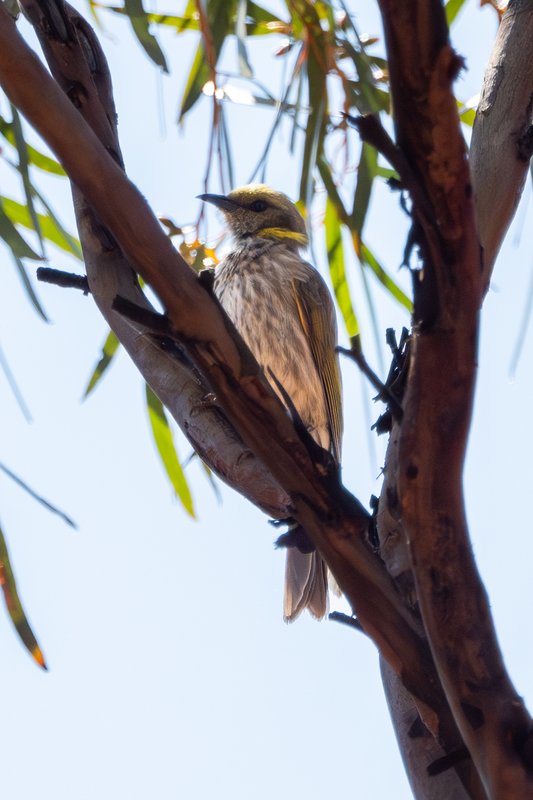
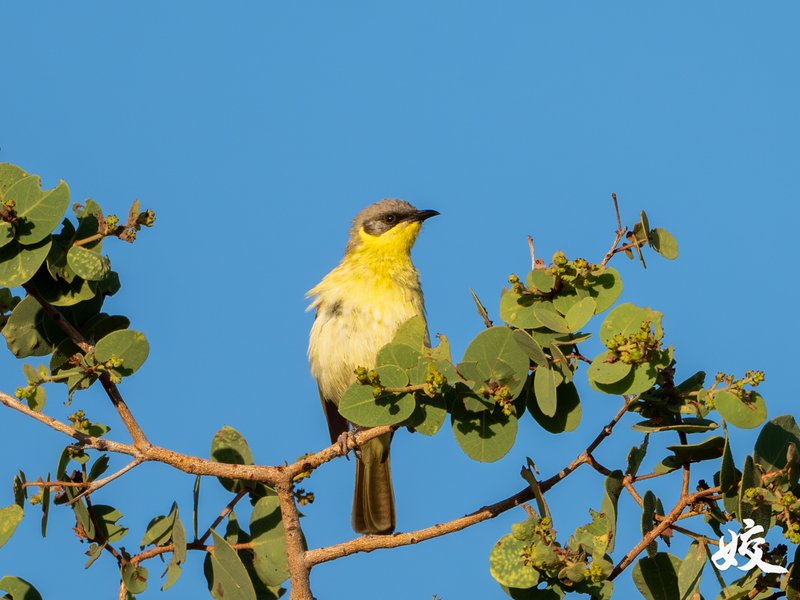
15-17 cm. Pale olive-grey with clear-cut white neck-plume, some margined blackish above. In inland, n. Aust. and WA, head yellow; body paler. Immature: rich yellow base to bill; neck-plume less distinct. Singles, pairs, parties, in colony: feeds low to tops of tallest trees; nervously active.
- Other name
- Chickowee; Greenie; Native Canary.
- Similar Species
- Yellow-plumed Honeyeater.
- Voice
- contact-call 'due-wheat!'; brisk 'chickowee' or 'chickabiddy' (local dialects); in song-flight, repeated 'chickowee, chickowee', 'chick-wert, chick-wert'; alarm call: high-pitched strident trill, like alarm clock.
- Habitat
- seldom far from water in open forests, woodlands; mostly in river red gums on watercourses; but also mallee, blossoming woodlands/heaths, shelter belts, road reserves, golf courses, orchards, town/inner city parks, gardens.
- Breeding
- July-Jan; inland, any month after rain.
- Nest
- deep cup of grass, spiders' web; lined with plant down, horsehair; slung from outer leafy branchlets 1-25 m high.
- Eggs
- 2-3; white, pale buff-deep pink, minutely spotted chestnut-red toward large end; purple-red, deep-lilac spots below surface.
- Range & Status
- widespread in e. and se. Aust. and mostly in river red gums on watercourses throughout interior. Absent from coastal n. NSW, coastal Q and tropical coastal n. Aust., driest w. deserts, sw. WA (but with local extension coastally s. to c. Perth); absent from Bight coast-Nullarbor-Gt Victoria Desert region. Otherwise widespread; common; colonial. Sedentary, with local nomadism.
- Distribution key to races
- 1. Ptilotula penicillata penicillata 2. Ptilotula penicillata leilavalensis 3. Ptilotula penicillata carteri 4. Ptilotula penicillata calconi