Splendid Fairywren
Splendid Fairywren(学名:Malurus splendens),是雀形目细尾鹩莺科细尾鹩莺属的鸟类。俗称蓝细尾莺,体型小巧的细尾鹩莺,主要活跃于灌木丛或森林底层。分布于澳大利亚西部至中部,常见于内陆干旱区和西澳大利亚西南部。
Splendid Fairywren
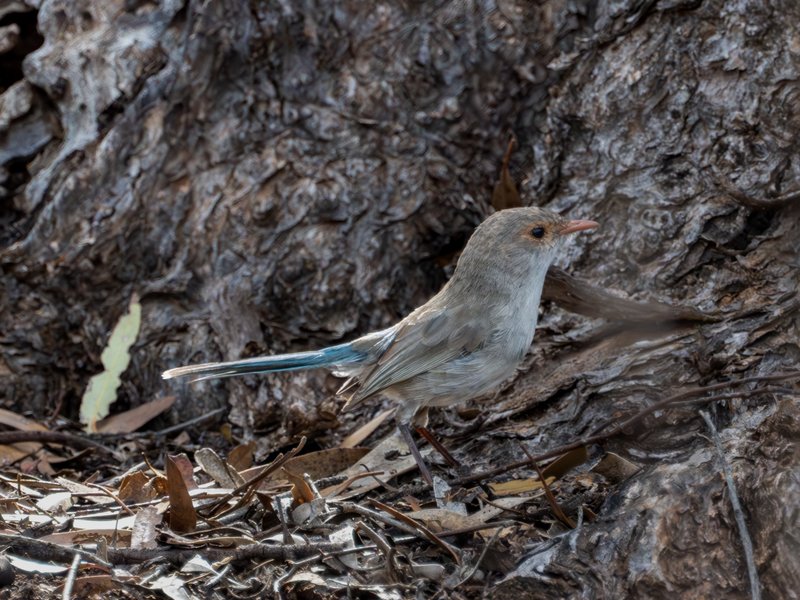
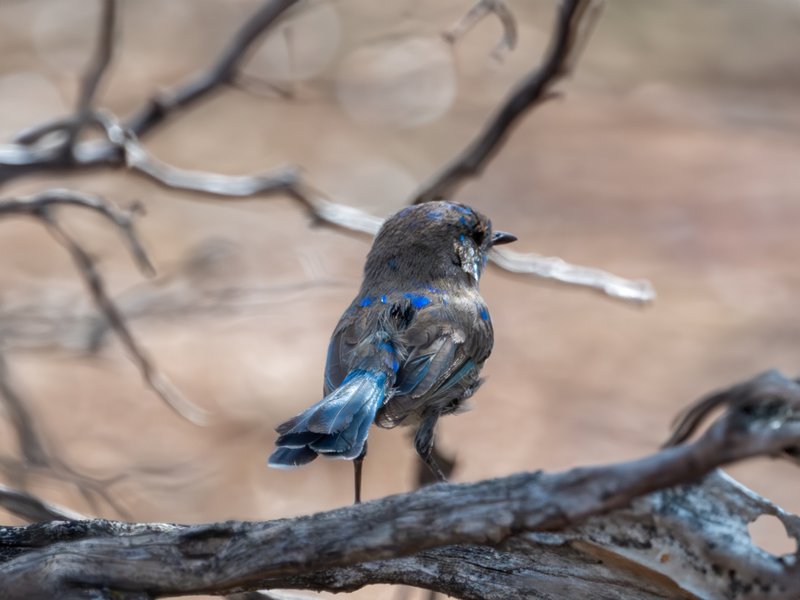
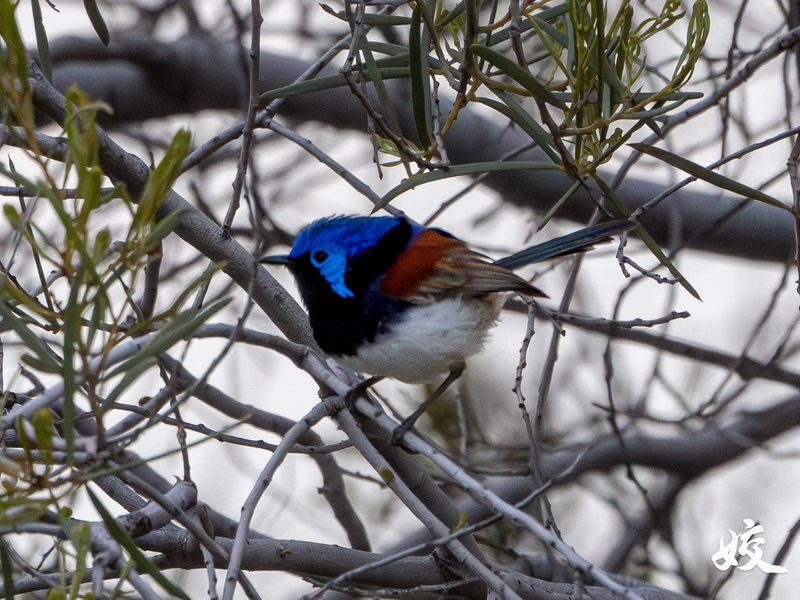
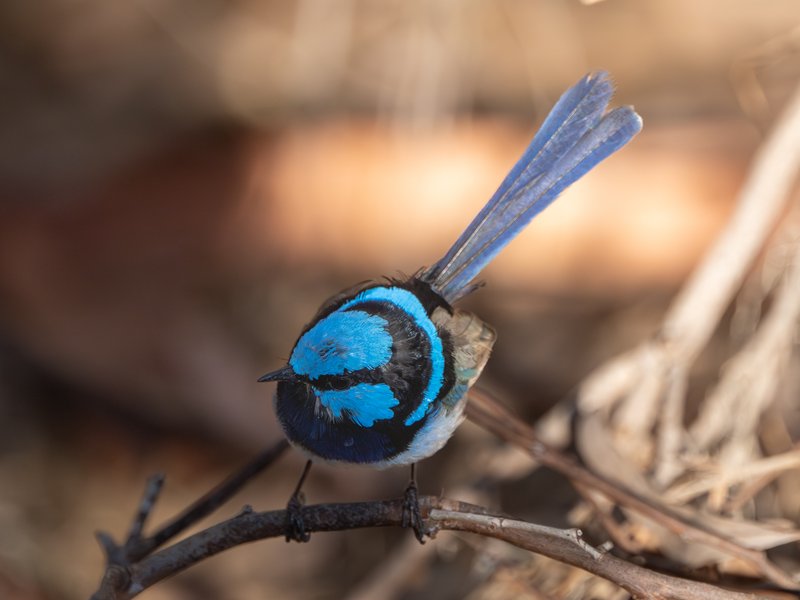
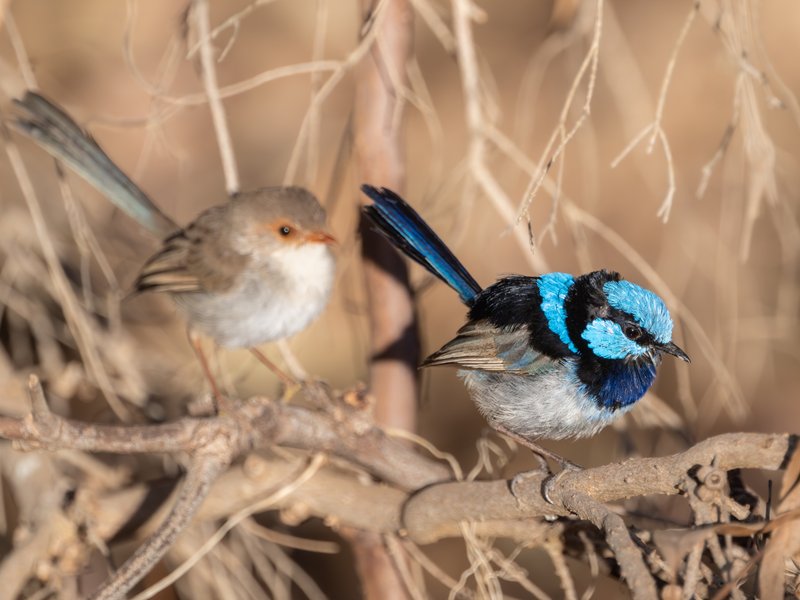
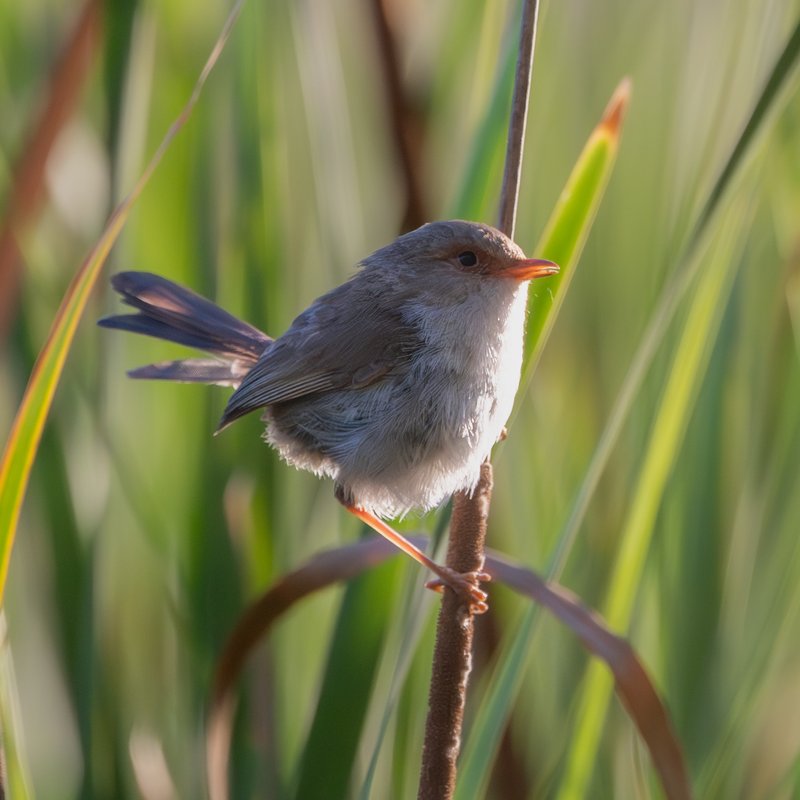
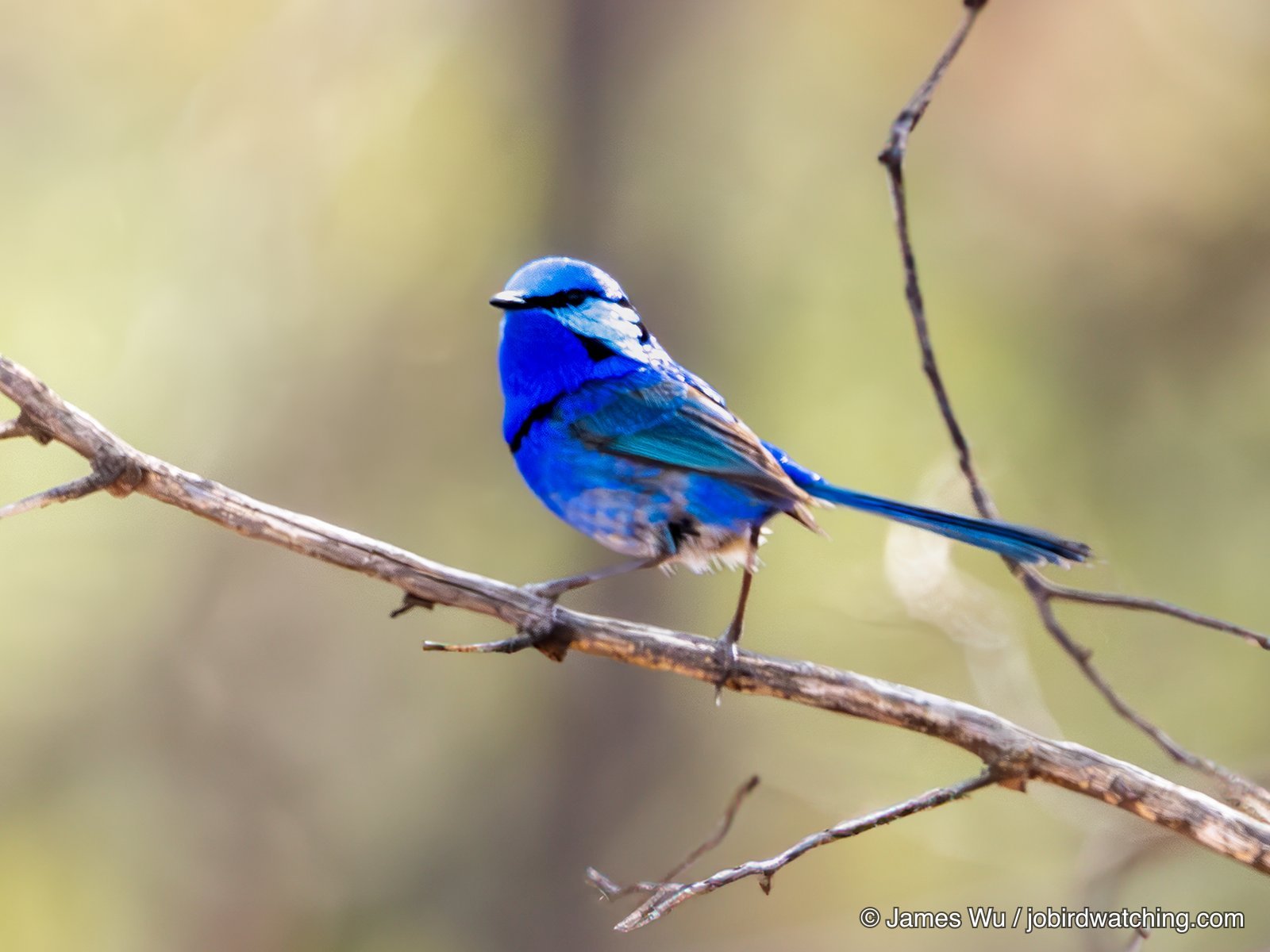
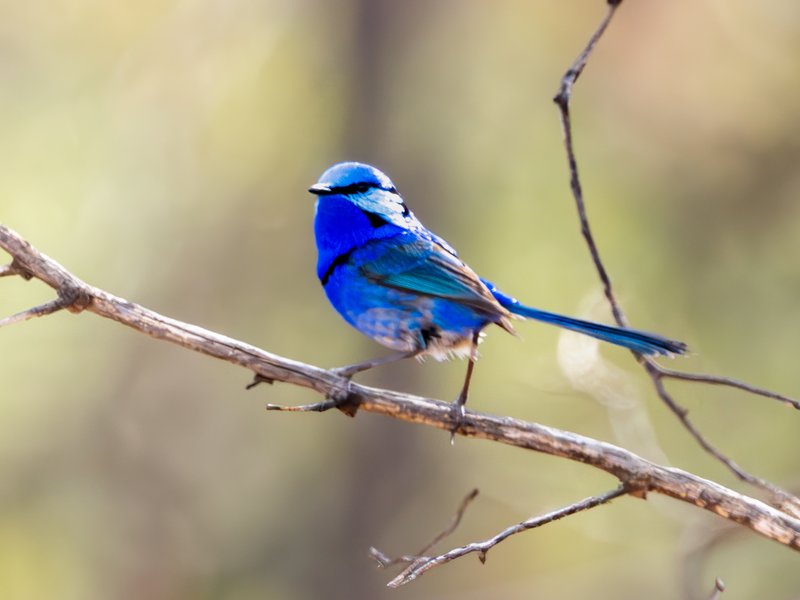
12-14 cm. Nominate Race: familiar 'blue wren' of sw. WA. Male: glossy violet-blue above and below; crown and especially cheek patch much paler; black bands around nape and breast; but no black band across lower back (unlike other races); tail short, broad, blue. Male, eclipse: bill black; plumage brown, with blackish lores; wings bluish; tail blue. Female: bill, lores and eye-ring pale tan; upperparts brownish grey; underparts whitish; tail dull blue. Immature: like female; young males develop dark bills and blue wings. Race musgravi, 'Turquoise Fairy-wren', male: paler than nominate, except for deep violet-blue throat/upperbreast. Note black band across lower back, longer tail. Race melanotus, 'Black-backed Fairy-wren', male: brilliant glossy cobalt-blue; cheek patch paler; black band across lower back broader; breastband narrower. In musgravi and melanotus, female, immature and eclipse male resemble nominate. Family parties, 'brown birds' predominating; in s. WA, reported to forage higher than other fairy-wrens.
- Other name
- Banded, Black-backed or Turquoise Fairy-wren.
- Similar Species
- Variegated Fairy-wren. Superb Fairy-wren, female: bill, lores, eye-ring red-brown; tail brown, washed blue-green.
- Voice
- like Superb, but harder, more metallic; less loud and sharp than chestnut-shouldered wrens.
- Habitat
- nominate race: undergrowth on margins, clearings in forests, woodlands; watercourse-vegetation, swamp margins, golf courses, orchards; shuns built-up areas. Inland: saltbush, mulga, mallee-spinifex. Races musgravi and melanotus: mallee-spinifex, dense mulga, saltbush, bluebush; shrubby, grassy gorges in inland ranges; acacia-scrubs; belar with open understorey of smaller shrubs; watercourse-vegetation, including lignum, cumbungi, cane-grass.
- Breeding
- Sept.-Jan.
- Nest
- domed, somewhat untidy; of dry grass, spiders' web, plant down; low in thicket, tussock, reeds, saltbush, cane-grass; spinifex; to 10 m in tree, e.g. paperbark; in mulga-shrub.
- Eggs
- 2-4; white, finely spotted red-brown, zone at large end.
- Range & Status
- nominate race: s. WA, n. to Shark Bay, inland to upper Ashburton R.-w. Gibson Desert-Wiluna-Laverton, e. coastally to near Eucla. Common, sedentary, local. Race musgravi: sc. Aust., from Gibson Desert-Gt Victoria Desert (WA), e. through sw. SA, s. to c. Ooldea-n. Eyre Pen.-Port Germein, thence n., mostly w. of Flinders Ras., to Simpson Desert; in s. NT, mostly in deserts circling ranges, e. to Finke, nw. to Tanami desert. Patchy and uncommon; part-nomadic. Race melanotus: inland e. Aust.: e. from c. Mannum-Annadale (SA), e. fringes of Mt Lofty-s. Flinders Ras. to sw. Q.; e. in NSW to c. Moree-Peak Hill-Griffith-Balranald; nw. Vic. from Swan Hill, sw. to Wyperfeld NP; w. to Murray mallee of SA, s. to c. Coonalpyn.. Race emmottorum: Thargomindah-Windorah-upper Diamantina R.-Winton, e. to Tambo-Mitchell. Patchy; part-nomadic.
- Distribution key to races
- 1. Malurus splendens splendens 2. Malurus splendens musgravi (callainus) 3. Malurus splendens melanotus 4. Malurus splendens emmottorum