Whistling Kite
Whistling Kite (Haliastur sphenurus) 啸鸢,是鹰形目鹰科栗鸢属的鸟类。飞行中常鸣叫。
Whistling Kite
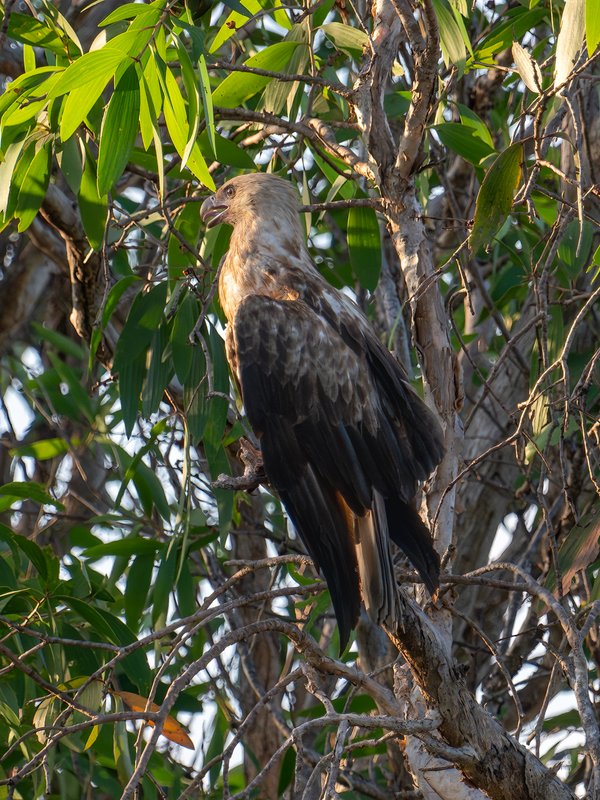
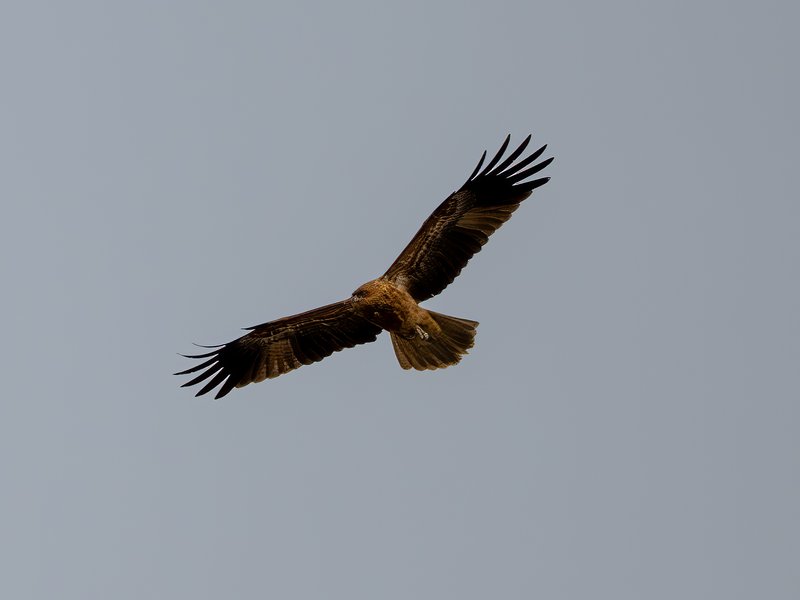
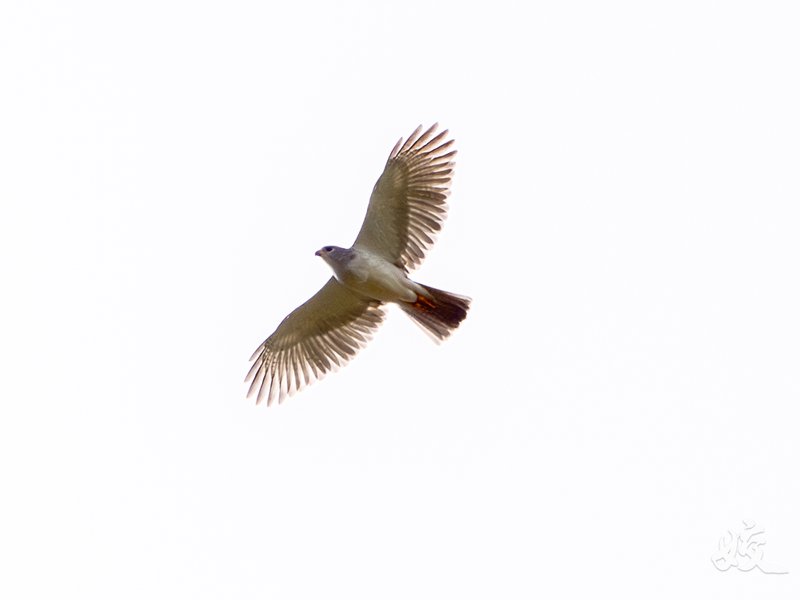
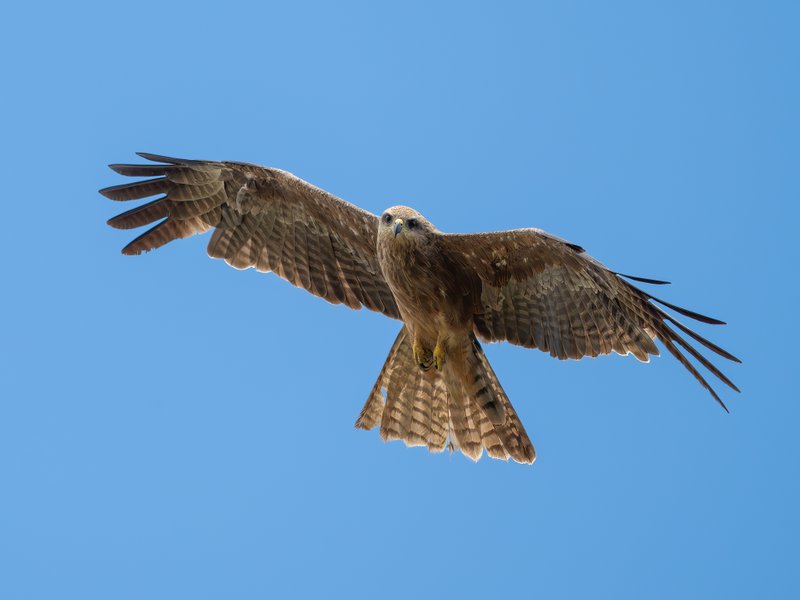
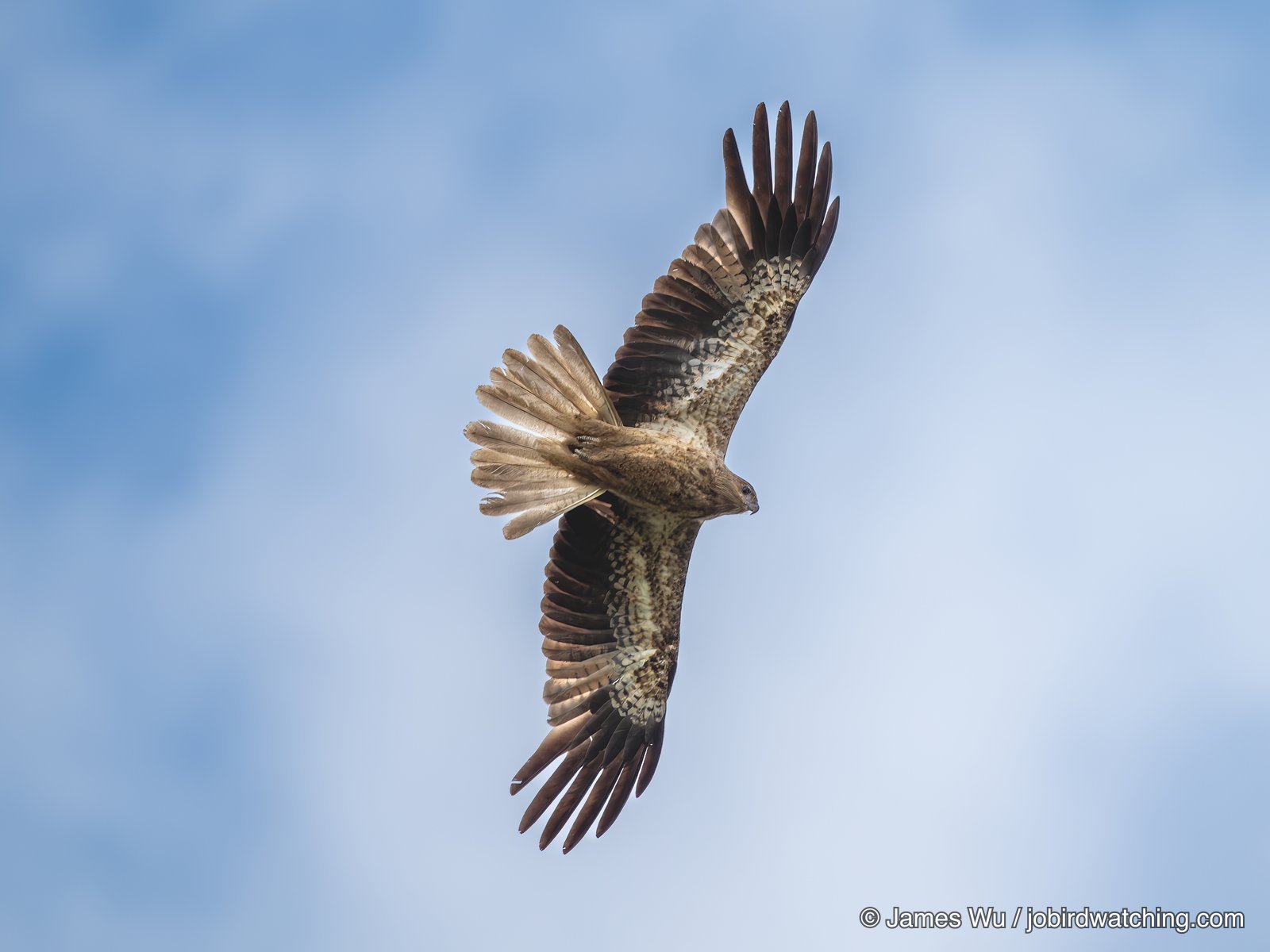
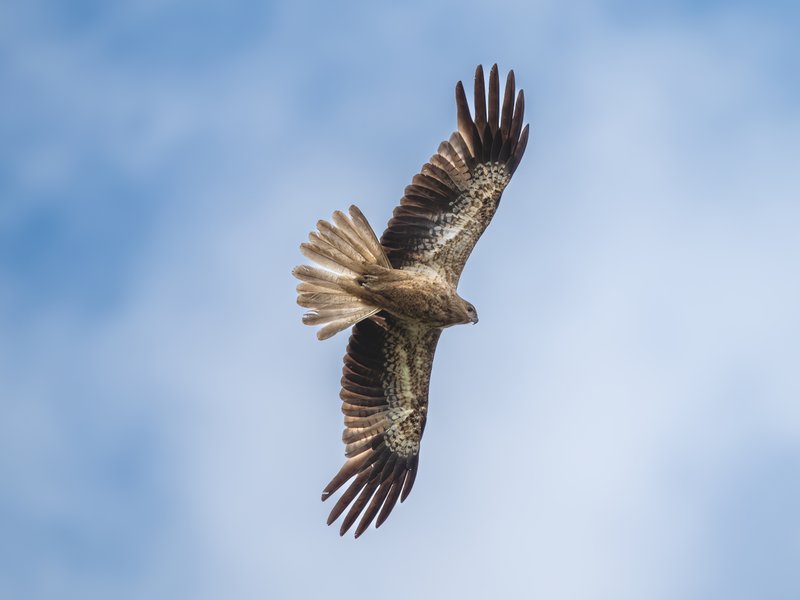
50-60 cm; span c. 1.2 m. Female larger.Small-headed, blonde to sandy-fawn large hawk with browner wings, contrasting black flight feathers, and long, plain, pale, rounded tail. Underwing pattern distinctive: broad, pale brown leading edge turns at right angles near end of wing and crosses to trailing edge, separating black outer primaries from black secondaries. Pale streaks on head and body; traces of large pale spots on wings; legs/feet bone-coloured, unfeathered. Juvenile: more heavily streaked; wings with large pale spots. Singles, pairs, small travelling companies: soars buoyantly in small circles on drooped wings with prominently spread black 'fingertips', 'wrists' well forward; tail long and rounded, fanned when soaring. Body rises and falls with wingbeats, but effortlessly glides, circles and floats. Takes live prey, e.g. young rabbits; swoops to pick fish or carrion from water; pirates food from ibises, herons.
- Other name
- Whistling Eagle (erroneous).
- Similar Species
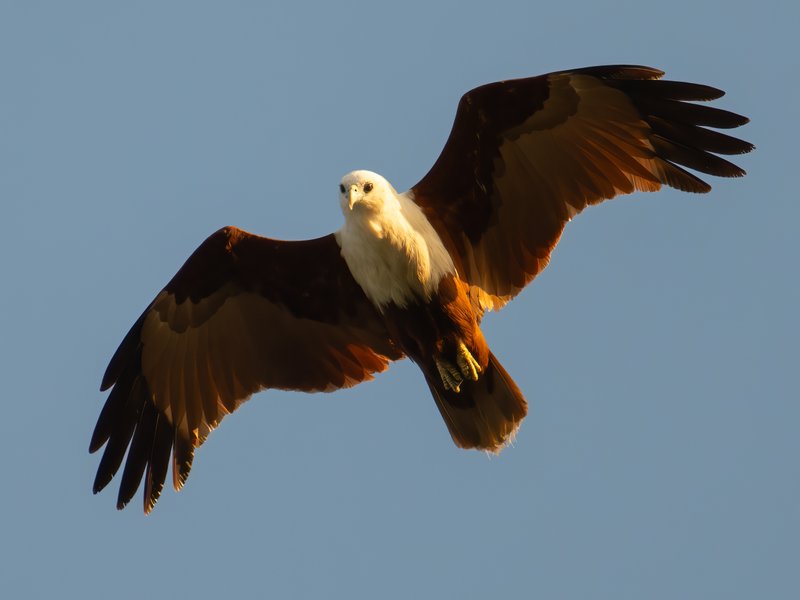
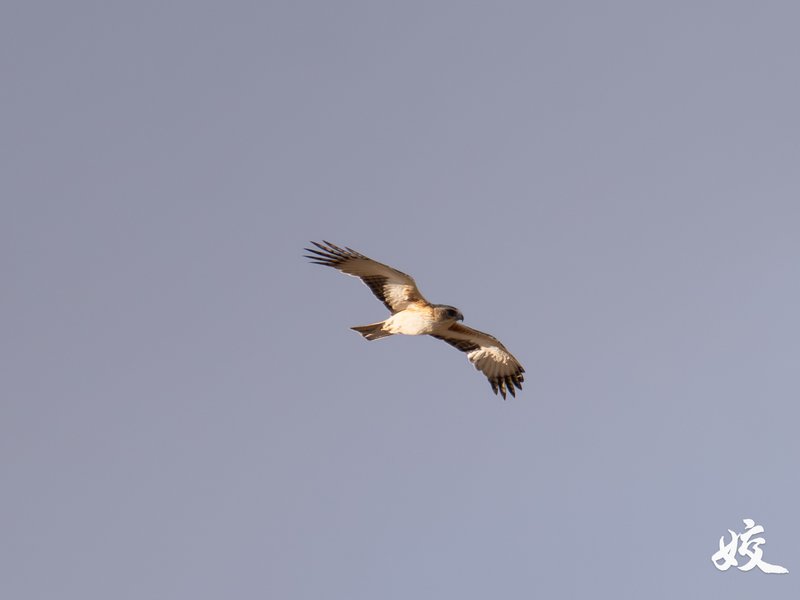
- Black and Brahminy Kites. Little Eagle: larger-headed, thicker-set, with feathered legs, triangular underwing pattern (see plate); soars on flatter wings, head/neck extend further; tail squarer. Brahminy Kite, juv.
- Voice
- distinctive shrill whistling call: first note leisurely, descending, followed by staccato upward burst; peevish mews.
- Habitat
- open forests and foothills, usually near water; timbered watercourses; lakes, swamps, tidal inlets, estuaries, mudflats.
- Breeding
- June-Oct., s. Aust.; Feb.-May, n. Aust.; any time after rain.
- Nest
- bulky, of sticks; high in eucalypt or exotic pine; re-used year after year until large.
- Eggs
- 2-3; blue-white, blotched red-brown.
- Range & Status
- Aust. and coastal islands; casual Tas. Common. Sedentary; migratory or nomadic to coastal n. Aust. in dry season; s. in autumn in s. Aust. Also PNG, New Cal.