Laughing Kookaburra
(英文名:Laughing Kookaburra,学名:Dacelo novaeguineae),是佛法僧目翠鸟科笑翠鸟属的鸟类。身长42-46厘米,嘴长8-10厘米,重约500克,是翠鸟家族中体型最大者。以其独特的笑声命名,这种叫声常在清晨或黄昏时分响起,有‘林中居民的时钟’之称。笑翠鸟主要分布于澳大利亚东部,包括西南部地区,以及新西兰的部分地区。
Laughing Kookaburra
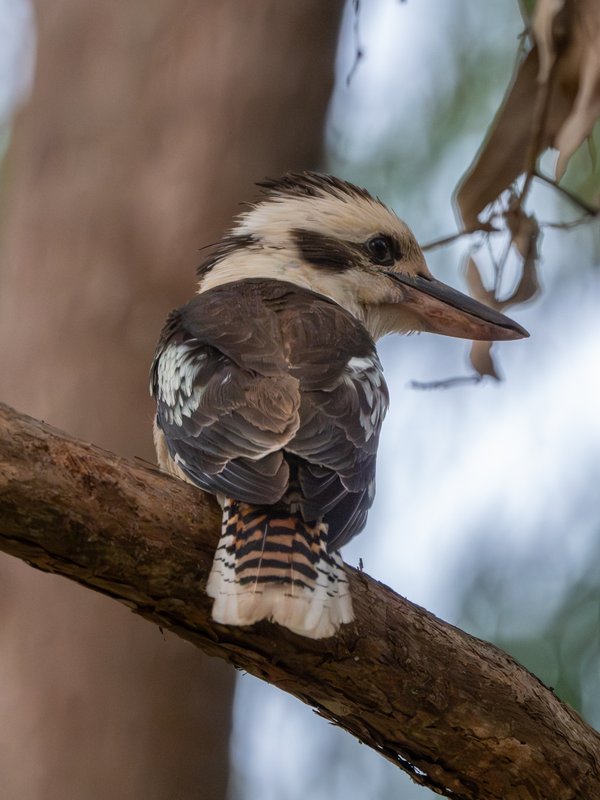
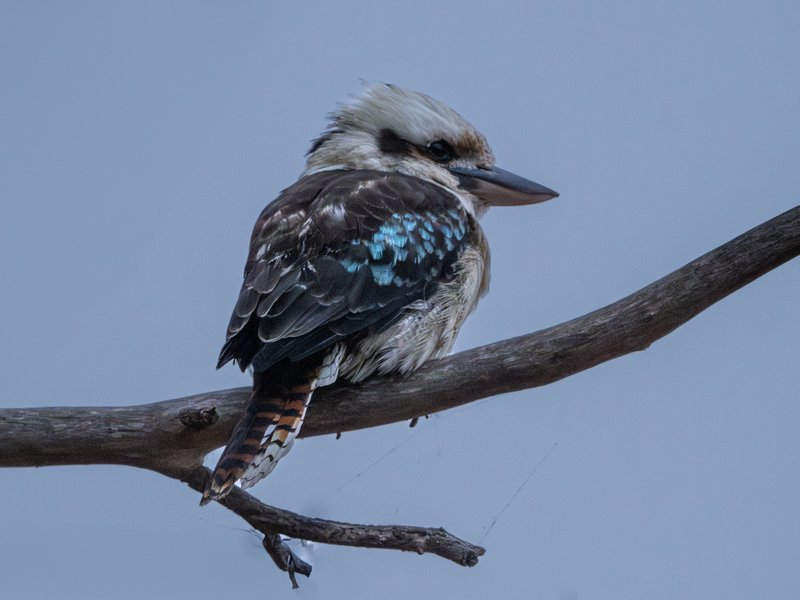
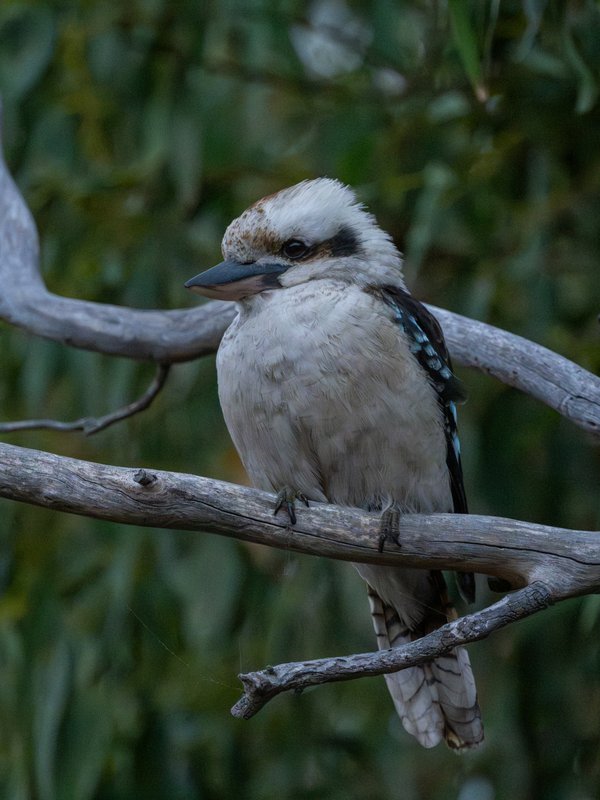
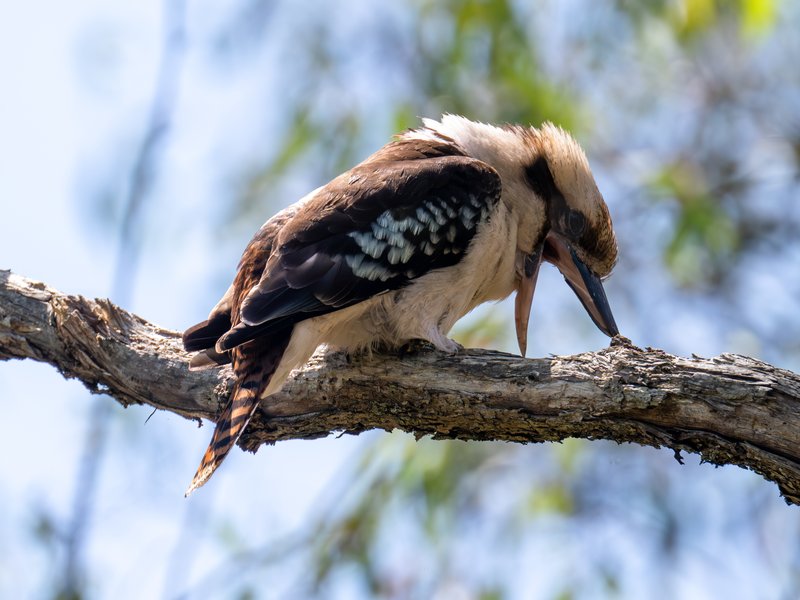
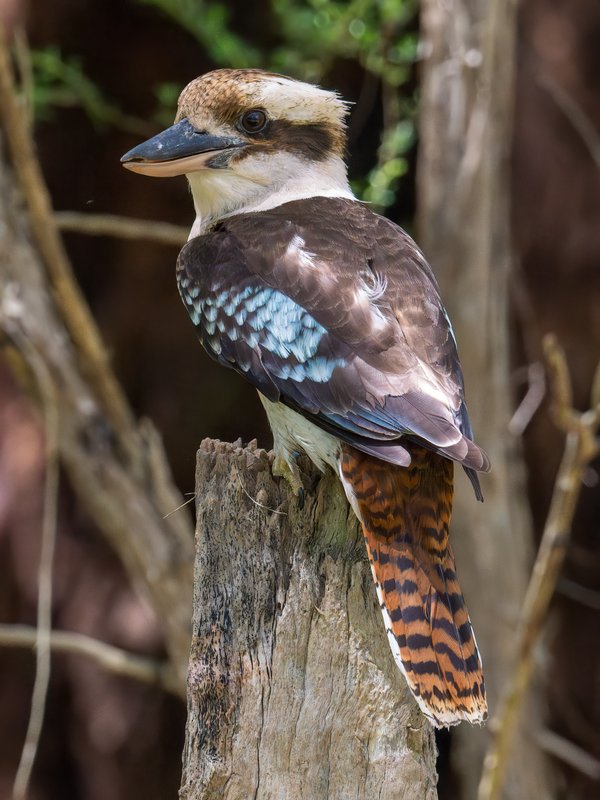
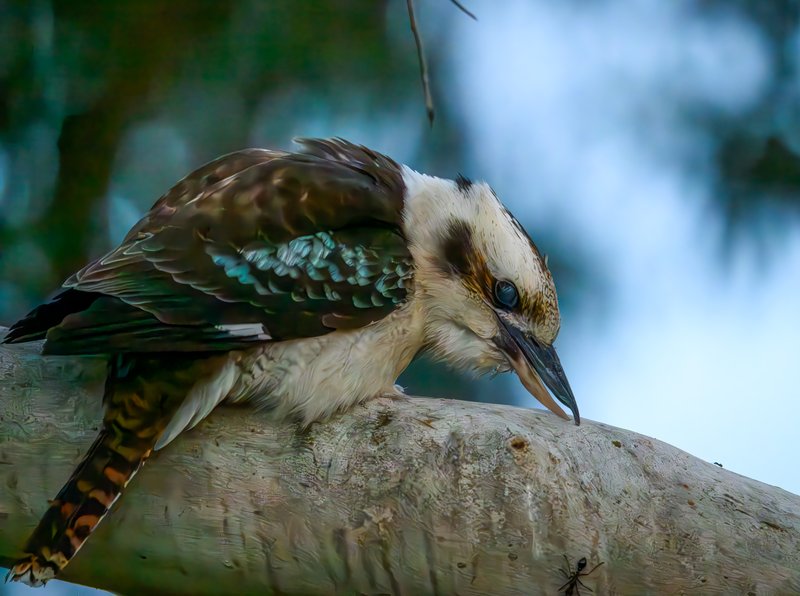
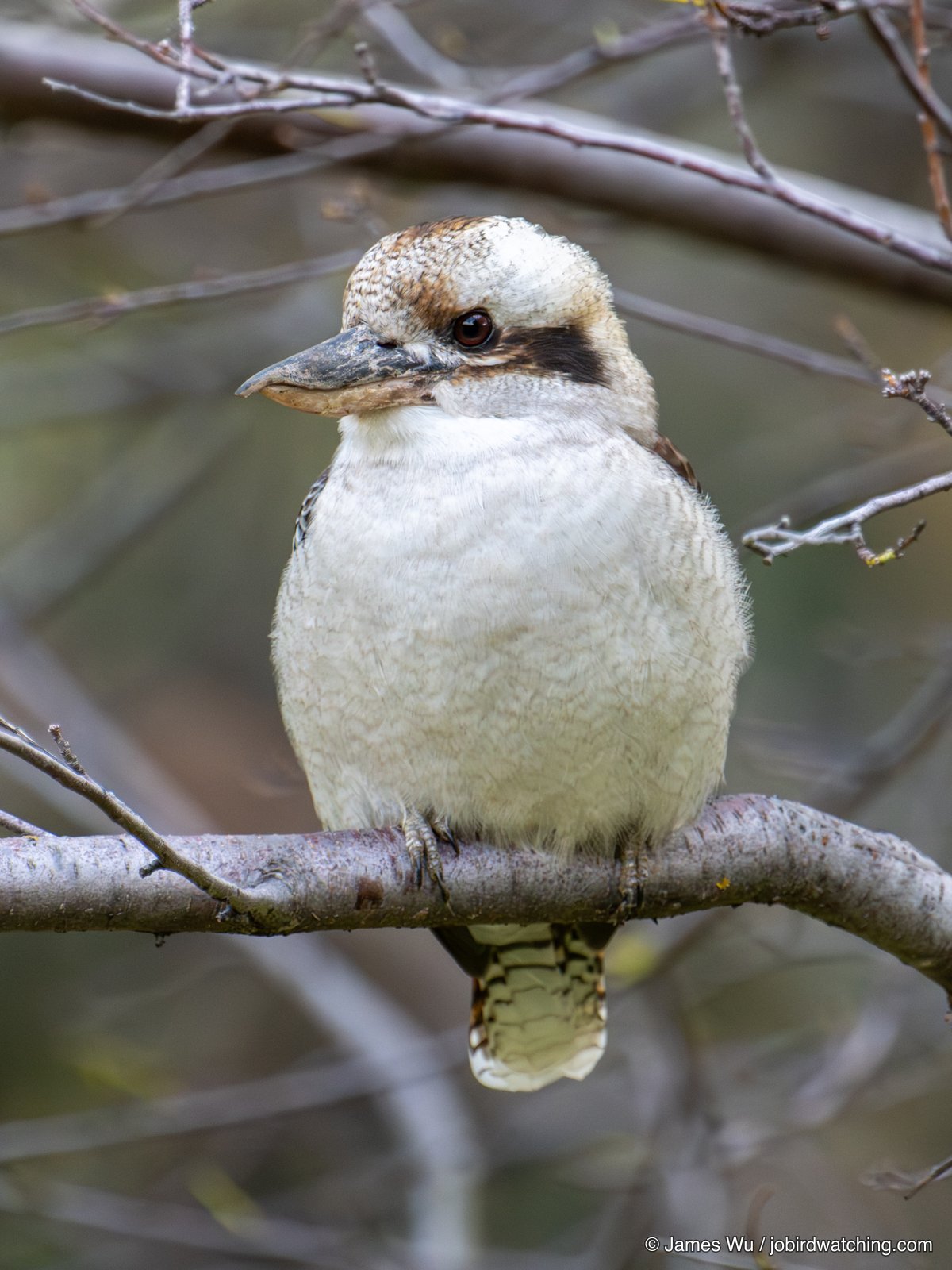
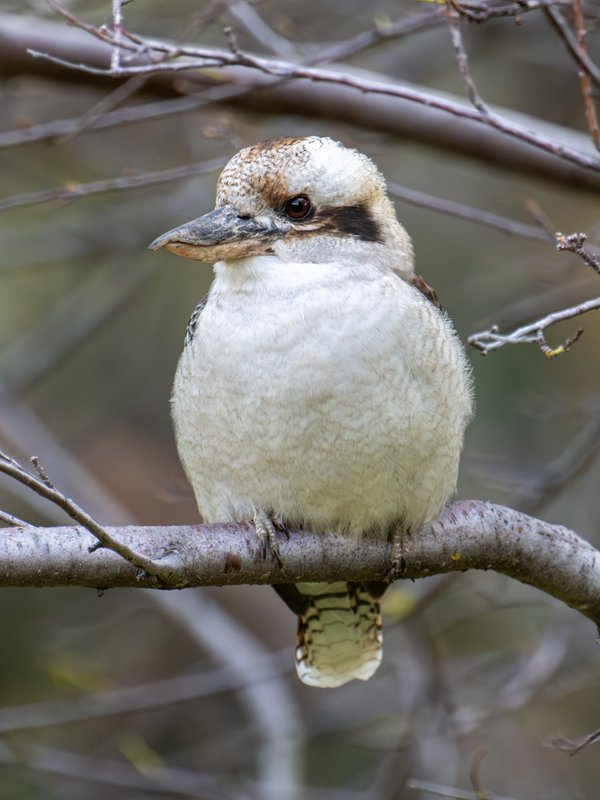
41-47 cm. Big bill pale below; crown brown, dark brown 'ear patch'; brown eye; brown wing mottled pale blue; older males have centre rump blue-green. Juvenile: shorter dark bill; fine brown scallops. Pairs, territorial groups of a dominant pair and subordinate 'helpers'. Perches watchfully, makes long sloping glides onto insects, reptiles, mammals, crustaceans; occasionally plunges into shallow water when hunting, and commonly when bathing. Flight level, direct; bill, white wingpatches and white-tipped, barred, red-brown tail. In spring, makes high circular display flights over 'enemy territory' with deep, stiff wingbeats.
- Other name
- Laughing Jackass.
- Voice
- famed 'laugh': staccato 'kook-kook-kook' rising to shouted 'kook-kook-kook-ka-ka-ka', slowing to chuckles; taken up by group, answered by others.
- Habitat
- woodland, forest clearings, timbered watercourses, farmland, orchards, parks, gardens.
- Breeding
- Sept.-Jan.
- Nest
- level tree hollow to 20 m high; hole in bank, tree termite nest, haystack, wall.
- Eggs
- 2-3; white, roundish.
- Range & Status
- mainland e. Aust.: from C. York (Q) to Eyre Pen. (SA): inland on watercourses to c. Longreach-Cunnamulla (Q); Darling R. (NSW); most Vic.; s. Flinders Ras. (SA). Introduced: sw. WA (1897 on), now Geraldton-Esperance; Tas. (1905), mostly in e. and n.; Kangaroo I. (SA) (1926); Flinders I., Bass Strait (c. 1940). Common. Sedentary.
- Distribution key to races
- 1. Dacelo novaeguineae minor 2. Dacelo novaeguineae novaeguineae