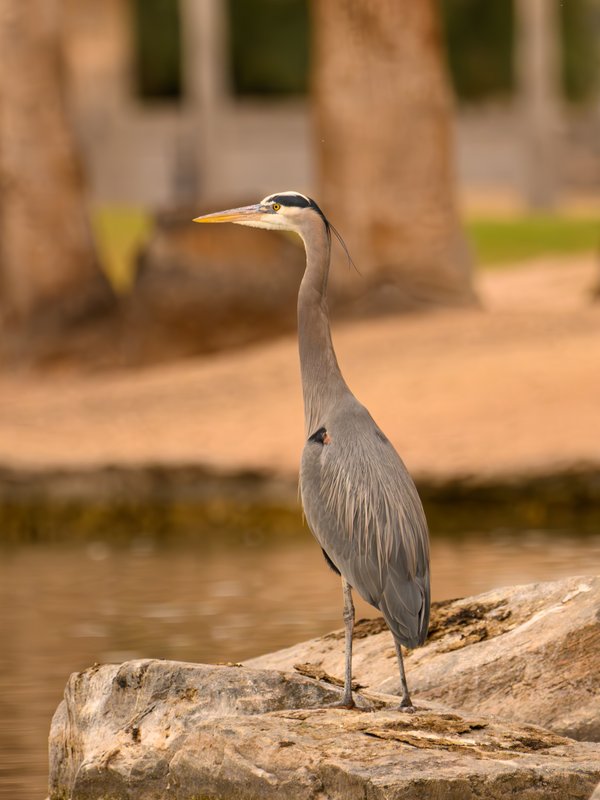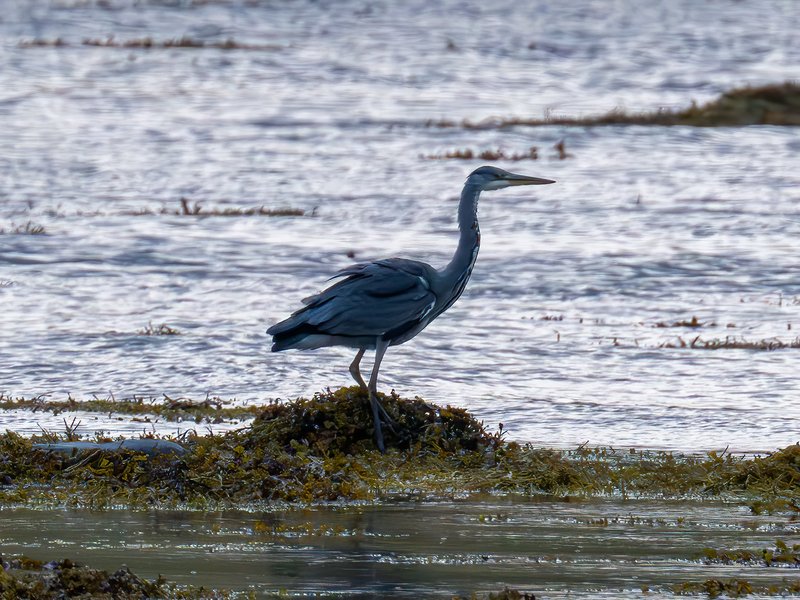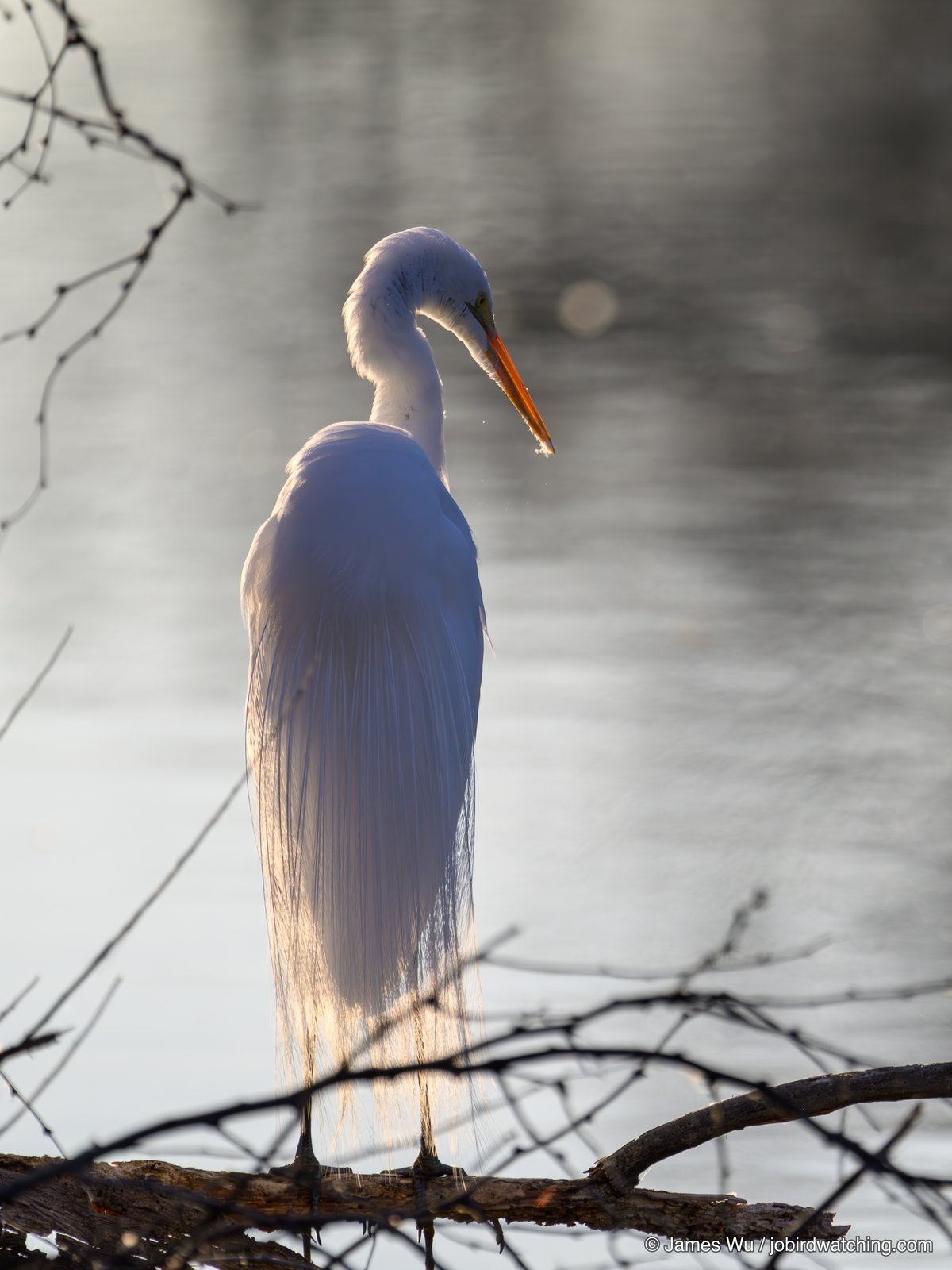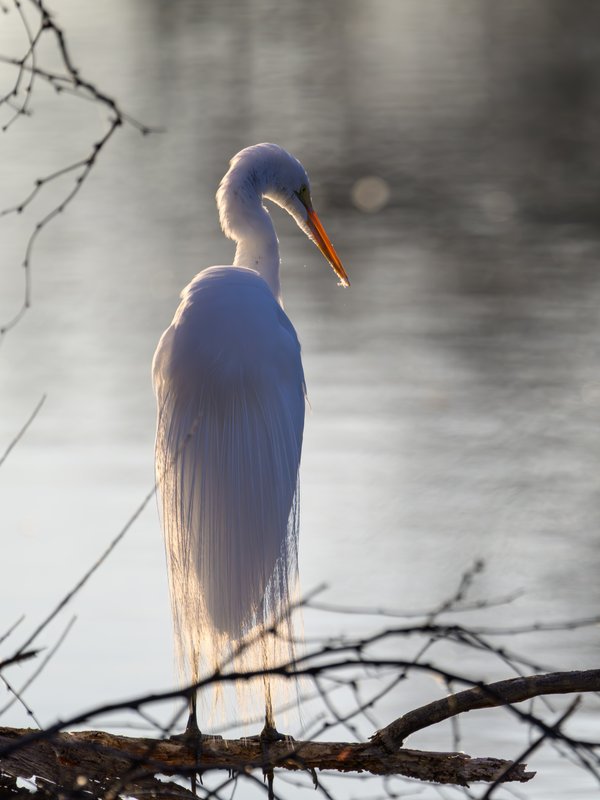
Great Egret
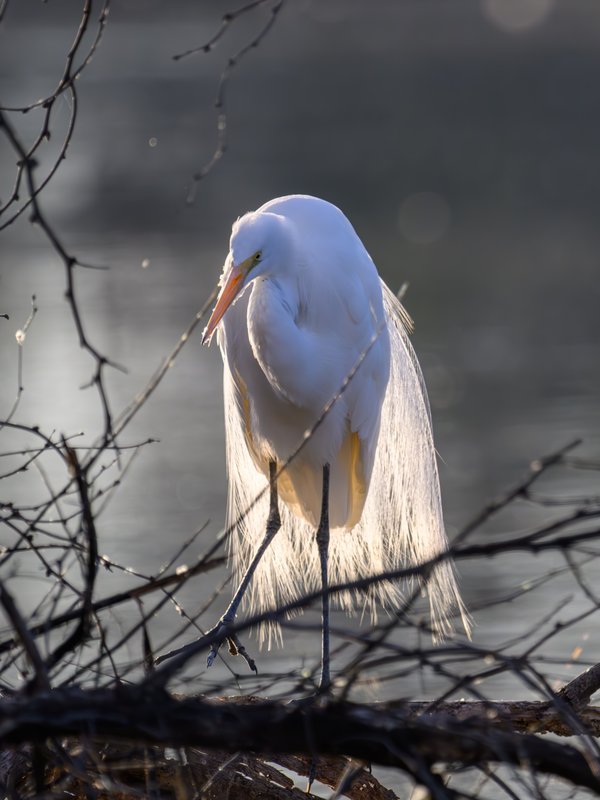
Great Egret (Ardea alba) 大白鹭,是鹈形目鹭科鹭属的鸟类。别名: 有白鹭鸶、鹭鸶、风漂公子、白漂鸟、冬庄、大白鹤、白鹤鹭、白庄、白洼、雪客,大型鸟类。显著特征为颈部独特的‘S’形弯曲,嘴裂过眼,嘴色随季节由黄变黑,腿和脚均为黑色。繁殖季节时,会展现出华丽的繁殖羽,脸颊裸露皮肤呈现蓝绿色。分布广泛,遍及北美、南美、非洲、欧亚大陆乃至澳大利亚。
Great Egret
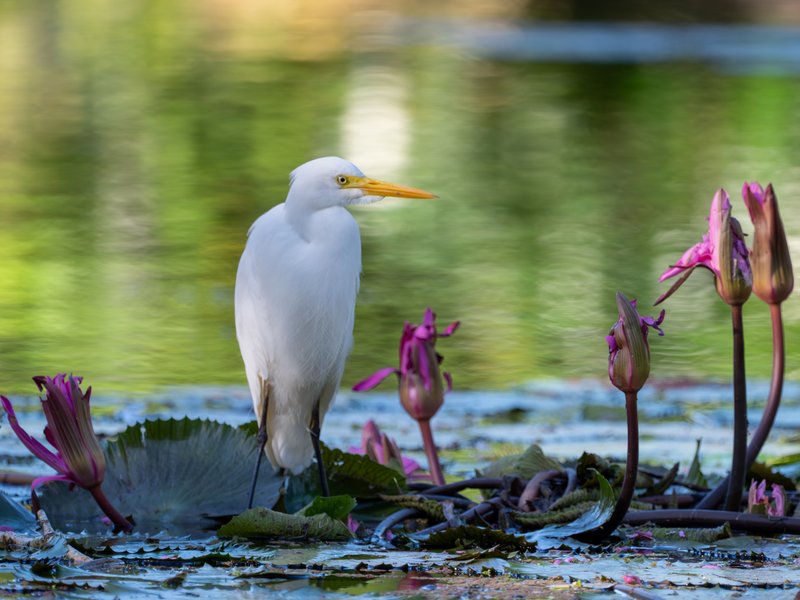
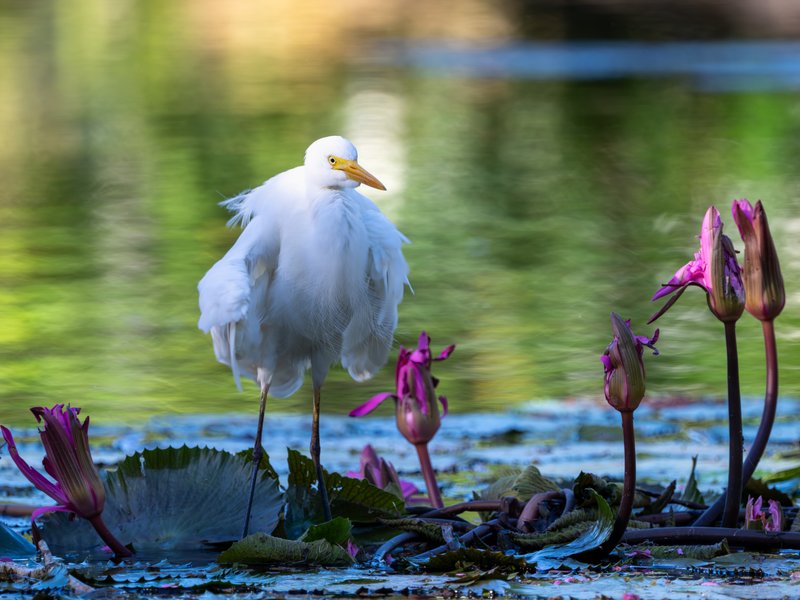
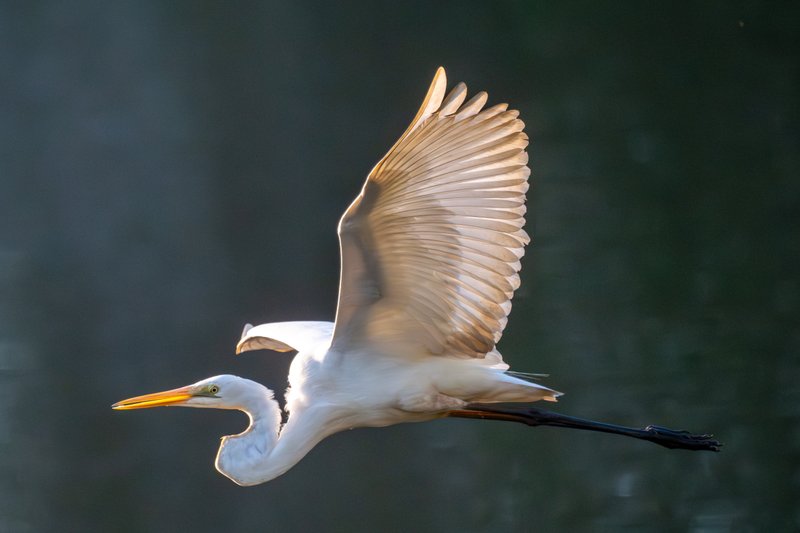
76 cm-1 m; span c. 1.5 m. Tallest egret, with a gaunt, lanky, leaning-forward look. When stretched out, head and neck nearly one and a half times as long as body. For most of year, bill pale to rich yellow, sometimes with dark tip. Note flat crown, yellow facial skin and gape pointing back under eye; blackish legs. Breeding Plumage: bill black; facial skin pea-green; erectile 'aigrette' plumes cascade down over back to beyond tail tip, but none on breast. Some develop plumes and breed while retaining yellow bill; some black-billed birds without plumes are seen. Solitary, small parties; in parts, e.g. floodplains of n. Aust., very large companies in wet season. Usually forages in water, moving with cautious deliberation; freezes motionless for long intervals before making lightning thrust. Occasionally seizes fish from surface in hovering flight. Sustained flight steady with stately wingbeats, neck usually folded; trailing legs extend far beyond tail with 'knee-joint' usually carried beyond tip of tail.
- Other name
- Large or White Egret; White Crane.
- Similar Species
- Intermediate Egret: head and neck about equal length of body; wingbeats quicker.
- Voice
- deep guttural rattling croaks.
- Habitat
- shallows of rivers, estuaries; tidal mudflats, freshwater wetlands; sewage ponds, irrigation areas, larger dams, etc.
- Breeding
- Nov.-Feb. in s. and e. Aust. March-May in n.
- Nest
- scanty platform of sticks; in treetop colony over water in swamp woodland, mangroves.
- Eggs
- 3-5; blue-green.
- Range & Status
- Aust. and Tas. in suitable habitat; casual Lord Howe I., Macquarie (and other) sub-Antarctic islands. Dispersive. Cosmopolitan.
- Distribution key to races
- 1. Ardea alba modesta